George Falls Through Time – Being Polarizing is a Good Thing

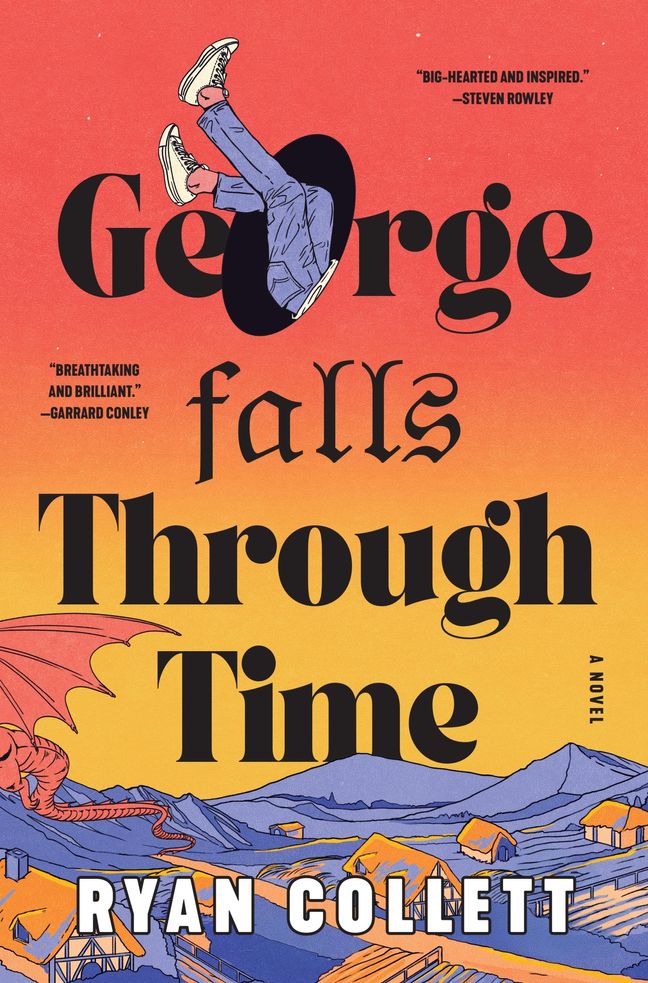
When I was browsing new releases in January, I passed over George Falls Through Time; admittedly this was mostly because the publisher dropped Ministry of Time as a comp title. I despised … pretty much everything about that book, and it’s gotten worse with time. Thankfully, this got put back on my radar via being pitched to me as an ‘interior existential fuckshit novel’ which is right up my alley. It’s the type of controversial book that is executed well enough to cater to very specific tastes, meaning that most people who picked this up hated it. Honestly, this is likely going this year’s biggest gap (other than DNFs) between my rating of a book and the general consensus.

And honestly, I blame the marketing. It’s pitched as “A confessional queer romance, a swords-and-sorcery soap opera” … which is missing everything this book is trying to do. It is a glorious train wreck in slow motion. This is not a fun book full of whimsy and romance with a historical serf trying to find his freedom (well, there is that, but not like you’re thinking). Instead, this book is the hollowness that comes when when you fixate on the pointlessness of life, the artificiality of all human connection, and the lack of agency over your own destiny. It is cyclical and frustrating and uncomfortably real.

No matter how conflicted (in a good way) I feel about this book, the sign that this review is looking to be one of my longest is a sign that this novel had lots of interesting things to say.

The Premise:
George has lost his job, his boyfriend left him, he has no sense of meaning in life, and now walks dogs. When two run away and things spiral out of control, he ends up falling into 1300s England. Honestly, this was probably the best thing that could have possibly happened. There’s some business with a dragon, but the book is really about George’s internal journey to find meaning in life.

Read if You Like: intense depictions of depression, speculative fiction character studies, the power of a quiet life, simple vocabulary arranged intentionally

Avoid if You Dislike: time travel light on historical detail, books that de-emphasize traditional plot structures, characters (and romances) that are hard to cheer for

Continue reading “George Falls Through Time – Being Polarizing is a Good Thing”

A Trade of Blood – Has the Magic Worn Thin?

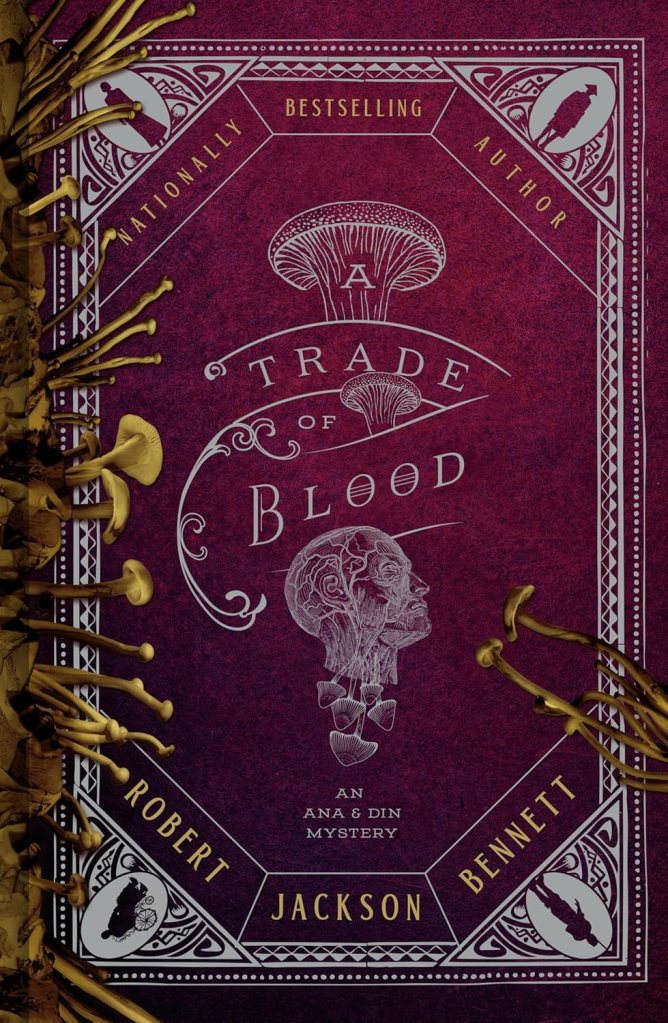
I am remarkably behind on reading a lot of the hot new releases that have been coming out in 2026. Even ones I’ve been salivating for, like the new SM Hallow book that I have been promised gruesome necromancy, has been put on the backburner. But the Ana and Din series is one that my friends have all been reading too, so it got shunted to the front of the pile. This book brought me all sorts of fun ideas for my current tabletop role playing group – where my players are building up a cult to a god of mushrooms – but this was by far the most disappointing of the three. I’m not mad I read it, and it was an enjoyable time. However, I found myself wishing I’d picked up a different new release instead.

Because these are self-contained murder mysteries, you can probably read them in any order with minimal confusion. However, The Tainted Cup is not only the first in the series, but also the best in my opinion. It also provides the clearest on-boarding to the setting. This review will have some spoilers for early plot points (mostly the method of killing), so read on at your risk.

The Premise:
Ana and Din travel to farming country after the daughter and scion of the richest farming family turns up dead, with the likely culprit being the heir to their rivals, who control the great cattle herds of the Empire. As usual, all is not as it seems, and the killing method is far from typical.

Read if Looking For: murder mysteries, creepy mushrooms, ill-advised affairs

Avoid if Looking For: a serious critique of exploitative agriculture, truly weird worldbuilding

Continue reading “A Trade of Blood – Has the Magic Worn Thin?”

The Dawnhounds – Fungal Cities & Fascism

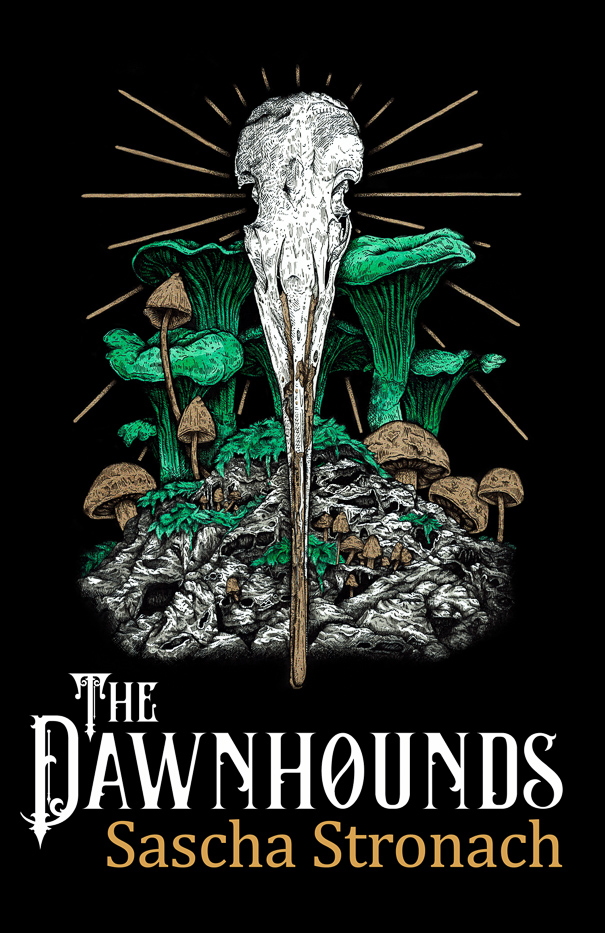
The Dawnhounds was the Beyond Binaries Book club pick over on r/fantasy. We had our midway discussion last week and will be wrapping it up on August 27th! This is a book that feels extremely ahead of its time, and fans of Perdido Street Station are going to enjoy it greatly. It’s the type of unapologetically political Fantasy that has been getting more and more traction, but this was written in 2019. I left feeling mixed about this book overall, but I got my concussion right around the halfway point, which definitely is when I started enjoying the book less. For those whom are drawn to the weird worldbuilding and ardently political themes, I think it brings a lot to the table.

The Premise:
Yat is a police officer in a city that has adopted biotechnology to replace the steel and iron of its former oppressors. She tries to do right by the city, but as a queer woman, she gets little respect from other officers. After she is murdered and comes back to life with the blessing of some eldritch power, she gets wrapped up in a conspiracy far bigger than she can imagine. Her path takes her to a pirate crew that has answers about what happened to her, and a realization about the system she worked inside.

Read if You Like: vaguely indescribable interludes, weird cities, characters having a crisis of faith, insect bullets

Avoid if You Dislike: spores, negative depictions of police, the power of LOVE, authors refusing to explain everything

Continue reading “The Dawnhounds – Fungal Cities & Fascism”

Novella Readathon #27: The River Has Roots

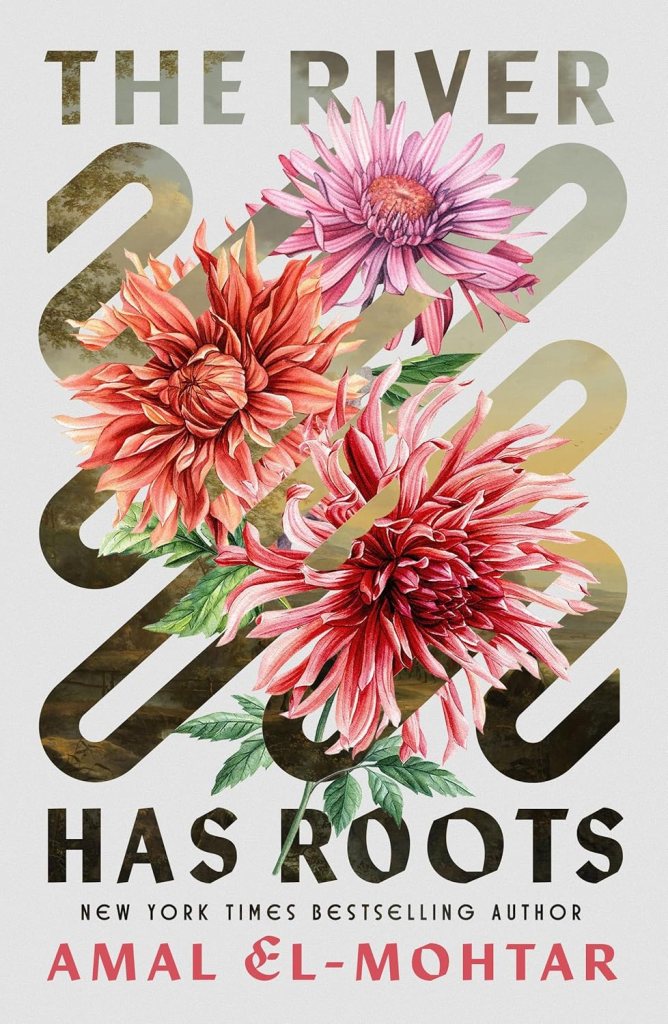
I adored This is How You Lose the Time War, and I’d been meaning to get around to more work by Amal El-Mohtar. After reading three other Hugo nominees, this seemed like a logical next step. It is the third fairy tale novella nominated for the Hugos this year. I didn’t dislike this book, but I also didn’t fall in love with it like so many others have. Certainly I’d put it lowest in my Hugo rankings.

The Premise:
Esther and Ysabel are sisters who grow magical willow trees on the banks of a river flowing from the fae realms. Their devotion to each other and the songs of their work keep them as close as sisters can get. However, Esther has suitors; a neighbor looking to expand his financial empire, and a fae whose customs are alluring and frustrating. The story’s focus places relatively equal weight on the sibling and romantic relationships, with Esther getting a heavier focus than Ysabel.

Read If Looking For:  the power of sisterhood, conjugation-as-magic, unknowable fae, lush prose, high quality audiobook production

Avoid If Looking For: tense plotting, twists and surprises, rigorous thematic work

Continue reading “Novella Readathon #27: The River Has Roots”

Novella Readathon #13: Cinder House

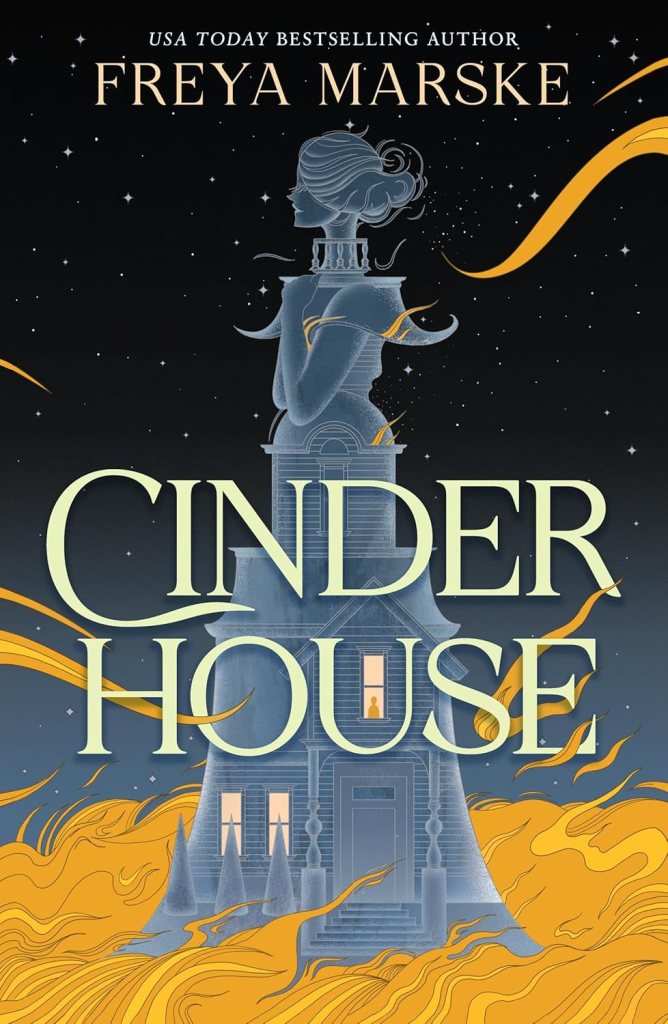
I have a soft spot for Cinderella. I wouldn’t describe it as my favorite Fairy Tale, but somehow pieces of it keep capturing my imagination. As a child, I watched the VHS for Ever After so much we had to buy a new copy – I still love it, corny dialogue and all. My teenage self enjoyed the goriness of the Grimm Fairy Tale. As an adult, The Magic Fish became my all-time favorite graphic novel (though that goes far beyond Cinderella). Cinder House enters in the long line of Cinderella tales I adore. In classic Marske fashion, it weaves together the fantastic and romantic elements to find a really excellent balance

The Premise:
Ella died shortly after her father, killed by a combination of poison from her stepmother and falling down the stairs (but really it was the poison). Now a ghost posessing the house owned by the woman who killed her, Ella cleans and cooks for her stepfamily, unable to live a life apart from the building that has become her body. Cue some classic Cinderella elements, such as the Prince holding a ball to find a wife, which has a lot of the traditional trappings of Cinderella. For the most part, this book is Cinderella + the main character is a ghost who feels the house as her new body. 

Read If Looking For: chronic illness coding, the sensuality of bare feet on carpet, a friendly bit of correspondence, your body is a temple

Avoid If Looking For: fairy tales that invert the original, Cinderella that eschews insta-love, criticisms of monarchies

Continue reading “Novella Readathon #13: Cinder House”

Novella Readathon #11: The Lathe of Heaven

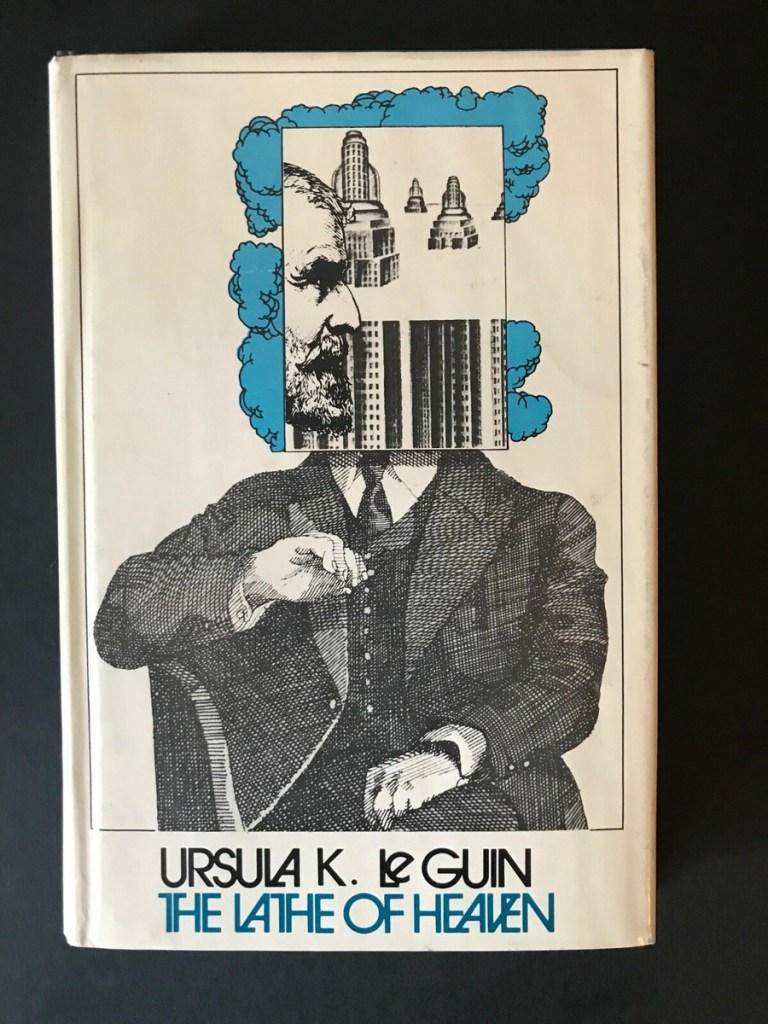
As one of the Greats of the genre, I don’t know that I’ll have anything to say about The Lathe of Heaven that hasn’t been said before. I haven’t read a ton of her longform writing, and that’s a crying shame. Honestly, I don’t even think I would have picked this up had 1970s not been on the bingo card this year; it’s been a good kick in the pants that I really need to continue reading older works.

The Premise:
George Orr lives in a world with many problems. War in the Middle East, relentless climate change, and his fear of dreaming. You see, Orr’s dreams have the potential to change reality, rewriting history in radical and extreme ways. He gets caught stealing medications to prevent himself from dreaming, only to find himself in a Sleep Therapist’s office. Dr. William Haber begins to use Orr’s abilities to reshape the world, to improve it and ‘fix’ society’s problems. Orr just wants to find a way to never dream like that again. 

Read If You Like: philosophical science fiction, the ethics of omnipotence, classics in the genre

Avoid If You Dislike: extended explanations of fictional science, abusive therapists, the feeling of hopelessness and lack of control in your life 

Continue reading “Novella Readathon #11: The Lathe of Heaven”

Novella Readathon #3: The Flesh of the Sea

The best book I read last year was How to Survive this Fairytale by SM Hallow. It was by a new indie publishing house, so I decided to pick up a few other of their titles. Unfortunately, Hedone Books has gone under, because I very much would have been interested in more of books they put out. Currently, you can only read The Flesh of the Sea via Audible; I was lucky enough to have purchased my physical copy before the publisher went under. This won’t be my favorite read of the year (or even this project), but it was very enjoyable. It’s a quick read – even in the context of novellas – and I think it would be a fairly good palette cleanser, especially when paired with other weird-nautical series like Tide child.

The Premise:
Wilford is a natural scientist who, after getting rejected by the Royal Society in London, ends up on a really weird pirate ship. He sends letters of his misadventures to a fellow naturalist, Jean Baptiste, whom he had been avoiding after a drunken kiss. On his travels, Wilford encounters all sorts of disturbing and disgusting creatures, befriends his crewmates, and generally tries to prove his worth to himself, Jean Baptiste, and the Society. Meanwhile, Jean Baptiste’s journal shows his life feels empty without Wilford in it, and he gets very upset about an overprotective pirate who has been making moves on Wilford.

Read If Looking For: weird travelogues, disaster academics, yearning and pining, epistolary novels, quirky pirate crews

Avoid If Looking For: intense horror and gore, bespoke prose, Romantasy

Comparable Media: Tide Child, Memoirs of Lady Trent, Someone to Build a Nest In

Continue reading “Novella Readathon #3: The Flesh of the Sea”

Monkey Meat: The Summer Batch

Back in April, I read the first collection of Monkey Meat stories and fell in love. Juni Ba’s art, humor, and themes were catnip for me. The vibes are Sunday Morning cartoons focusing on the dystopian nature of late stage capitalism, with heaping of weirdness thrown into the mix. Overall, I think The Summer Batch is (mostly) a direct upgrade, but the two can really be read in any order. Each story is self-contained, with only a few characters appearing in multiple stories – and never requiring you to have read earlier tales to understand what’s going on. All that’s important is that you’ve returned to Monkey Meat Island! Don’t worry, all we ask for access to the theme park is your immortal soul.

The Premise:
Welcome back to Monkey Meat island! Like last time, there’s a wide variety of stories within this volume. This time however, the book itself is a magazine created by the Monkey Meat corporation, meaning you also get complementary ads. Isn’t that great?

Read if Looking for: the corporation always wins, irreverent humor, in-book recommendations for real-world art, meta-commentary

Avoid if Looking for: optimism or escapism, realistic characters or situations, subtlety

Comparable Media: The Triangle Agency, Dungeon Crawler Carl, Rick and Morty

Continue reading “Monkey Meat: The Summer Batch”

The Disco at the End of the World  – Too Much Boogie!

Nathan Tavares has more or less cemented himself as an instabuy author for me, and Disco at the End of the World continues placing him near the top of my favorite author’s list. The early reviews for Disco had me hesitant: several readers I trust DNFd, and a 3.5 rating on Goodreads typically indicates that a book has some fairly major flaws. Like with most of Tavares work, I think my love for it is going to be higher than most people’s. He speaks to my soul in a way that few authors do. This book has some significant rough patches, but it also filled a void that I’ve been searching for: speculative fiction that seriously engages with historical underground queer spaces in America. If that isn’t something that immediately gets you excited though, there probably isn’t enough here for me to recommend it to the average reader. 

The Premise:
Mitch is a member of the Spaceguard, which has replaced Nasa in this version of the Cold War with more of a military emphasis than exploratory. He works on the moon base, where he’s known as a queer who doesn’t get a hard time only because he also smuggles contraband in for everybody else. He gets reported for morality breaches and is sent back to Earth, where he and his fellow servicewoman Gloria (not that most soldiers used that name for her) helped open an underground Disco outside Hollywood. Strange things are happening to Mitch however, and he ends up being a contact point for Aliens who are threatening to destroy Earth, unless he, Gloria, and his new family can bougie hard enough to change history.

Read If You Like: portrayals of underground gay culture, alternate space-race history, queer acid trips, disco ball spaceships

Avoid If You Dislike: characters facing homophobia, long stretches without speculative elements, the power of LOVE, intense tonal shifts

Comparable Media: Welcome to Forever, Exit Stage Left: Snagglepuss Chronicles, Disco Witches of Fire Island

Continue reading “The Disco at the End of the World  – Too Much Boogie!”

The Many Deaths of Laila Starr – Vignettes on Death

This book has been sitting on my desk as a potential whole-class read for high school level comics classes. It’s award-nominated and generally has a phenomenal reputation. At 128 pages, this story is absolutely worth a look if you’re in the mood for something contemplative with some light humor elements. It feels very much like an Autumn book, in that it asks readers to think about their own relationship with death, but it remains pretty accessible throughout. Plus, it’s popular enough that you can likely nab a copy from your local library!

The Premise:
A child destined to discover immortality is born, and with it comes layoffs. Death finds herself without work, trapped in a human body and the pesky mortality that comes with it. This comic covers her many lives (she gets brought back by her companion Life often) as she comes into contact with the child (and later teen, adult, and elderly man) who caused her downfall.

Read If Looking For: a god experiencing mortality, episodic story structures, casual cigarettes, quiet storytelling with vibrant colors

Avoid If Looking For: the political machinations of gods, experimental art, novel and original endings

Comparable Media: Cloud Atlas, Sandman. I’ve also heard that it pairs delightfully with Daytripper and Karmen, both of which I’m intent on reading soon.

Continue reading “The Many Deaths of Laila Starr – Vignettes on Death”