George Falls Through Time – Being Polarizing is a Good Thing

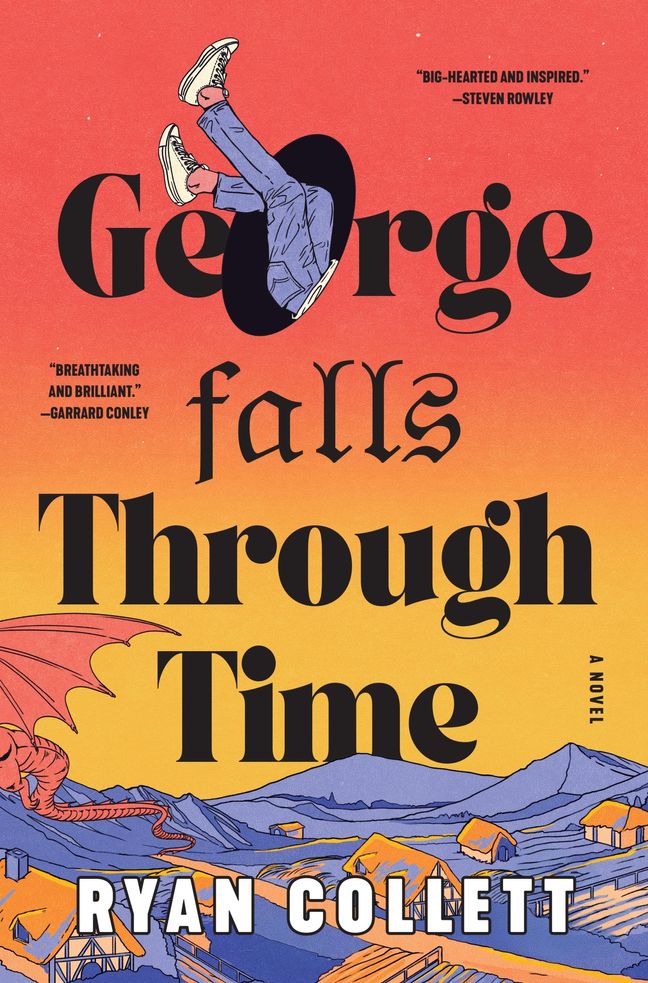
When I was browsing new releases in January, I passed over George Falls Through Time; admittedly this was mostly because the publisher dropped Ministry of Time as a comp title. I despised … pretty much everything about that book, and it’s gotten worse with time. Thankfully, this got put back on my radar via being pitched to me as an ‘interior existential fuckshit novel’ which is right up my alley. It’s the type of controversial book that is executed well enough to cater to very specific tastes, meaning that most people who picked this up hated it. Honestly, this is likely going this year’s biggest gap (other than DNFs) between my rating of a book and the general consensus.

And honestly, I blame the marketing. It’s pitched as “A confessional queer romance, a swords-and-sorcery soap opera” … which is missing everything this book is trying to do. It is a glorious train wreck in slow motion. This is not a fun book full of whimsy and romance with a historical serf trying to find his freedom (well, there is that, but not like you’re thinking). Instead, this book is the hollowness that comes when when you fixate on the pointlessness of life, the artificiality of all human connection, and the lack of agency over your own destiny. It is cyclical and frustrating and uncomfortably real.

No matter how conflicted (in a good way) I feel about this book, the sign that this review is looking to be one of my longest is a sign that this novel had lots of interesting things to say.

The Premise:
George has lost his job, his boyfriend left him, he has no sense of meaning in life, and now walks dogs. When two run away and things spiral out of control, he ends up falling into 1300s England. Honestly, this was probably the best thing that could have possibly happened. There’s some business with a dragon, but the book is really about George’s internal journey to find meaning in life.

Read if You Like: intense depictions of depression, speculative fiction character studies, the power of a quiet life, simple vocabulary arranged intentionally

Avoid if You Dislike: time travel light on historical detail, books that de-emphasize traditional plot structures, characters (and romances) that are hard to cheer for

Continue reading “George Falls Through Time – Being Polarizing is a Good Thing”

Novella Readathon #30: We Burned so Bright

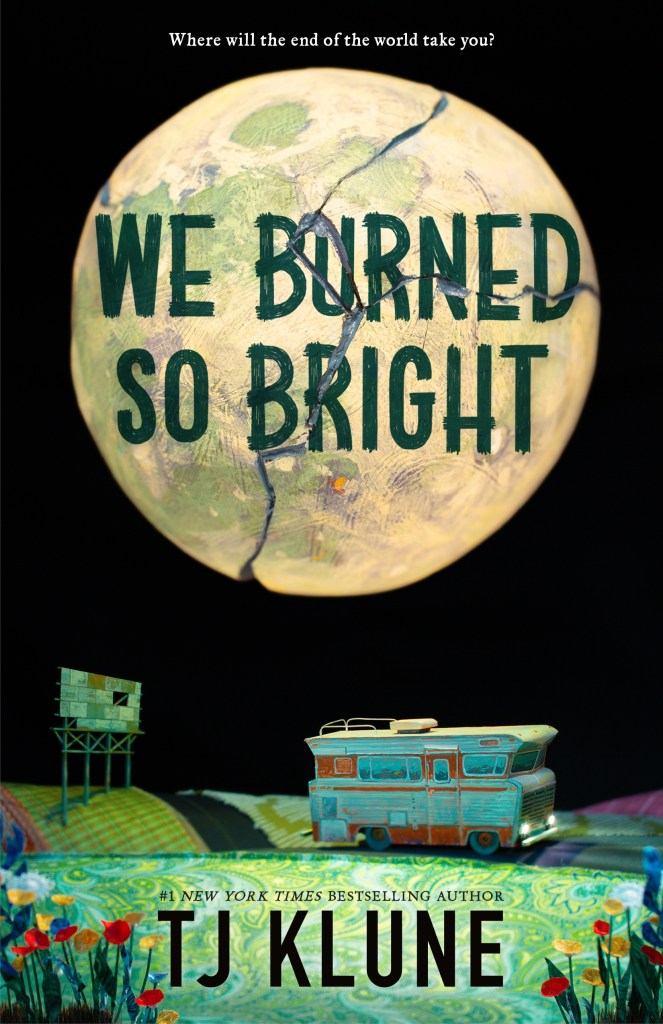
I have been super hit or miss with Klune. He’s definitely the biggest gay author in fantasy right now, but I don’t find myself terribly interested in pursuing his backlog. However, since We Burned so Bright is a novella, featured elderly gay protagonists, and got a reputation for being a tonal shift from his normal writing, I figured it would be worth trying out. I still don’t think Klune is going to be a must read author for me, but this settled some hesitations I had about his older work.

The Premise:
The world is ending. A black hole is slowly consuming our solar system, and everyone’s lives are measured in weeks. Don and Rodney are an elderly couple. As the world ends, they buy an RV and set to travel from Maine to Washington. Along the way, they meet all sorts of folks who are facing the end of the world in their own way. At the end of their journey is a piece of their own past that they never completely came to terms with.

Read If You: want to watch the world crumble, enjoy episodic stories, crave elderly protagonists who don’t descend into stereotypes

Avoid If You: are looking for cozy fantasy, salacious gay romance, or saving the world

Continue reading “Novella Readathon #30: We Burned so Bright”

Novella Readathon #29: Riot Baby

Platonic love is a topic that I’ve been craving more and more of in my reading, especially this month. Riot Baby has been languishing on my shelf for three years, and my craving for sibling bonds explored better than in my previous few reads finally got me to pick it up. I left the story conflicted. What Onyebuchi does well, he does phenomenally. However, I almost liked this story more as vignettes rather than as a cohesive novella.

The Premise:
This book follows siblings Ella and Kev throughout their childhood and early adulthood. Ella has powers akin to Jean Gray (a wide swath of extremely powerful abilities including precognition, destructive telekinesis, astral projection, etc), and Kev is a techie. The book’s main plot comes when Kev goes to jail, warping both his and Ella’s conception of what living in such a world looks like. However, the book doesn’t follow a traditional plot structure (you won’t find overarching antagonists here other than society itself), instead keeping Ella and Kev’s emotional journey as the focal point of the story.

Read If: you want a story about familial – not romantic – love, character centered stories are enjoyable to you

Avoid If: clear plot structures or well-executed speculative elements are important to you


Continue reading “Novella Readathon #29: Riot Baby”

Novella Readathon #19: Cabaret in Flames

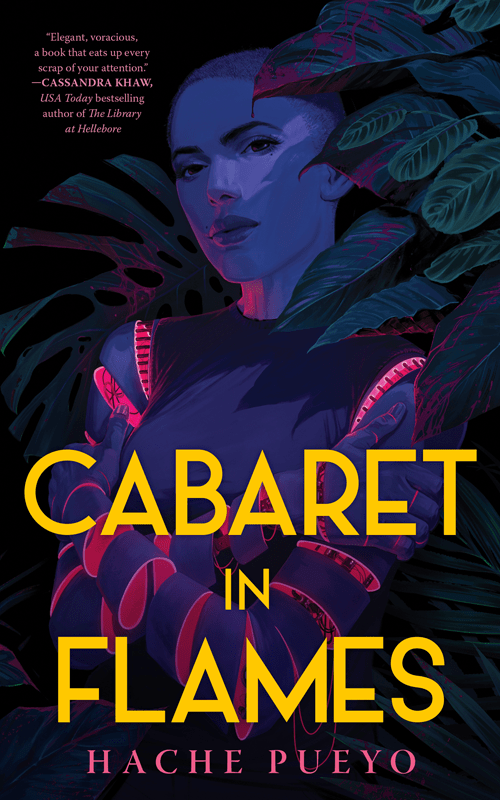
Last year one of my favorite reads was Pueyo’s debut novel But Not Too Bold, which was a delightfully gothic monster romance – with an emphasis on monster. Cabaret in Flames was one of my most anticipated releases of the year, and I’m mostly disappointed in it. As with some of my other three star novella reviews, I still think it’s worth a look for readers who are excited about the specific premise and tone of Cabaret in Flames, but not for a more general audience. 

Elevator Pitch:
Ariadne is a doctor, and her patients are Guls, creatures with unnaturally long lives who can feed only on human flesh and blood. When a strang Gul comes looking for her 5-years vanished mentor, she is forced to confront her dark past that Erik saved her from. This Gul, Quaint, wants to find Erik and asks for Ariadne’s help as they travel to a Rio De Janerio club that serves Guls almost exclusively. 

Read If Looking For: characters processing intense childhood sexual trauma, monster romance, stories unable to be separated from their setting (Brazil, in this case)

Avoid If You Dislike: why the fuck won’t you two just talk to each other!, uninspired prose

Continue reading “Novella Readathon #19: Cabaret in Flames”

Novella Readathon #18: The Iron Below Remembers

Every year there’s a book. A book that blows my mind and makes me want to scream from the rooftops how much I love it. Typically, this book is a little more niche, with choices that keep the story from appealing to the broad audience needed for breakout hits. I’ve championed Welcome to Forever by Nathan Tavares and How to Survive this Fairytale by SM Hallow, and now its time for me to tackle The Iron Below Remembers. This book examines how history gets layered and built, revels in queer sexuality, and uses a superhero framework to focus on the intensely personal. Characterization is consistent and exciting, and our characters aren’t stand-ins for the reader’s hopes and dreams. It’s kind of a perfect mix for me, though there are a few elements that I think will put off the general reader. Certainly it’s a strong contender for book of the year (the only current competition is The God Eaters by Jessee Hajicek). I’m mostly just disappointed I didn’t pick it up sooner.

Elevator Pitch:
Professor Yadav’s specialty is ancient history, specifically the Karthik Empire, a South Asian colonizing force whose lasting impact is comparable to our world’s British Empire. His boyfriend is Ezra/Savior, a beloved superhero with golden retriever energy. When one of Savior’s battles uncovers a pristine artifact of sorcery – whose use and knowledge has been lost to time – Yadav’s connections see him as one of the primary researchers studying it. As his academic star rises, relationship dynamics shift. Woven through their journey are Yadav’s academic musings on the Karthik Empire. 

Read If You Like: superhero settings from the perspective of a normie, fictional academia, relationships as something requiring work and investment

Avoid If You Dislike: abundant talk about sex (but very little actual sex happening), anecdotes that don’t connect with the main plot, footnotes, superhero settings without many superhero plot beats

Continue reading “Novella Readathon #18: The Iron Below Remembers”

Novella Readathon #17: The Whisper that Replaced God

The Whisper that Replaced God has a reputation as one of the better Grimdark novellas out there. I don’t read a ton in this subgenre, but my enjoyment of Michael R. Fletcher’s novels has me exploring it a little more every year. Overall, I found this book very successful and will happily pick up the sequel. Your enjoyment of it is going to depend heavily on whether you enjoy the narrator, so it might be worth reading a page or two before committing to purchasing it. 

The Premise:
Mute is the convenient assassin for his younger brother the King. Born with a gift from The God of Silence, Mute can suck all sound out of the room. His childhood of ostracization and violence have left him mentally unstable, passed over for the throne and obsessed with Dorothy, whom he visits in the brothel whenever possible. When he sees his uncle and Dorothy together, he kills the man in a fit of range, and both Mute and Dorothy are captured by foreign troops. He lives a life without meaning, and perhaps this new adventure will fill that void.

Read If Looking For: depraved and traumatized protagonists, fucked up noble families, the silent scream of a dying man

Avoid If Looking For: happy endings, characters with clear motivation and purpose, exemplars of good parenting

Continue reading “Novella Readathon #17: The Whisper that Replaced God”

Novella Readathon #11: The Lathe of Heaven

As one of the Greats of the genre, I don’t know that I’ll have anything to say about The Lathe of Heaven that hasn’t been said before. I haven’t read a ton of her longform writing, and that’s a crying shame. Honestly, I don’t even think I would have picked this up had 1970s not been on the bingo card this year; it’s been a good kick in the pants that I really need to continue reading older works.

The Premise:
George Orr lives in a world with many problems. War in the Middle East, relentless climate change, and his fear of dreaming. You see, Orr’s dreams have the potential to change reality, rewriting history in radical and extreme ways. He gets caught stealing medications to prevent himself from dreaming, only to find himself in a Sleep Therapist’s office. Dr. William Haber begins to use Orr’s abilities to reshape the world, to improve it and ‘fix’ society’s problems. Orr just wants to find a way to never dream like that again. 

Read If You Like: philosophical science fiction, the ethics of omnipotence, classics in the genre

Avoid If You Dislike: extended explanations of fictional science, abusive therapists, the feeling of hopelessness and lack of control in your life 

Continue reading “Novella Readathon #11: The Lathe of Heaven”

Novella Readathon #7: Autobiography of Red

Two weeks ago, if you asked me the novella I was most excited to read, I’d have responded Autobiography of Red. It’s got several ardent supporters whose taste I trust, it tackles an obscure figure from Greek mythology, a creature whom exists only for Herakles to kill, and it deals in thorny and tragic gay relationships. Unfortunately, what should have been catnip for me ended up as a frustrating reminder of why I tend to avoid Literature. While I’ve enjoyed several novellas with a more Literary bent (most recently On the Calculation of Volume), this one ended up feeling more like work than enjoyment. I do plan to eventually reread it, and I’m hopeful that I’ll get more out of it on a second look, because the bits I liked were really quite phenomenal. 

The Premise:
While there are some introductory materials and extra bits, most of this story is the autobiography of Geryon: a boy and man in the mid-1900s who is red and has wings. This goes largely unremarked in the story. It traces his troubled childhood and teenage affair with Herakles, his listlessness in adult life, and a chance reunion with Herakles that is perhaps not everything Geryon wanted it to be. This is … a poor description, I will admit. I’m not sure how to give a better one though. Mostly it asks you to crawl inside Geyron’s head as he floats through different portions of his childhood and young adult life.

Read If Looking For: Literature with a capital L, tortured souls, photography motifs, blank verse, books that feel like Indie Films

Avoid If Looking For: straightforward narratives, clear happy endings, adventure and thrills, Romance beats

Continue reading “Novella Readathon #7: Autobiography of Red”

Novella Readathon #2: On the Calculation of Volume

I’m not a connoisseur of time travel stories, but On the Calculation of Volume is certainly unlike any other I’ve read, and I was impressed with how this story managed to be intense and restrained at the same time. The book isn’t going to be for everyone – a lot of genre fiction fans will bounce off this, I think – but for people who are interested in something more reflective, this is excellent.

The Premise:
Tara does not know why she has repeated the 18th of November a hundred times. There seems to be nothing remarkable about that day – the first one of course – or even the 17th of November. However, she finds herself in an endlessly looping day, with a husband who thinks she is on a trip to France for work. This is her journal, and Tara is not okay.

Read If You Like: psychologically intense stories, existential slice of life, clear and simple prose, literary science fiction

Avoid If You Dislike: books where ‘nothing happens’, inconsistent time travel mechanics, repetitive plot beats

Comparable Media: The Other Valley, Virginia Woolf’s writing, The Bone Harp

Continue reading “Novella Readathon #2: On the Calculation of Volume”

Japanese Gothic – Time Travel Behind the Sword Ferns

I knew very quickly that this was a new release I wanted to carve out time for. As much as I don’t love derivative naming conventions, I loved Mexican Gothic and had high hopes for Japanese Gothic. Ironically, they are very different types of Gothic fiction, and I don’t think this book references the style of Silvia Moreno-Garcia’s at all. Considering this one is getting a good amount of buzz, I think you can expect to see more [Country] Gothic titles in the future. It’s a shame, because I think Japanese Gothic stands on its own two feet as a really delightful horror story, even if not every element worked for me.

The Premise:
Lee is a college student who fled to Japan after murdering his roommate. His father lives in an old Samurai house with a rotating cast of short-term Japanese girlfriends. Meanwhile, Sen is the son of a disgraced Samurai in the late 1800s, and she desperately wants to live the path of the warrior and live up to her father’s hopes. The world has moved past Samurai, however, and she knows her father’s living breath is a testament to his cowardice, which he takes out on Sen. These two protagonists discover that they can communicate through time. Lee hopes that Sen – obviously a ghost – can give him insight into how he can find the mother who was kidnapped when he was a child. Sen hopes to find details of her family’s fate, for she would do anything to protect them. 

Read If You Like: paranormal time travel, historical settings, turtle myths, a creeping sense of unmooring from reality, psychological horror

Avoid If You Dislike: abusive families, unreliable narrators, dead animals, descriptions that feel claustrophobic 

Continue reading “Japanese Gothic – Time Travel Behind the Sword Ferns”