
I have a soft spot for Cinderella. I wouldn’t describe it as my favorite Fairy Tale, but somehow pieces of it keep capturing my imagination. As a child, I watched the VHS for Ever After so much we had to buy a new copy – I still love it, corny dialogue and all. My teenage self enjoyed the goriness of the Grimm Fairy Tale. As an adult, The Magic Fish became my all-time favorite graphic novel (though that goes far beyond Cinderella). Cinder House enters in the long line of Cinderella tales I adore. In classic Marske fashion, it weaves together the fantastic and romantic elements to find a really excellent balance
The Premise:
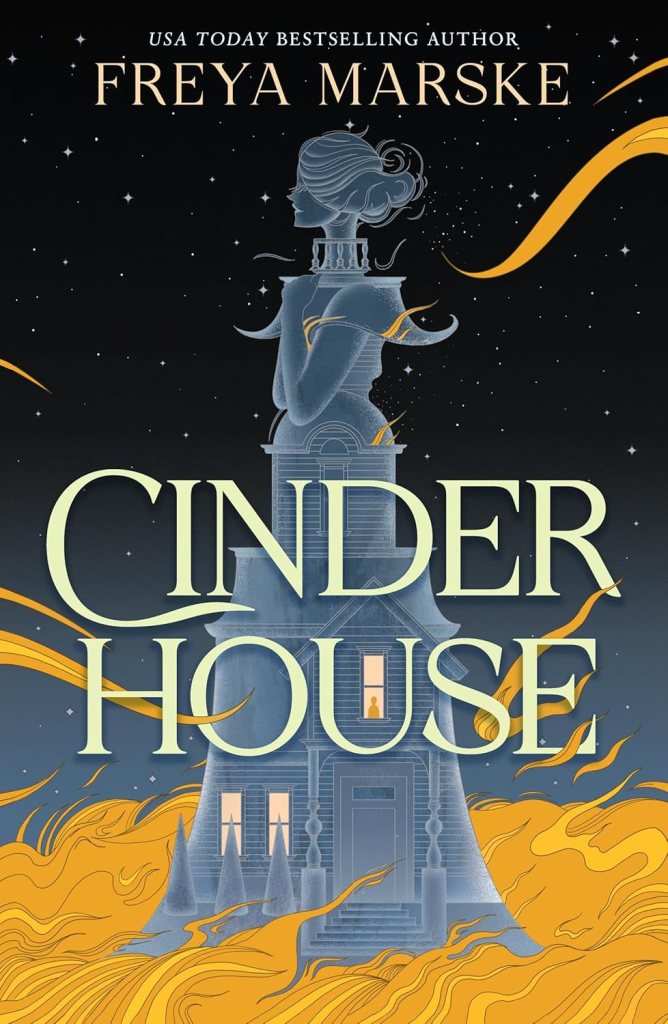
Ella died shortly after her father, killed by a combination of poison from her stepmother and falling down the stairs (but really it was the poison). Now a ghost posessing the house owned by the woman who killed her, Ella cleans and cooks for her stepfamily, unable to live a life apart from the building that has become her body. Cue some classic Cinderella elements, such as the Prince holding a ball to find a wife, which has a lot of the traditional trappings of Cinderella. For the most part, this book is Cinderella + the main character is a ghost who feels the house as her new body.
Read If Looking For: chronic illness coding, the sensuality of bare feet on carpet, a friendly bit of correspondence, your body is a temple
Avoid If Looking For: fairy tales that invert the original, Cinderella that eschews insta-love, criticisms of monarchies
What Worked for Me
Cinder House manages to stay very faithful to the original Cinderella while also striking out in new and interesting directions. All the classic bits are present: the fairy godmother, the ball, the ruthlessly evil stepsister and the slightly less evil stepsister who is more ambivalent than anything else. Ella’s ghosthood fits very well into this framework. Actually, so well that it feels seamless. She does not haunt the house, she is the house. She cleans for the same reason that we take showers. Her family treats her as a literal object – there were a few pseudo-torture scenes that were surprisingly intense – but conversely it makes for some really fun moments of house personification. She is the grudge that the house holds, and the windows are her skin, the roof her hair, and the pipes her veins. Markse even manages to weave ghosthood into the midnight deadline seamlessly, giving a bit more narrative substance to the deadline. Her ghosthood reinforces the motif of being unseen in the original Cinderella tale. The two ideas just marry beautifully, to the point where it makes me wonder whether this isn’t the way Cinderella was always meant to be told. I can’t think of higher praise than that.
Other details get added too. Ella corresponds with a sorcerer as she tries to learn more about ghosts and her new life. Her stepsister is herself a sorcerer, giving her an even greater outlet for cruelty. The fairy godmother is a little less benevolent and a little more mercantile, a Fey in the traditional sense. Within all this however, the core of the story remains the same. I don’t mind radical departures from source material, but this was a great example of how to do a faithful retelling with a twist in a way that works. Nothing detracts from the core of the Cinderella story, which means that people who get pissed off that a girl is falling in love with a man she just met will leave this novella frustrated.
This book is also very much about chronic illness and disability, through Markse will let you draw your own conclusions on that front if you don’t read the author note. I knew this was coming from other reviews, which made it easier to pick out and spot these details. Ella’s ghosthood keeps her from interacting with the world. She is trapped in the house, floating from room to room and feeling everything in the house so intensely, despite feeling nothing at all. Her ability to rave about her interests is limited to letters, which require constant vigilance to avoid her family from discovering. Her brief foray back into corporality – mostly to eat palace food, who cares about the prince – is tempered by the knowledge that these three days will only intensify her sorrow and isolation when she must return to her life without that magic. Even the epilogue – which is a happy ending of a variety that I won’t spoil in this review – sees Ella needing to constantly adjust how she lives to accommodate her incorporeality and invisibility. Her existence is a constant awareness of the barriers that she cannot cross, the workarounds needed to achieve a piece of what everyone else has, and an othering that isolates her from people recognizing her personhood.
Last bit, but the Prince was positively delightful. I don’t want to talk much about him to avoid ruining some delightful nuggets that Marske lays out for the reader, but I found him a compelling foil for Ella. The romance between them was short, but far more believable than most takes on Cinderella portray. Ella is starved for human attention and touch, and Jule has his own shit going on behind the scenes that make the romance on a short timeframe plausible. The specific version of the ending between him and Ella are going to upset some people, but it really worked for me. Mostly though, I love that he’s not a character I’ve ever seen before despite still feeling like a quintessential Prince Charming. As with Ella, he is both very faithful to the original and also completely unique and compelling, and I generally don’t come to a Cinderella retelling expecting much from the Prince.
What Didn’t Work for Me
I don’t have many huge complaints. There’s a moderate one in the next paragraph that is super spoilery. Otherwise, little things bugged me, such as how the sex scenes felt tonally different from the rest of the book, some descriptions of dance didn’t hit the way Markse intended, or how the geopolitical worldbuilding get more discussion than is ultimately warranted by its importance in the text. Just small things that would pull me out of the story, but nothing that was seriously hindering my enjoyment. I don’t think Cinder House was quite intense enough to hit my all-time favorites, but it’s an easy story to recommend, for fans and skeptics of Romantasy both. Do I think it’s award-worthy … I don’t think so. However, my preferences for awards tend towards the Le Guin, and I think this is a solid contender for the type of story that the Hugo Award goes for. I plan on reading many of the other nominees, and I certainly wouldn’t be mad if Cinder House won.
The next paragraph contains major spoilers:
I’ve been writing a lot recently about the prevalence of asshole parents. In the Cinderella story, this is mostly to be expected. The evil stepmother is evil, and Marske doesn’t feel the need to modify that. However, she decided to also make the father an asshole. He dies before the story starts of course, but it turns out that he murdered Ella’s mom, and the stepmother saw the writing on the wall and killed him first. On its face, this is only annoying because the asshole father trope is currently haunting me. However, this plotline didn’t feel developed at all. There were some clues early on that, from a plot perspective, are neat and tidy; some readers will guess the twist but not all. Ella spends no time struggling to recontextualize her relationship with a father she mourned. There is no reflection of moments that weren’t actually as loving as she thought they were. No mentions of how he interacted with his Stepmother to give her clues to his nature that Ella overlooked in her teenage angst. Of course, Patrice murders not just her husband, but stepdaughter as well. Ella goes so far as to say that she “died for nothing – no, she’d died because her father had made this house unlivable for a pragmatic woman.” No, you died because your stepmother wanted the money. Absolving Patrice from your own death makes no sense. This choice was even stranger because there’s no other attempt to humanize or soften Patrice; she’s wretched for the entire book. Ella has a lot of rage in her, so let her rage at both of them. This whole story thread just didn’t feel like it got enough attention to fit in with how seamless everything else was. I wish it had gotten cut or was given more narrative importance. As it stands, her father’s wretchedness lives in a bit of no-mans land.
Conclusion: a wonderful take on the Cinderella story


I read this earlier this year but had a more mixed experience than you. I loved the ideas and how wonderfully the author managed to merge Ella and the house into one complex being. But I did want more from it too. I think that was due to the novella length though and I’ll definitely be trying the authors upcoming dark academia book.
I especially loved the princes story and how it was told. And I liked the more traditional, trickstery fae too. I agree that the father storyline was random though. It so so subtle that I actually saw it pop up as a Goodreads question whether he’d killed the mother or not. I wish it had shown some flashbacks or something as like you said with him never appearing it just doesn’t work. I picked up on it but it lacked any kind of emotional depth.
LikeLike