
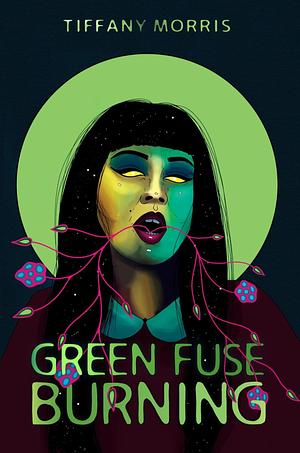
I’ve always enjoyed objects as a frame through which stories are told. The Empress of Salt and Fortune comes to mind, which leverages museum-style artifacts and descriptions through which a story is told. Green Fuse Burning takes a different route: paintings! This is an unabashedly queer indigenous horror that feels multidimensional and more thoughtful than genre fiction normally goes for. It’s the type of book that has a very specific audience in mind, but for whom this book is likely perfection.
The Premise:
When Rita’s girlfriend goes behind her back to get Rita an artist residency in the town her father grew up in, Rita isn’t sure it’s a good idea. The isolation and unfriendly locals light the coal of creativity, however, along with the lingering trauma that haunts her life. This story is told through the lens of the six mixed-media landscapes she paints during her residency, which trace a dark path through her mind.
Read if You Like: books about mental health and suicidal ideation, mushroom horror, internal monologue getting the spotlight
Avoid if You Dislike: racist small town residents, stories where ‘nothing happens’, bad audiobook narrators
What Worked For Me:
Green Fuse Burning is an excellent choice for anyone who is interested in horror that explores a character facing down their own will to live. As we traverse Rita’s paintings – and the experiences that lead to their creation – she comes to terms with the fact that she would like to die, to disappear thoroughly enough that her body won’t be found to distress and traumatize those who come after her. This realization is not a straightforward one, and I appreciated how Morris disconnected the plot of this story – Rita’s inner monologue – from conventional plot structures. Instead, the meandering path that Green Fuse Burning takes feels honest in it’s abruptness. Sudden changes make sense in context of the memories you confront, and the Rita’s focus shift with the tides. Trauma and mental health aren’t simple, and Morris doesn’t attempt to dumb things down for the reader. This book is a mirror and a window, not a summary.
I also really liked the romantic relationship pictured. Me enjoying how love falls to pieces isn’t new – I enjoy exploring the complexities of relationships just as much as I love a simple Genre Romance – and there’s a great sense of tension between Rita and Molly. The abortive attempts to help, to try and assume best intentions despite the nagging suspicions you can’t quite silence. The clarity that solitude can bring, and the panic of clinging to to a relationship even when you aren’t sure it fits into your life anymore. This book is probably not a good one for anyone who’s going through something in their own romantic relationships, as it probably will make any doubts you have worse (unless that’s what you’re looking for, in which case knock yourself out). More like this, please!
What Didn’t Work for Me:
Honestly, I think my biggest issue with this story was the narrator. The whole book was delivered with a very flat affect. Not only was this generally difficult to focus on for longer periods of time, but I also felt like it blunted some of the emotional intensity of the prose. When the main character is having a panic attack, I think it’s worth shifting your narration style at least a little bit. I think I missed out on a lot of intense scenes and imagery that would have otherwise resonated with me. At 104 pages, I plan on returning to this in paper form at some point to give it another shot.
Conclusion: lots to love here, but a poor audiobook experience affected my immersion
- Characters: 4
- Setting: 3
- Craft: 4
- Themes: 4
- Enjoyment: 3

