
The Dawnhounds was the Beyond Binaries Book club pick over on r/fantasy. We had our midway discussion last week and will be wrapping it up on August 27th! This is a book that feels extremely ahead of its time, and fans of Perdido Street Station are going to enjoy it greatly. It’s the type of unapologetically political Fantasy that has been getting more and more traction, but this was written in 2019. I left feeling mixed about this book overall, but I got my concussion right around the halfway point, which definitely is when I started enjoying the book less. For those whom are drawn to the weird worldbuilding and ardently political themes, I think it brings a lot to the table.
The Premise:
Yat is a police officer in a city that has adopted biotechnology to replace the steel and iron of its former oppressors. She tries to do right by the city, but as a queer woman, she gets little respect from other officers. After she is murdered and comes back to life with the blessing of some eldritch power, she gets wrapped up in a conspiracy far bigger than she can imagine. Her path takes her to a pirate crew that has answers about what happened to her, and a realization about the system she worked inside.
Read if You Like: vaguely indescribable interludes, weird cities, characters having a crisis of faith, insect bullets
Avoid if You Dislike: spores, negative depictions of police, the power of LOVE, authors refusing to explain everything
What Worked For Me:
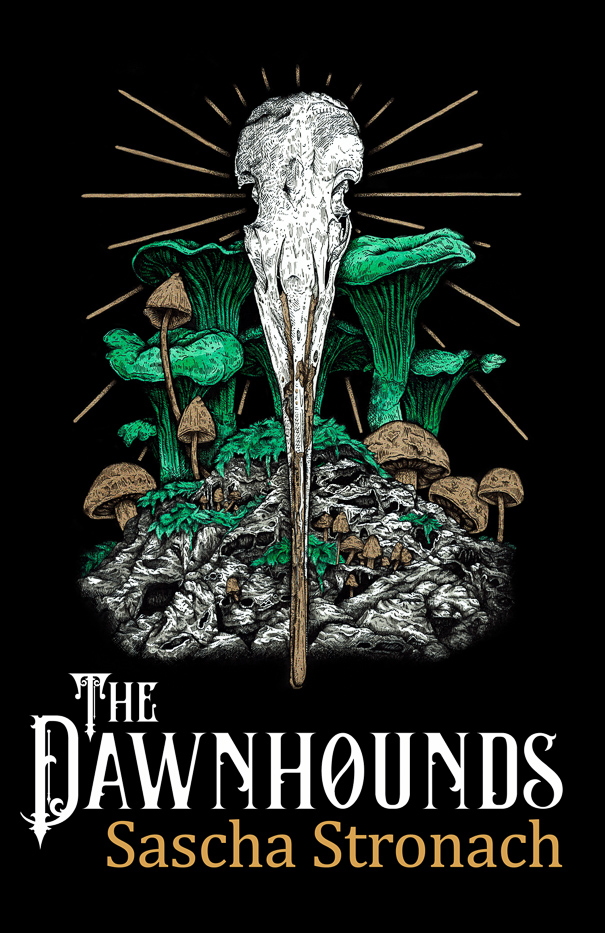
I immediately fell in love with Stronach’s worldbuilding. While I never quite found my footing with the different nations and historical events, the aesthetics were immaculate. Hainak adopted biotech as a counter to the city’s colonizers. Now that the rebellion has won, steel and iron have been outlawed, and natural architecture and body modifications are a statement of political purity. Fungal houses slowly consume their contents if not fed. You can get a custom-grown prosthetic made of vines, but it’ll get taken away if you can’t keep up with loans. Rifles are loaded with insect-bullets who will chew through the strongest bark-armor seeking bone and flesh. The controlling political party wear bird masks and preach about the purity of the cycle of life – and how degenerates like Yat corrupt the city by refusing to take part birthing a new generation. There’s enough social and political familiarity that the alien nature of everyday life doesn’t feel too jarring, but Stronach’s setting isn’t like anything else I’ve seen. The snippets we see of the outside world indicate that that this is a post-apocalyptic setting, complete with robots that are so old they don’t function anymore. Mix this with some gods that feel very eldritch (their chapters were some of my favorites!), and you’ve got a really unique mix of elements that I haven’t seen anywhere else. This is firmly within the New Weird genre without feeling like an imitation of the big names within that field.
Stronach clearly had a lot that she wanted to say about police work – and militant power structures in general. Yat and her partner Sen both think of themselves as good cops, trying to do what they can within a corrupt system. This idea gets deconstructed over and over again as Stronach takes a sledgehammer to the idea that those making quiet positive choices are still complicit in the larger systems of abuse and violence. When the system of policing itself is corrupt and abusive, it is impossible to truly enact positive change from within it. Both of their journeys to recognize the horrors of their organization were satisfying and well-realized. There were so many good and small moments where they were able to see something with fresh eyes and recontextualize their past experiences. Yat, for example, was a street urchin and criminal before becoming a cop. She justifies her (and her people’s) actions by saying they had a good reason to break laws. She promptly gets called out that surely no other criminal could ever have a good reason for turning to crime. Stronach does a great job of stringing together these disparate moments into a wall of anger and thoughtfulness and the fact that this is the world that many of us actually live in. This book neither indulges in police as faceless storm-troopers, nor does it happily skip along ignoring the abuses of nearly every police force on the planet.
I don’t know, maybe me living in the Twin Cities and all the fascist shit that the federal government brought to us this year made this book hit particularly hard, but I thought the thematic work around policing was thorough, fair, and woven seamlessly in the the characterization and plot without getting didactic.
What Didn’t Work for Me:
I feel like I need to acknowledge that I was generally having low motivation and brain fog while reading this book. Yay concussions! It’s hard to know how much of my inability to maintain focus was a result of that vs the second half of the book just not thrilling me as much as the first half. I’d get through five pages and then drag myself off to a nap or to do dishes or … literally anything else.
I do think the The Dawnhounds struggled to keep a coherent plot. Worldbuilding and themes? 10/10 no notes. However, we were introduced to some city political elements, including a looming election that the religious bird faction was worried about losing. We then spend several chapters on a pirate ship focusing on a side-character that felt completely disconnected from the A-Plot that had been previously established, possibly as some setup for later books in the series. When Stronach returns to the city, political tension falls away in favor of a pretty straightforward terrorist thriller that, mushrooms and magic aside, would have fit right in with Season 2 of the TV show 24. This jumpiness left me feeling like the core story was unfocused, and I frequently found myself having to reread pages to figure out how we got to the current situation.
The most frustrating part was that there were many spots that felt intentionally confusing that worked spectacularly! Specifically, Stronach would pop out to other parts of the world, sink into the mind of a deity, muse about the meaning of water to a fish, and I had no idea what was happening, but it felt evocative and intentional. Like the puzzle pieces were missing, but I could see just enough of the finished picture to fall in love with it. However, there were many times I felt disconnected from the story despite feeling like it was written in a straightforward style. It was really tough to put my finger on, which is why I suspect I may be at fault here, at least in part.
I also have some fairly serious issues with how Stronach handled the ending. It’s clear she wanted to push back against the Dead Lesbian Syndrome. However, she took the strangest path to get there, and made the climax feel unearned. There were far more sensible ways to achieve a happy ending for Yat that didn’t feel dangerously close to Deus-Ex-Machina.
Conclusion: wildly ambitious, with so many cool ideas thrown into a blender. I found the second half generally disappointing, but it was such a great setting that it was still worth it in the end.
- Characters – 4
- Setting – 5, this is the big highlight that will bring people to the book
- Craft – 3
- Themes – 5
- Enjoyment – 5 (first half) 2 (second half)


The world-building and everything that it has to say on policing has me completely intrigued! But man, the ending sounds a bit frustrating. If I ever get my hands on this, I’ll consider myself warned. Thanks for this review!
LikeLike