Interview With The Vampire – A Turning Point in Vampire Stories

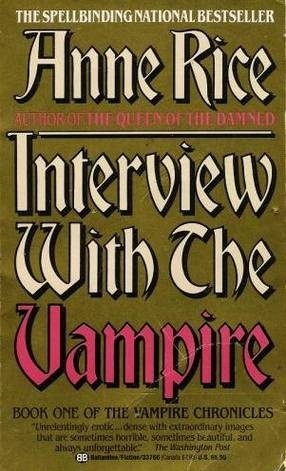
Interview with The Vampire has been on my read list for a while. Actually, I’ve been interested in exploring the history of vampires a bit more deeply once I realized that the three original vampire novels (The Vampyre, Carmilla, and Dracula) are all super queer. Interview with the Vampire represented a shift in how modern vampires were written. Rice placed them at the center of the tale instead of as an antagonist to be vanquished. As with its predecessors, it’s also super queer-coded. I think I came into the novel with incorrect assumptions about what this book would be, which led to this being a more disappointing read than I was hoping for.  In the end I enjoyed it, but I wish discussion about the book was more accurate to the reading experience.

Read If Looking For: musings on the nature of immortality, immoral protagonists, interesting monologues

Avoid If Looking For: two gay-coded dads raising their vampiric daughter together, main characters who didn’t own slaves, traditional plot structures

Continue reading “Interview With The Vampire – A Turning Point in Vampire Stories”

The Buffalo Hunter Hunter

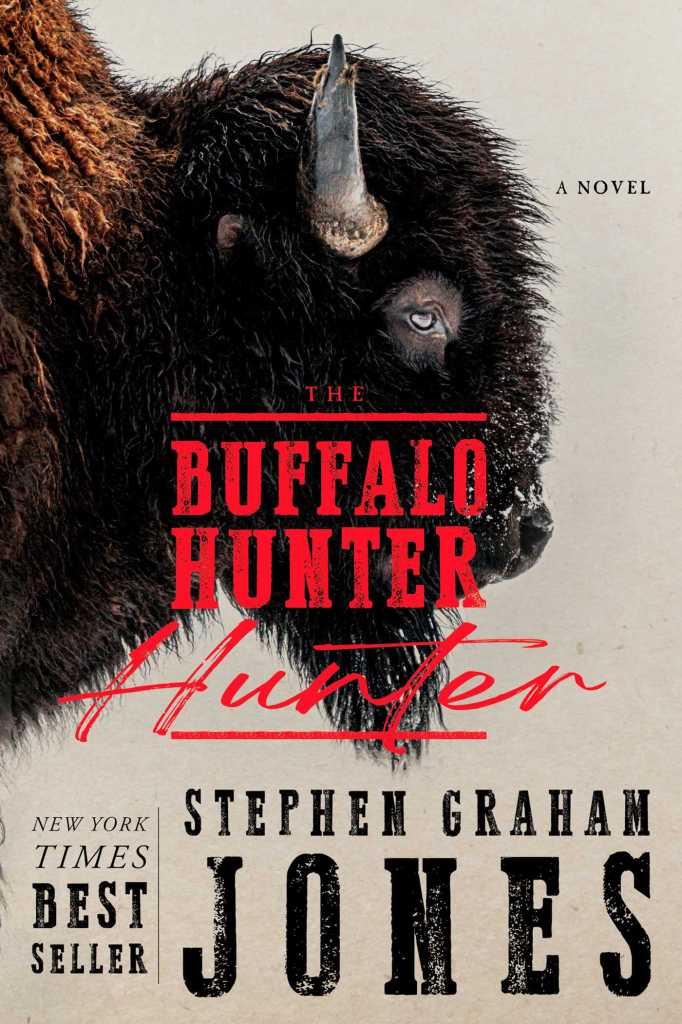
As I continue exploring whether or not horror is the genre for me, Stephen Graham Jones has flitted in and out of my orbit. I had mixed feelings about Mapping the Interior, but Buffalo Hunter Hunter not only had glowing reviews, but also has one of my favorite covers of all time. There’s a lot to love here, but I found myself wishing it were a lot shorter than its actual length. Mixed feelings overall, but Stephen Graham Jones is definitely an author I want to read more of, because the parts of this book that worked really worked.

Read if: you like epistolary horror and framing narratives, enjoy framing narratives and/or epistolary formats, don’t care if the dog dies

Avoid if: you prefer books that get to the point right away, want traditional vampire representation, have an aversion to graphic depictions of violence – including historical events

Comparable Works: The Route of Ice and Salt, The Black Hunger, The Woods all Black

Continue reading “The Buffalo Hunter Hunter”

The Paper Menagerie and other Stories

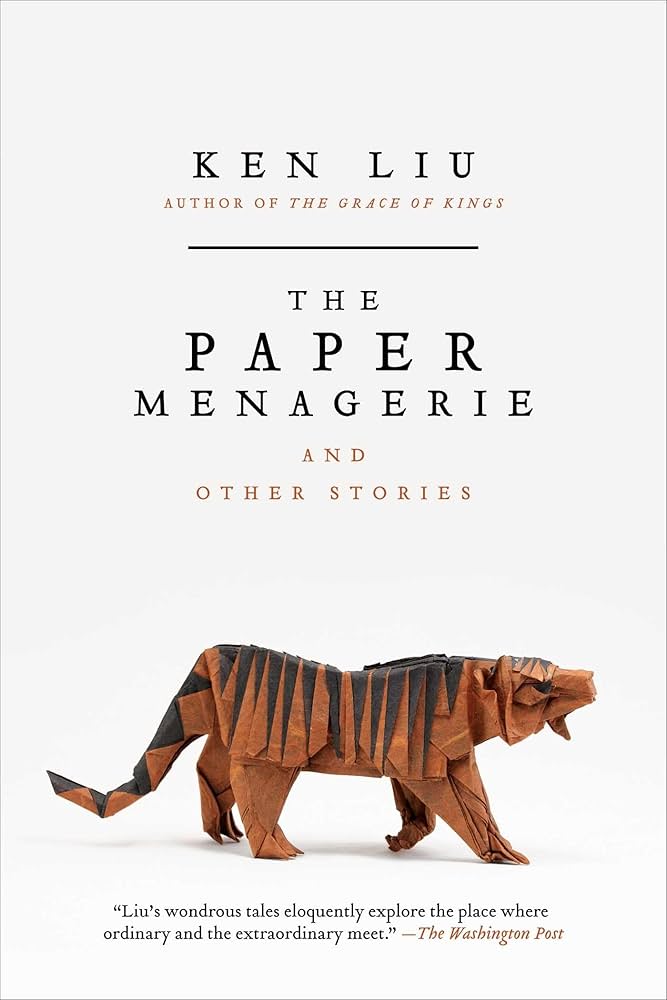
One of my 12 Must Read Books of the year, The Paper Menagerie and Other Stories is the type of collection that gets spoken alongside Stories of Your Life and Others, by Ted Chiang. I think this is a classic example of when I need to divorce my own reading experience from the hype a title collects as it gets recommended and re-recommended. Ultimately, this was a good collection (especially in the midpoint and back half). However, it didn’t match the pedestal I had placed the book on. In fact, I don’t think it would hit my top 5 anthologies of all time, and I haven’t read that many. I think I was expecting a bit more magic, a bit less of a history lesson. And while history lessons aren’t bad, Liu’s approach in some of these stories felt less like storytelling and more like lecturing. It didn’t help that some of the weaker stories (in my mind) were placed up front, and that Liu is perhaps too fond of parallel narratives as a framing device for his shorter work. Not a bad technique, but tiring and predictable when they come in a constant stream.

The collection was at its most successful when it explored ambiguity, moral nihilism, and the complexity of family relationships. All of my favorites explored various familial ties (an estranged father and daughter, a woman navigating the grief of her dead daughter, a son’s reflection on how he treated his mother, etc. There’s some emotional gut punches, interesting thought experiments, and moments of wonder here. Had I entered the collection with no prior knowledge, I think I’d have enjoyed it more.

Below are my short thoughts on each story. However, my highlights were Simulacrum, The Regulator, The Paper Menagerie, and The Man Who Ended History: A Documentary

Continue reading “The Paper Menagerie and other Stories”

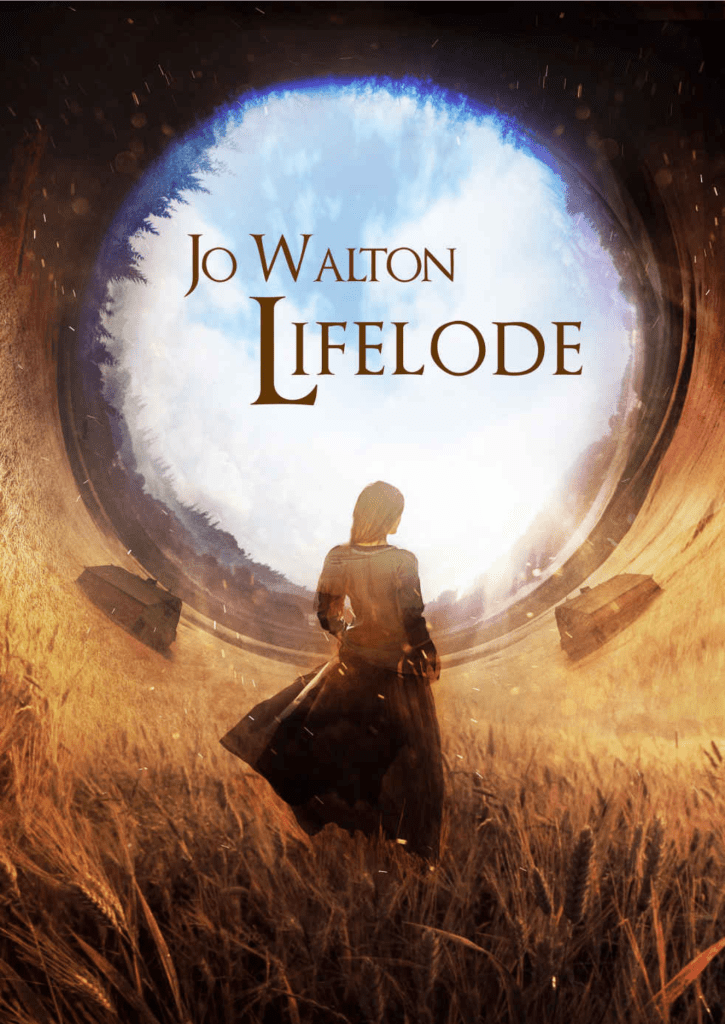
Lifelode – A Domestic Fantasy to Chew On

I am so happy that I read Lifelode. It isn’t a perfect book, but I love how it defies easy comparisons and pushed boundaries of fantasy in the 2000s structurally and thematically. It’s got delightfully weird worldbuilding and, if pressed, would use One Hundred Years of Solitude as the closest comparison I’ve read (though even that isn’t right). More selfishly, it’s also probably one of the best books I’ve read for a book club, simply because I think Lifelode makes so many bold choices that will spark interesting discussion. Certainly my views here on how Walton handled theme don’t seem to be universally shared amongst those who, like me, ended up reading far ahead for our midway discussion. Lifelode isn’t necessarily a dense book, but there’s a lot of interesting choices here which set a great foundation for discussion whether you loved or hated the directions the story took. 

Read if Looking For: books without easy comparisons, celebration of traditionally feminine work, Gods as hiveminds, reimagined family structures

Avoid if you Dislike: pastoral settings, relationship drama, complex family trees, peas, petty characters

Continue reading “Lifelode – A Domestic Fantasy to Chew On”

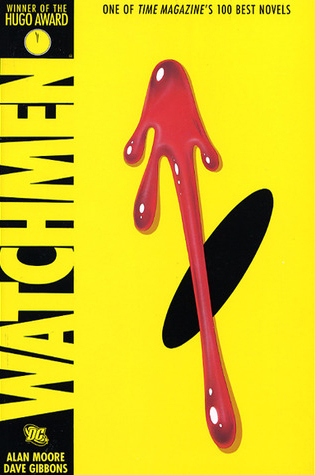
Watchmen

Watchmen has been touted as one of the best comics to come out of all time. Historically, many such novels lauded as ‘all time bests’ in the fantasy and science fiction genres have not lived up to the hype for me. Watchmen however, feels like the real deal. It’s dark and gritty, a take on superheroes that feels more nuanced than other deconstructions of superhero stories I’ve seen (such as Hench, Steelheart, or The Boys, all of which I very much enjoyed). It’s tough to read in a lot of places, and not a story I was interested in binge-reading. However, the juice was absolutely worth the squeeze, and I think it has a lot of important things to say about America and its fascination with superheroes. 

Read if Looking For: layers of theme, episodic chapters, cold war stories, low powered supers (mostly), comics that get studied at colleges, epistolary comics

Avoid if Looking For: mindless fun, protagonists who are good people, books free of sexism and homophobia, diverse protagonists

Continue reading “Watchmen”

Regicide: Saints of Firnus

Every once in a while a book recommendation passes beneath your nose that captures your attention. Regicide was that way. It started with a compelling cover, a blurb that promised grimdark fantasy elements, and a lack of clear romance plotline. It lived up to some of those promises and had some legitimately interesting developments, but was undercut by a dire need for another readthrough and round of proofing and edits.

Read if Looking for: Redwall for adults, morally upright protagonists in dystopian worlds, author-created illustrations, characters who happen to be gay

Avoid if You are Looking for: polished prose, multi-POV stories, deep themes or nuance, romance, books without depictions of intense racism, lots of magic

Continue reading “Regicide: Saints of Firnus”

Mister B. Gone

I’ve known the name of Clive Barker for a while now. Hellraiser is influential enough that even someone who absolutely despises horror movies knows its basic imagery. He’s an author lauded as a pioneering queer writer and an author I had no intention of touching with a 10 foot pole. Mister B. Gone was recommended to me by a friend who swore it was their favorite book of all time though, and so I took the plunge into this dark comedy. It wasn’t a perfect book, but the writing was engrossing enough that I’m curious to try some of his books that are more widely lauded.

Read if You Like: Fourth-wall breaking, morally bankrupt (but likeable) protagonists, humorous asides, demons and angels

Avoid if You Dislike: books without a strong A-Plot, engrossing climaxes, straightforwardly gay characters

Continue reading “Mister B. Gone”

The Black Hunger

As part of pride month, I’ve been doing a lot of thinking and discussing about how avoiding problematic tropes can lead to more problematic tropes. Bury Your Gays (other than being a Chunk Tingle novel I very much want to read) is a classic example of authors, playwrights, and screenwriters killing off queer characters as a way of saying this person was bad and immoral sort of like how literally every Disney Villain dies due to their own character flaws. That trend is bad and problematic, but its backlash led to such predictable happy endings that I didn’t get the same beautiful tragedy and sadness in queer speculative fiction that I could find in cis/het works. Thankfully, I think this is being seen and rectified, mostly by queer authors themselves. I’m all for tragic gays making a comeback.

The Black Hunger is a great example of how bad endings for queer characters isn’t problematic on its own. It’s only bad when used as a way to demonize queer folks. And while I had some issues with the book, I had a great time with it as part of my continued exposure therapy to the horror genre after being traumatized by watching The Mummy when I was five (I still don’t like beetles to this day). Unfortunately, this book struggled in other areas, mostly related to depictions of Buddhism, which will rightly be a dealbreaker for many.

Read if Looking For: older gay male representation, evil cultists (and Russians), far too many teeth, slow burn gothic horror

Avoid if You Dislike: multiple narrators, Epistolary novels that don’t read like letters, authors taking liberties with real-world religions without getting it quite right

Continue reading “The Black Hunger”

Empress of Salt and Fortune

I credit my relatively newfound love of Novellas to Empress of Salt and Fortune. I used to be the type of reader who loved doorstopper books – and I still do! – but had a ‘more is always better’ approach to books. Now, I think that the length of a novella gives space for writers to do really interesting, focused stories. I tend to find them more cohesive on the whole, and Empress of Salt and Fortune is a great example of Novellas at their finest.

Read If Looking For: framing narratives, the human impact of rebellions, emotional stories, character studies

Avoid if Looking For: traditional action and politics to happen on screen

Continue reading “Empress of Salt and Fortune”

Convergence Problems

I don’t read a ton of short fiction, but I’ve been trying to pick up more anthologies after loving Exhalation by Ted Chiang. Convergence Problems features the story A Dream of Electric Mothers, which is one that had been on my list to try out. What I found was a book of stories I burned through in a few afternoons.

Read If Looking For: anthologies, gorunded Sci Fi, parallel storytelling, the link between cultural beliefs and technology,

Avoid if Looking For: a novel,

Continue reading “Convergence Problems”