
This book was a match made in heaven for me. Queer yearning? Check. Unconventional and bespoke prose? Check. Thematic depth without being preachy? Check. The Wolf and His King I’ve read in a long time. I didn’t love how they tackled writing the ending, but The Wolf and His King is a book I will be happily shoving into the hands of my friends.
As a note, those looking for a traditional Romantasy story will be disappointed. There are absolutely romantic elements to the tale, but you won’t find the story focusing on Bisclavret and the King’s developing relationship. The book is more interested in each of their personal journeys, despite their mutual affection for each other. Like other books that are sort-of-technically Romances that don’t read like most books in the genre, The Wolf and His King is best viewed as a book that happens to include some romance elements, which I think will help temper some misplaced expectations based on how the book has been pitched.
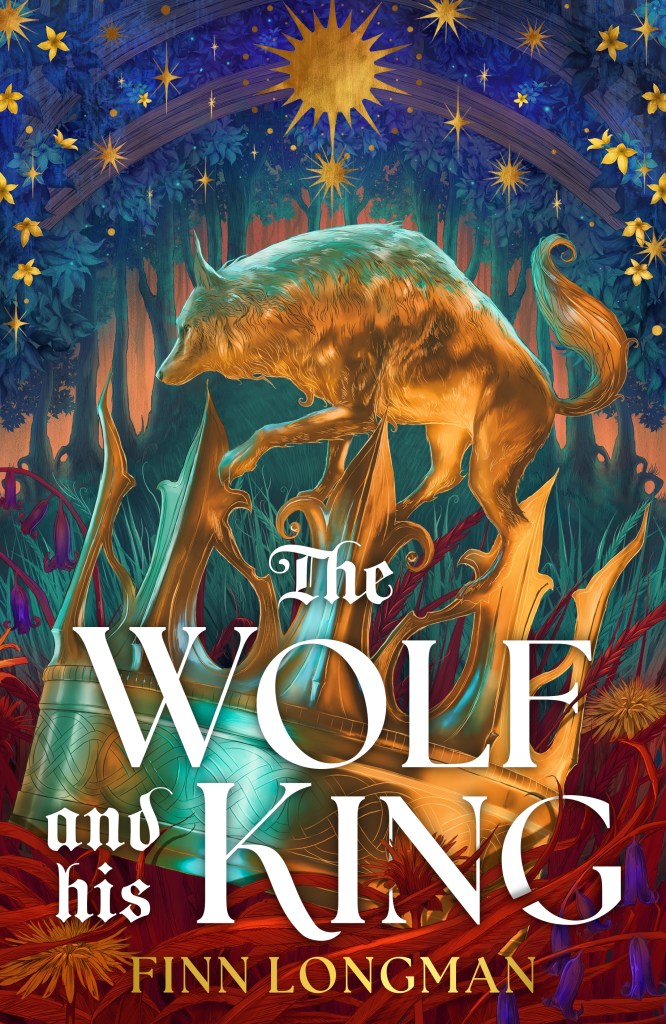
The Premise
Bisclavret lives in a self-imposed exile. He turns into a wolf against his will, and fears that venturing to court will put himself and others in danger. When the King dies and the new King returns from his own exile though, Bisclavret has no choice to but venture forth and swear fealty to the King. The King, meanwhile, is awash with self-doubt and a search for meaning about what type of King he’d like to be. He is taken immediately with Bisclavret, and the two form a close bond while each struggles to find a good path forward with their life. And the Wolf? The Wolf is always present, waiting to come out.
Read If Looking For: dreamlike prose, characters exploring their own self-doubt, a marriage of theme and structure
Avoid If Looking For: critical examinations of monarchies, fleshed out female characters, leads who are proactive
Comparable Media: Song of Achilles, This is How You Lose the Time War, Spear (by Nicola Griffith)
What Worked for Me:
Longman had no business doing so many innovel. This book is packed full of ambitious decisions that (usually) pay off in spades. Each perspective is written in a different mode: Bisclavret’s story is in 3rd person, the King’s is in 2nd person, and the Wolf is written in verse. Typically, each character is caught up in their own thoughts, without a traditional sense of conflict or rising action, but this introspection is served well by these choices. A good example of how Longman blends form and meaning is by looking at names. Bisclavret is our only named character (most are referred to by their title, role, or some form of physical appearance). You’d think this would be confusing, but I actually felt that it lent itself to how Bisclavret felt himself separated from everyone else in the story; his name and identity were the very things that kept him from truly embracing his newfound comrades despite quickly becoming a beloved figure at court. Meanwhile the King desperately wants Bisclavret to use his name, but he can never quite seem to bring himself to do so.
This novel felt like something between a dream and a fairy tale. In Longman’s authors’ note, they share that medieval writers took plenty of liberties with story and setting, and they plan to do the same. The Wolf and His King lives a bit unmoored from a specific time and place, instead wandering through our idea of medieval society layered with a more thorough understanding of courtly love and ancient societies that Longman brings to the table. The sentences are long and full of asides and clarifications, rarely having less than two commas. The experience of reading the prose in this book is wandering through the woods at twilight; you aren’t making much forward progress through the woods, but the walk itself feels like a small piece of magic in your pocket. The lack of names and focus on internal dialogue plays into the atmosphere as well, preventing you from feeling like anything is concrete except for the emotions and fears of Bisclavret and the King.
Monstrosity being used as allegory is nothing new in novels, and Longman’s decision to embrace Bisclavret’s lycanthropy as an allegory for both queerness and disability itself isn’t innovative. However, they did a fantastic job of executing on this theme in thought provoking ways. Bisclavret isn’t able to stop thinking about the Wolf. The beast comes and goes, remaining frustratingly inconsistent in how often it rears its head. He lives in fear and anticipation of the next time his condition flares up, building his life and routines around the transformations. He particularly finds the loss of hands horrifying, associating it strongly with his own humanity. I appreciated that little fixation as a quirk of character in what could have been a bland transformation. It impacts how he interacts with others, especially his cousin whom has known about his condition since childhood. While there are so many quotes I could pull to illustrate Longman’s thematic work, this has lingered with me
The best I can do is try to live despite it – which I thought was the philosophy you were encouraging me to adopt. You cannot now drive me back into fearful timidity because the limitations of that idea have made themselves known.
Bisclavret lives in a constant state of tension between what he believes himself to be, what others believe him to be, and the sense of freedom and possibility that keeps hanging within grasp. As he experiences more and more access to the life he dreamed of at court, he opens himself up to greater loss and his relationship with his condition shifts. It was nuanced, thoughtful, and I wouldn’t change a thing about how Longman wrote Bisclavret’s lycanthropy. Bisclavret is always aware of the wolf, even when it isn’t actively rearing its head. His whole life revolves around this one thing, even when other people don’t see that in him.
I’ve raved quite a bit, but I also want to take a second to acknowledge how well-written the side characters were. Each feels like a real human being with their own lives and considerations. The King’s friend, a scholar he brought back with him from a foreign land, is particularly compelling as a queer side character who stubbornly refuses to adhere to cliche. It’s worth noting that there’s only one female character of any note – the King’s ward – and while I thought her writing was nuanced and thoughtful, those looking for a strong female cast in stories featuring queer men will be disappointed.
What Didn’t Work For Me:
Let’s begin with the goodreads blurb. If you haven’t already read it, please don’t! It spoils some of the key events that happen ~60% of the way into the book. It baffles me why the publisher would make this choice, because it fundamentally alters the way I viewed a lot of events in the middle portion of the book. I know that many authors choose not to read these types of blurbs, but as someone who generally finds them helpful as I’m screening books, it would be great if these summaries could be written with thought and care to how it affects the experience of actually reading the book.
I also think that the first half is much stronger than the second. I read this book for the Beyond Binaries Book club over on r/fantasy, and at the midway discussion I was convinced this was going to be a contender for my book of the year. Now, I can say that I liked it a lot, will eagerly recommend it to others, and that it takes a lot of big risks in style and structure that pay off.
Unfortunately, while the second half of the story maintains the beautiful language and attention to characters’ internal monologue, I found the plotting and thematic development to be less successful. The metaphor of Bisclavret’s monstrosity as queerness or living with disabilities remains, but feels much looser and less insightful. It breaks down around some key moments in the story altogether. The climax of the story arrives with sudden abruptness, and revelations come to characters without any foreshadowing or build up. It felt like Longman had a specific length of story in mind, but they forgot that they needed to build towards the ending until they had 30 pages left. It made the conclusion feel rushed, and certain parts of the ending unearned and convenient. Other portions of the story, such as ancient France’s relationship with queerness, gets left behind altogether.
Longman didn’t stick the landing, but there’s enough in The Wolf and His King that I loved that their next novel (which takes on Welsh myth) will be an easy buy for me.
Conclusion: a gorgeous and unique book that doesn’t quite stick the landing.


Literally had this on hold and just borrowed it from the library today 😁 Glad you explained about the romance, I’m still excited to read it, but I do like having the right expectations. I wonder how I’ll feel about the POV choices and dreamlike writing, that can be hit or miss for me, but it sounds interesting. It is always a weird choice when the descriptions spoils a book, but I think I’ve sorta forgotten this one, and I’ll avoid reading it again lol.
LikeLike