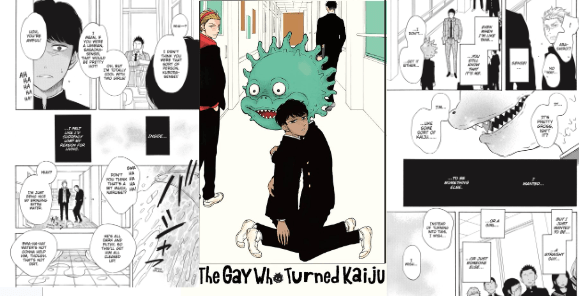
I really don’t know what to make of this manga. The Gay Who Turned Kaiju is the type of book where it makes a single really big choice, and how a reader responds to that choice is going to define their experience with the entire book. The story walks a tightrope between important (and uncomfortable) themes and wantonness. I can’t figure out which side it falls on. If protagonists committing sexual assault is a hard no for you, then avoid this one.
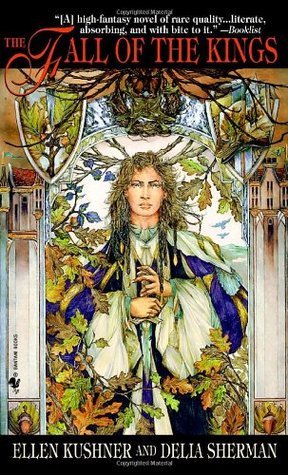
I finally got around to reading the third – and final – novel in the Riverside series. While it is a sequel, they can really be read in any order or can stand alone just fine. In this entry, we trade swordplay for academic debate. Other than the shift from sword to pen however, the structural DNA of The Fall of Kings fits with its predecessors. Expect gorgeous prose, political intrigue, problematic queer leads, and lots of guys cheating on their wives.
The Premise: Theron Campion is the heir to House Tremontaine, but he’s more interested in his various affairs than learning anything of politics. His newest infatuation is Basil St. Cloud, a Doctor of Ancient History who is angling for the Horn Chair and a significant pay bump. As the two kick off an affair, Basil begins to grow more and more infatuated with the idea that the ancient Wizards actually were magic, and that the Kings had a magical connection with the land. Theron, funnily enough, is a descendent of both the ancient Kings and the Duke who slew the last one. Their romance, politics (family, academy, city council), and emotions get swept up as part of the newest chapter of a very, very old story.
Read If Looking For: the cluttered posturing of university professors, morally and emotionally dubious characters, slow pacing, the importance of idle gossip
Avoid If Looking For: fleshed out female characters, the swordfights of earlier Riverside books, a book where you understand how the magic works
Comparable Media: Greenwode, The Goblin Emperor, Downton Abbey
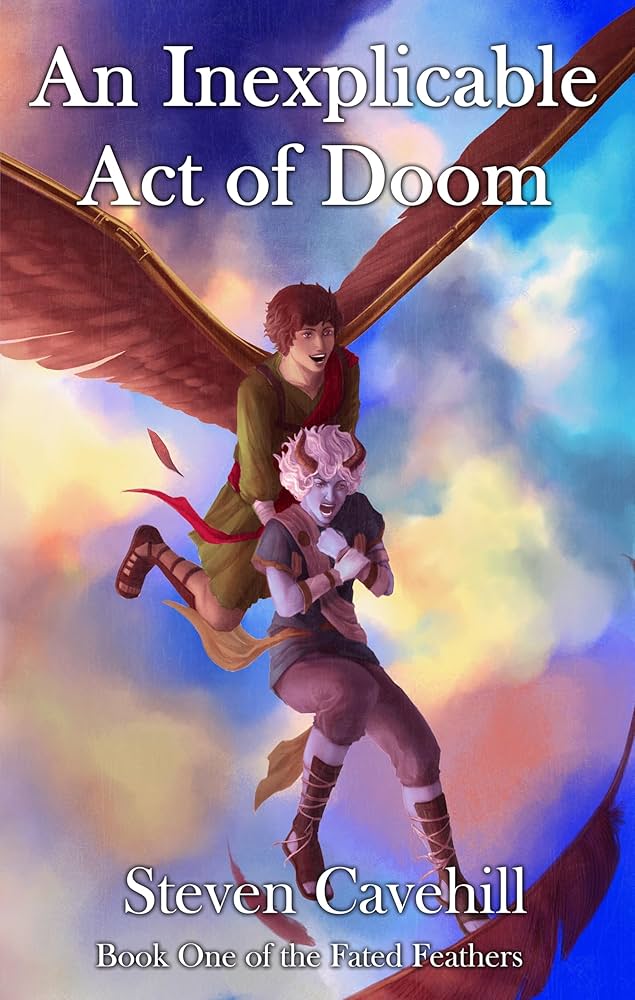
I grew up loving Greek Mythology and imagining that half the characters in the books I read were actually gay. I would have loved An Inexplicable Act of Doom, and wish more books like this had been published when I was a kid. While written with kids in mind, I think adults looking for a more low-key reading experience will enjoy it a lot as well. Plus who doesn’t love a sweet romance between a god of your inevitable and unexpected doom with a guy who’s supposed to perish horribly while flying through the air on mechanical wings?
The Premise Moros, also known as Doom Incarnate, has been tasked with arranging the death of Icarus to appease Posiedon (who’s still pretty upset about the whole King Minos situation and is taking out his anger on anyone remotely involved). Icarus has been living in a tower on a deserted island for the past ten years, and has just built one of his late-father’s designs: a pair of mechanical wings. Moros can tell Icarus is about to die horribly and decides, against his orders, to intervene in order to save the young man from certain death-by-gravity. This sets them both on a journey that will thrust them into the machinations of the gods as each tries to defy what the Fates have foretold for them.
Read if Looking For: harmless bickering, Greek Gods as narcissistic assholes, cozy adventures, witch Aunties who give great advice
Avoid if Looking For: typo-free books, positive depictions of Theseus, nuanced or complex themes & characters
Disclosure: I was asked to be an ARC reader for this book in exchange for an honest review, though I think this was closer to a final Beta-Read than a true ARC. I did also request that Cavehill would donate a single copy of the physical book to my classroom library for my students to read. I think they’ll quite enjoy it.
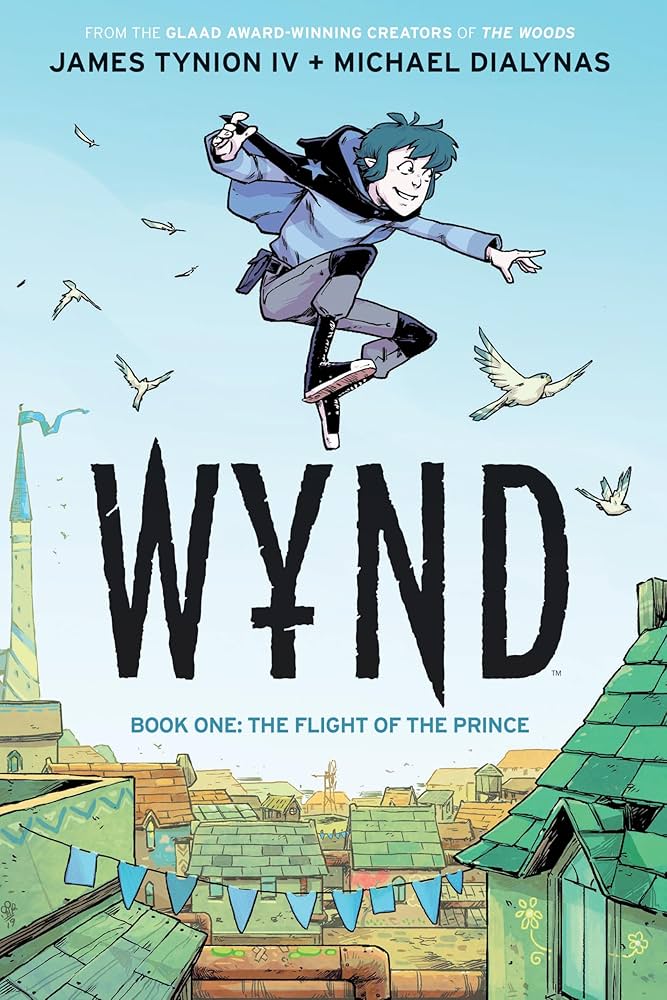
I picked up the first book in this series as I collected books for a class on Queer Comics and Cartoons. It didn’t end up making the cut as a whole-class read, but it quickly found its way into my classroom library and has become quite popular. While the series isn’t quite finished – final book is releasing this year! – I figured finishing book 4 was enough to write a review about the series more generally. It won’t tickle the fancy of anyone looking for serious or deeply thematic fare, but it’s fun and quick and a truly delightful kids book that I think many adults would enjoy as a casual read.
The Premise: In a city where being touched by the unnatural wilds marks you for death, young Wynd hides his ears at all costs. However, Pipetown is simmering with tension, and few realize how close the continent is to open warfare. Wynd ends up fleeing with a reluctant prince, a cute gardener, and his adoptive sister, and his adventures put him in contact with several human factions, a bug-faerie culture in the midst of its own political revolution, and a very militaristic society of vampires.
Read if: you love classic fantasy tropes, comics with vibrant illustrations are your style, faeries-as-bugs sounds fun
Avoid if: simplistic morality will bug you, you dislike chosen ones & prophecies, fantasy racism isn’t a worldbuilding trope that works for you
I’m almost positive that my yearly romance kick has faded away for the time being. I’ve been settling back into some meatier fantasy/science fiction as I try and clear my shelves to prepare for r/fantasy’s yearly bingo to pick up again and I pivot to reading a lot of gay stuff again (probably including romances). It was a tough winter in Minnesota this year, which explained why I binged so many romances. They’re listed below in approximately the order I enjoyed them.
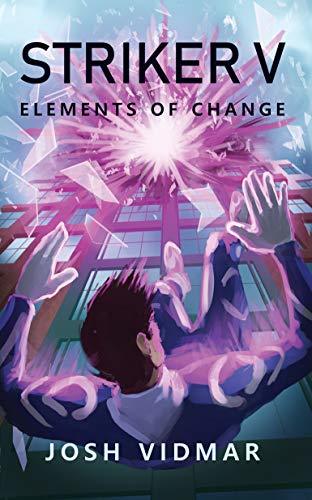
This was meant to be a book I read when I was on the treadmill, taking a break from curriculum writing, or when I couldn’t fall asleep. The type of story it didn’t matter much if I drifted in and out of. I was reading it on my cell phone, not even a damned e-reader. Striker V gripped me in the early chapters and didn’t let me go for a good long while. This novel examines Superheroes from a more person-first perspective than the standard, caring just as much about how humans would react to the constant violence of superhero activity as the fights themselves. It didn’t quite stick the landing, and I have some issues with the resolution of the story. However, it did things I haven’t seen much in superhero stories, and those bits felt just as interesting as The Watchmen.
Elevator Pitch: Striker is the fifth superhero with his name. He’s got seven years until retirement and two years until he reaches his heroic lineage’s average age of death (none have survived to retire). He’s got big muscles, a massive healing factor, and some touch-based mind syncing. He’s been worn down by the constant pain of his existence, the fear that no matter what he does his bones will be ground to dust over and over while the public excitedly waits for him to fall from a skyscraper one more time so that Subway will give away free promotional sandwiches. The shifts have been longer recently with increased villain activity, and the book opens with him in a desperate battle against his best friend in the world, who has just now gone rogue.
Read if Looking For: mental health struggles, governmental bureaucracy (and sometimes humor), dystopian superheroes, happy endings
Avoid if Looking For: nuanced climaxes to nuanced conflicts, creative superhero powers, villains that make sense, tonal consistency
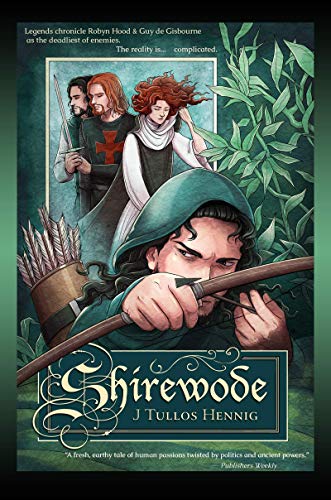
December this year has, apparently, been the month of mildly disappointing sequels. If you’d like to see my review of book 1 in this take on gay Robin Hood, see Greenwode. It lost a lot of the things that made it interesting, rehashed old ground, and didn’t succeed in raising the stakes of book 1 in a satisfying way. Just frustrating all-around. I think it’s a good recommendation for people who want fantasy gay yearning, but I needed the series to move past that.
You would think from this cover art that archery and action were going to be at least a little more prominent in this book? Too bad! Think again!
If you loved and wanted more of the ‘enemies by fate and religion’ vibes in book 1, you may like this one a lot more than I did. It remains the focal point of the series.
The Premise: Book 1 ended pretty tragically. Gamelyn thinks his first love is dead. Rob thinks his first love betrayed him and is responsible for the death’s of his parents and sister. The Abbess and Sherriff are just generally horrible people. Book 2 picks up several years later as Gamelyn returns from his time in the Crusades as a Templar. Meanwhile Rob is finally the bandit we all knew he’d become. Gamelyn is assigned to hunt down the false pretender to the pagan god’s power by the Templars, not realizing the love of his life is actually alive and the very man he’s hunting. Meanwhile, Rob’s sister Marion is also alive, has amnesia, and is the kept pet of the evil Abbess.
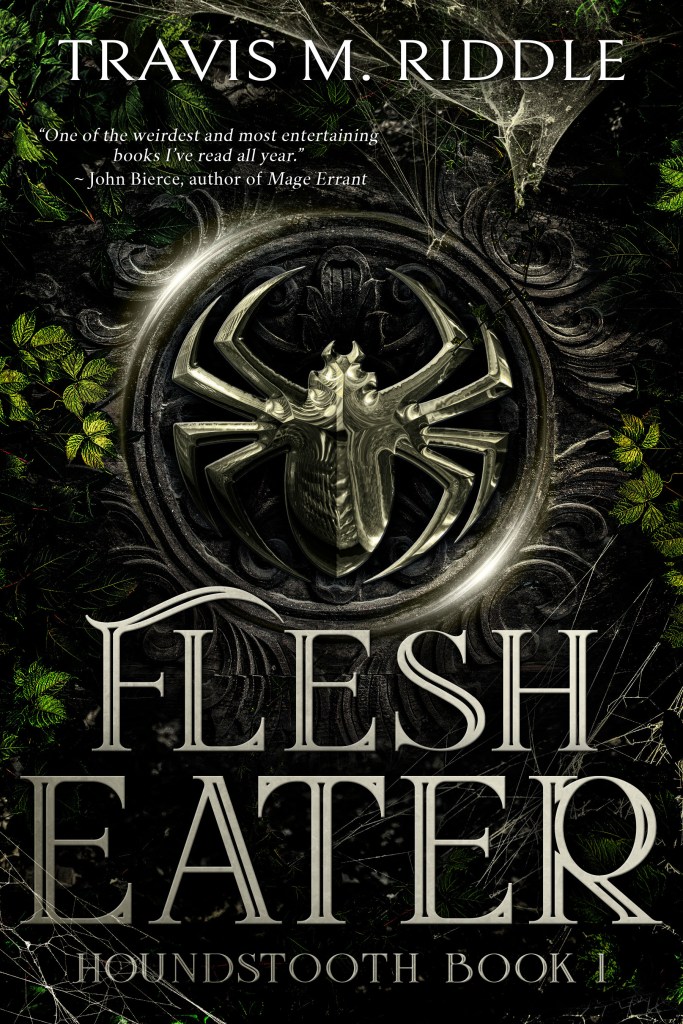
I didn’t know much about Flesh Eater going into the story other than it involved spiders and a queer male protagonist. I’m not totally sure what I expected, but Zootopia for Adults setting up an Epic Fantasy trilogy wasn’t it. Lots to love here, with a really fantastic take on an everyman protagonist. However, it’s not quite as dark as the title and cover might lead you to believe.
Elevator Pitch: Coal is a fox with very distinctive markings. This is unfortunate considering he is a criminal. Once a librarian, he has been branded a Flesh Eater for consuming his father’s flesh. As he desperately tries to make enough money to clear his record, Coal ends up involved with the underbelly of society. He’s scrambling to get by, to survive the Emperor’s bounty hunters, and to make money any way he can. Unfortunately, life as a librarian didn’t prepare him for any of this.
Read if Looking For: extended spider-riding scenes, a normal person who acts (mostly) like a normal person would, animal societies, organized crime
Avoid if Looking For: Overpowered protagonists, clear villains, medieval tech levels, lots of magic
One of my goals in 2025 was to read more truly unknown books. Some of my favorite reads have been nearly unknown, and popularity is no indicator of quality. Steven Cavehill’s pitch for his book on r/queersff caught my eye, and I mentally bookmarked it for when I started one of my kindle binges. It’s got some classic high fantasy and dystopia elements, and was a fun read. I’ll definitely pick up the sequel, but I also hope that Cavehill goes through a final round of line-edits on his writing next time around.
The Premise: Rhys is a city guard relegated to paperwork, much to the disappointment of his noble family. He’s dating the mildly possessive leader of the demon-hunter Rangers, an organization he’s working to join. Ambrose is a half-elf thief desperately trying to buy a better life for his younger brother. The two are on a collision course when Ambrose robs a noble runesmith, accidentally causing the house to burn down and starting a manhunt for him. A manhunt Rune is placed in charge of.
Read if Looking For: asshole families, always another secret, tropey fantasy characters, overly-dependent relationships, notices at the start and end of sex scenes
Avoid if Looking For: polished writing, characters who see the plot coming at them, books free from fantasy racism (elves)
I’ve been reading lot’s more comics recently, both for work as I continue to develop two seperate comics courses for middle and high schoolers, but also for personal pleasure. I’ll still do bigger reviews for comics that I want to dig a bit more deeply into, but for now enjoy a pre-Thanksgiving meal of some (mostly) light and fun comics.