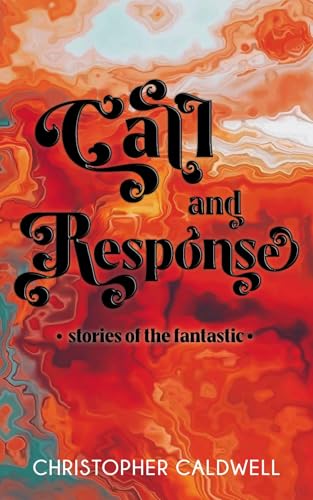
Call and Response is a fairly new anthology of short stories by Christopher Caldwell built around a delightful premise: what if each story comes in a pair? In Call, Caldwell introduces characters and worlds, only to return to them in Response. Sometimes these appearances are small cameos, other times they are directs sequels. Call and Response is unapologetically black and queer, with several stories sneaking semi-autobiographical details into the fantastic. This collection won’t satisfy those seeking the tight research of Ted Chiang or the experimental forms of Isabel Kim. However, Caldwell’s stories are candid, intense, and thoughtful. I’d love to see what he can do with a full novel.
Read If Looking For: stories of black resilience and rebellion, diverse representations of queerness, aquatic motifs
Avoid If Looking For: experiments in form or structure, answers to broken systems, unambiguous endings
Comparable Media: Convergence Problems, The Fox Roads, Ivy Angelica Bay
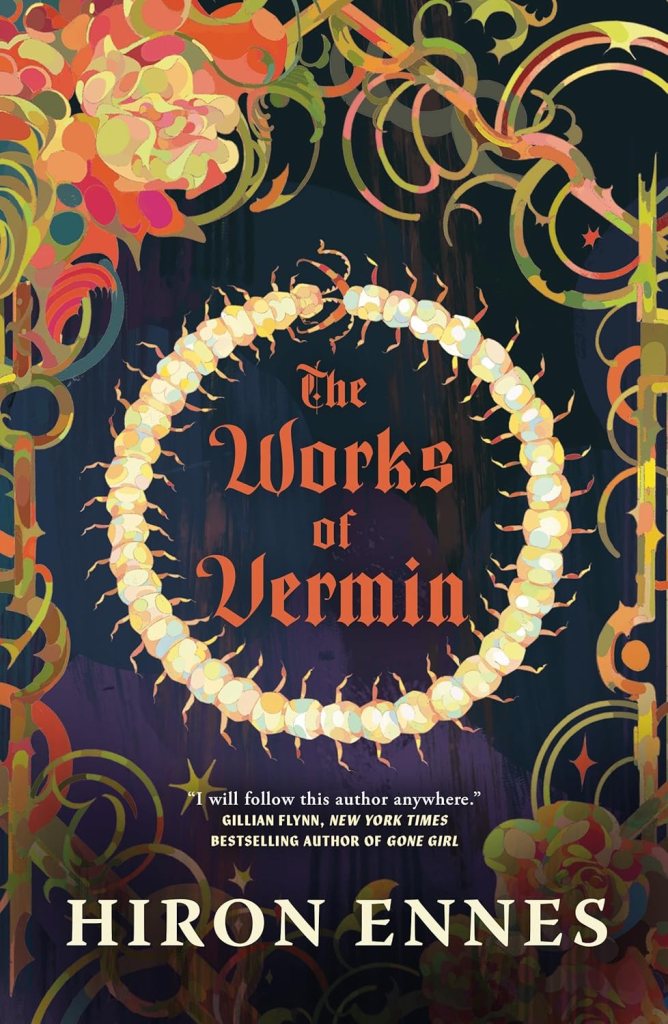
I have been dying to read this book for ages. Eldritch bugs + magic perfume + creepy operas = one hell of an idea for a book, and every review I’ve seen has said it lives up to its premise. I got lost wandering the streets of Hiron Ennes’ imagination. It is a decadent new entry in the New Weird genre, and it feels extremely apt for a world that sees the potential for the first human being to become a trillionaire. This book is a masterpiece, and I really wish I hadn’t read it near the end of the school year as my brain is struggling to remember which hallway the copy room is in.
The Premise: Guy is a vermin exterminator in the undercity, struggling to support himself and his younger sister. Aster is the chief perfumer for the violent Grand Marshal, who wears the skulls of those who would kill him as helmets. An insect with a taste for fine art has begun feeding in the city, and political unrest has begun to stir.
Read If Looking For: violent revolutions, weird worldbuilding, the dangers of capitalism, so many operas, big ass bugs
Avoid If Looking For: windowpane prose, clear explanations of how things work, dramatic fight scenes
Comparable Media: Perdido Street Station, Ambergreis, The Divine Cities
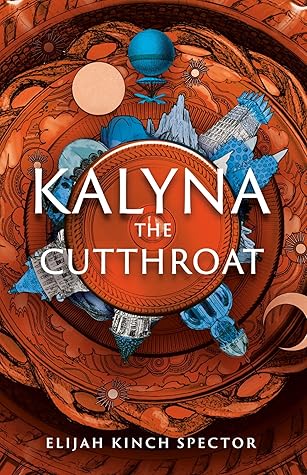
This book really snuck up on me. I enjoyed Kalyna the Soothsayer quite a bit despite some flaws and a hefty dose of suspended disbelief. I knew this story would be a different, more somber tale, but I didn’t expect to get sucked into this book as much as I did. It’s got some flaws – major ones, in my opinion – but I found myself consistently thinking about the questions that Spector posed. My reaction to it reminded me a bit of Walking Practice by Dolki Min (a very different story) because I just couldn’t stop thinking about the ideas presented. I’m beginning to think Spector is a writer capable of writing a real masterpiece, and I’m excited to continue following his work.
I think this book can be read independently of its predecessor, but you’ll be aware of the fact that there was a book that came before. You’ll be able to smell Kalyna’s main character energy, and her exploits from the previous book come up several times. However, the core story is about a new character and his complicated relationship with society.
Elevator Pitch: Radiant Basket of Rainbow Shells is a scholar of curses, travelling abroad to collect knowledge. When the Loashti Empire declares his people as dangerous and revokes their citizenship, he flees with the help of some mercenaries, including Kalyna. We get a decent amount of travel at the start, but most of the book centers around their time at the Lanrius River Guild (spelling? I listened to the audiobook), an anarchist utopia that’s going through plenty of growing pains but is trying to live with as little hierarchy and division as possible. Radiant negotiates whether he wants to be part of this community, whether the community is a good place, and what he can do to help both his family and his people, whom face a persecution he is temporarily free from.
Read If Looking For: fantasy that deals with ethics, casual queerness, optimistic anarchists
Avoid If Looking For: action, comedy, or magic
Comparable Media: The Mars House, A Choir of Lies, The Ones Who Walk Away from Omelas
It’s unsurprising that the AIDS epidemic has been notably absent from Fantasy and Science fiction novels. There are lots of reasons for this: many read for escapism, the 80s/90s isn’t a common time period for fantasy or science fiction in general, and AIDS doesn’t fit neatly into the cute love story narrative that traditional publishers have historically leaned on when writing books about gay men. Things are improving – traditionally published trans protagonists exist, though they’re still rare – and there are a few novels that have tackled the idea (though I couldn’t bring myself to keep reading the train wreck that was Disco Witches of Fire Island). I live in hope, but my hopes aren’t very high.
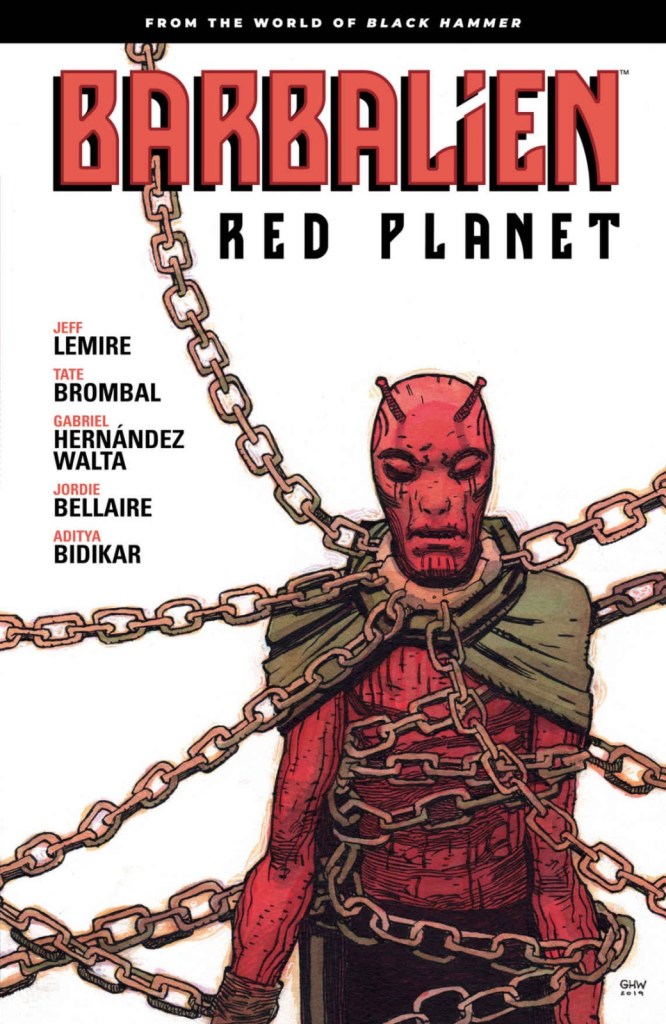
Comics have actually done a much better job of engaging with the topic, though not always well. I got to teach a few lessons on the representation of AIDS in superhero comics a few years ago, and I’m hoping I’ll have the chance to expand it into a full unit soon. Barbalien was part of that journey, and a great example of how mainstream comics have evolved on the issue over 30 years. Barbalien is set in the The World of Black Hammer, a superheroverse more or less analogous to DC or Marvel. You really don’t need any previous context for the story, so don’t feel like you need to jump in ‘at the start’ if you aren’t interested in the cute and satirical set of villain interviews that form the universe’s first installment. Barbalien is a more serious story, but not so bleak as to suffer accusations of torture porn.
Finally, it’s important to note that while Jeff Lemire seems to be listed as the main author, the story is a collaboration between him and Tate Brombal. The actual script (dialogue, panel by panel story descriptions, etc) is all Brombal, an openly gay comic writer.
The Premise Mark Markz is from Mars. When masquerading as a human, he works as a cop trying to do good. When openly martian, he fights crime as Barbalien. When both personas are needed at an AIDS protest, Mark comes into contact with Miguel, a young activist whose partner recently died of AIDS. As they fall in love, Mark grapples with his growing realization of how the system he works for is a force of oppression, finds connections in the queer underground, and is hunted by a rival from Mars.
Read If Looking For: queer joy, queer pain, and queer love
Avoid If Looking For: sympathetic cops, cinematic fight scenes, fleshed out supporting characters
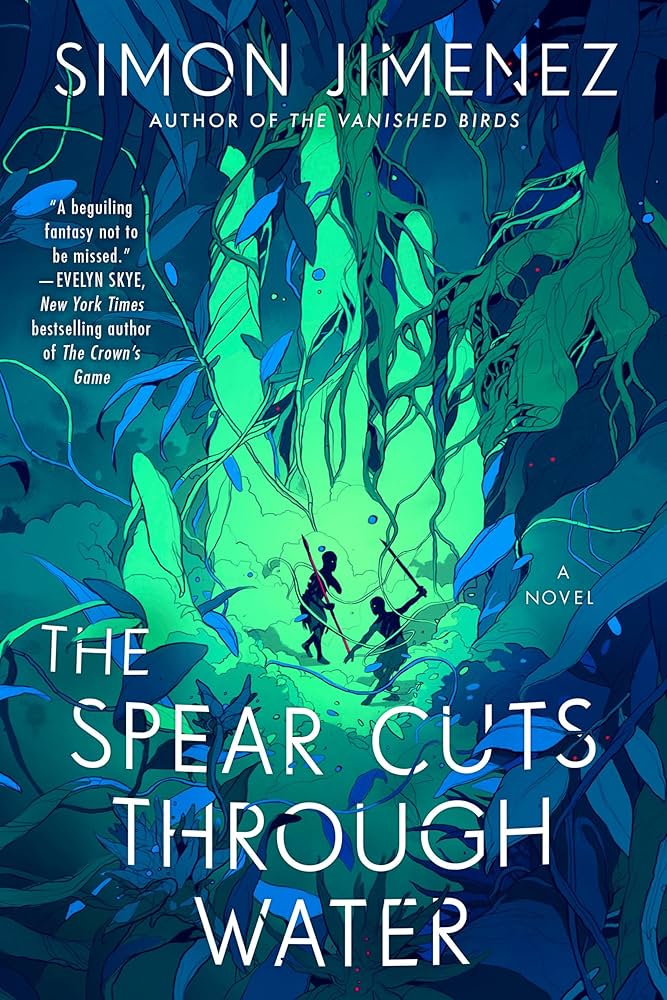
Words are not enough to describe how nervous I was to suggest my in-person book club read The Spear Cuts Through Water. Was it everything I remembered, or are my memories clouded by the pink haze of nostalgia? Would my friends like it as much as I did? Was the brutality and violence of the book excessive? Would I still think about this as my favorite book of all time? That’s a lot of pressure to put on a book, and expectations are the mother of all disappointment.
Thankfully, it absolutely stood up to the book of my memories. I think I liked it more this time around, and I certainly noticed things that I had missed in my first readthrough. The jury is still out on whether or not my friends will love it like I do. My only regrets are starting this book a little too close to our book club meeting – it’s tomorrow! – which coincided with a bout of brain frog that left Jimenez’s gorgeous pose a bit more difficult than I was equipped to handle after a long day of work. However, I consider it the best book I’ve ever read, and it represents the direction that I wish epic fantasy would start to explore.
The Premise: In the inverted theater, the child of Moon and Water performs for you a story of your people’s history. You’d heard this story before. It is the one your Lola told you and that you told your brothers in turn. It follows Keema and Jun, one an outcast with one arm and the other a monster of a man searching for a path towards redemption. They escort the Moon in her desperate bid to escape the empire freeing her from 8 generations of servitude and the people from 8 generations of tyranny. This is a tender story of the journey of two boys, a chronicle of the death of an empire, an exploration of guilt and shame and violence, and it is a story about how our past ripples into our future.
Read If Looking For: a simple story transformed by its format, an ode to the oral history of Fantasy, standalone epic fantasy, a very wise tortoise
Avoid If Looking For: straightforward storytelling, books free from graphic violence or sexual assault, rapid pacing
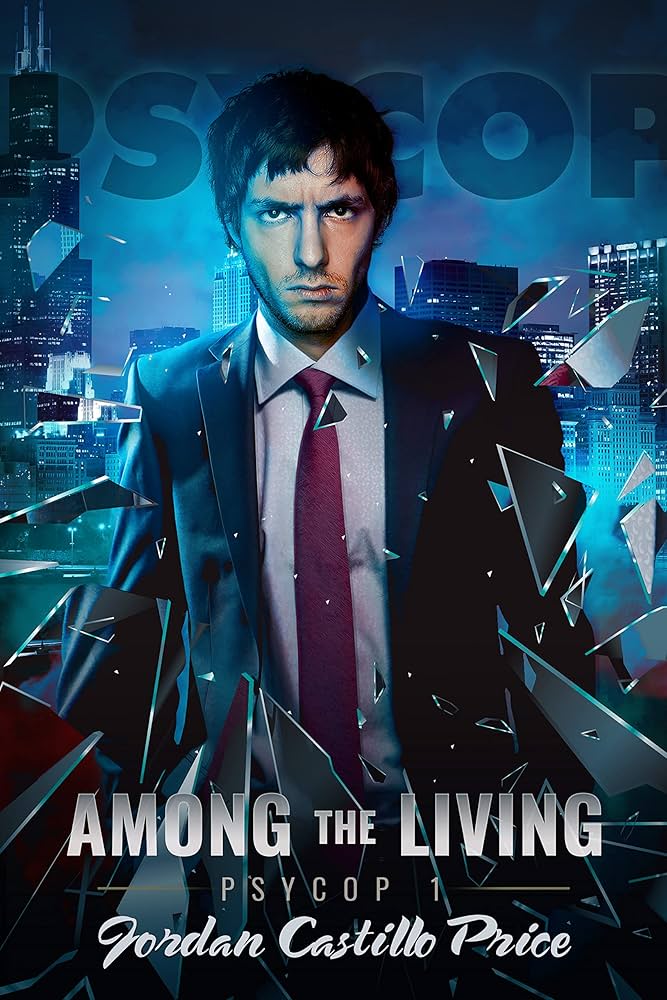
As a teenager, I was mildly obsessed with the Stephanie Plum series, which featured a chaotic detective (private eye?) who solved crimes and was torn between a hot Italian cop and a hotter brooding guy named Ranger. At one point I even went to the library’s book club when the newest book came out, which was me and a bunch of middle aged women. I got invited to their Jazzercise class. It was awesome. Anyways, Psycop feels a bit like that, but spooky and gay. I was really into thrillers growing up – David Baldacci had me in a chokehold before college – and it’s been nice to reconnect with that part of my reading history. Psycop isn’t building my brain up or pushing me to consider anything serious, but it’s a hell of a lot of fun. This review covers my thoughts on the first three books in this series, all novella length.
The Premise: Victor Bayne is part of a supernatural investigations unit. He can speak to the dead, which is mostly a pain in his ass except when it helps him do his job. That’s why he’s addicted to psychic suppressants. His partner just retired right in time for a murder scene to pop up that is mysteriously free from voices. Also on this case is Jacob Marks, a hunky mundane cop who recently jacked Victor off in the bathroom while they were at the retirement party for Victor’s old partner. Each book follows a new crime or mystery to be solved, often with a brand new cast member to spice up the dynamic for the book
Read If Looking For: a lead with a bunch of baggage, quick pacing, paranormal thrillers with a side of romance
Avoid If Looking For: books free from ‘pointless’ sex scenes, thematic depth, criticisms of the US police state
Comparable Media: Steaphanie Plum, Magic for Liars, Bones
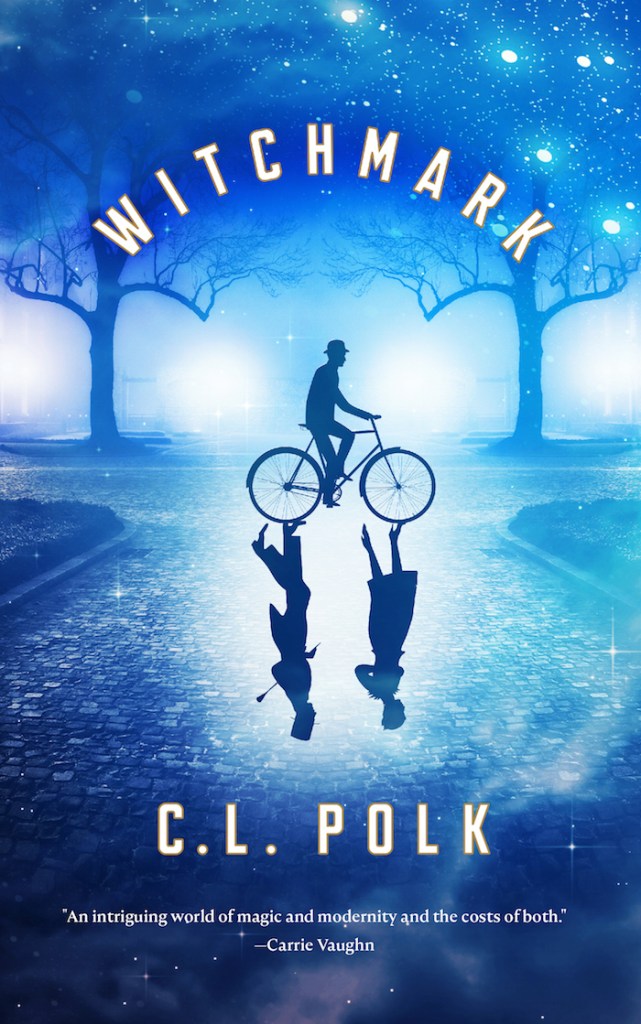
I’m not sure why Witchmark languished on my shelf for years. I already know that I love Polk’s writing, and Witchmark was on the forefront of queer content from Tor and Orbit releases right as it was starting to become more commercially acceptable for traditional publishers to put out queer books. It was one of 12 books I committed to read in 2026, and I’m glad I did! It sits in a setting I’ve not read much of (World War I adjacent, time period wise, though not set on Earth), but I think I need more bicycles in my fantasy. I don’t think I loved it quite as much as most others, but I had a great time and will be chasing down the sequels for sure.
The Premise: Miles has a gift for healing. Unfortunately, his magic doesn’t involve controlling the weather, which means he had to run away from his aristocratic family and fake his own death to prevent his father from turning him into a glorified magical battery for the Storm Singers. He’s now a Doctor who focuses on mental health in a veteran’s hospital. He gets yanked back into his old life when a dying man is brought to him, a man who knows that Miles has magic. And the gentleman who brought that dying man also seems intent on the secrets that Miles has so desperately kept. He needs to solve the man’s murder, lay low, and prevent his sister from binding his freedom to her whims.
Read If Looking For: a story set after the war has ended, an oppressive oligarchy that hits a bit too close to home, grounded and messy sibling dynamics
Avoid If Looking For: a mystery where you put the clues together, deep explorations of PTSD, developed romance arcs
Comparable Media: Howl’s Moving Castle, A Marvellous Light, Full Metal Alchemist
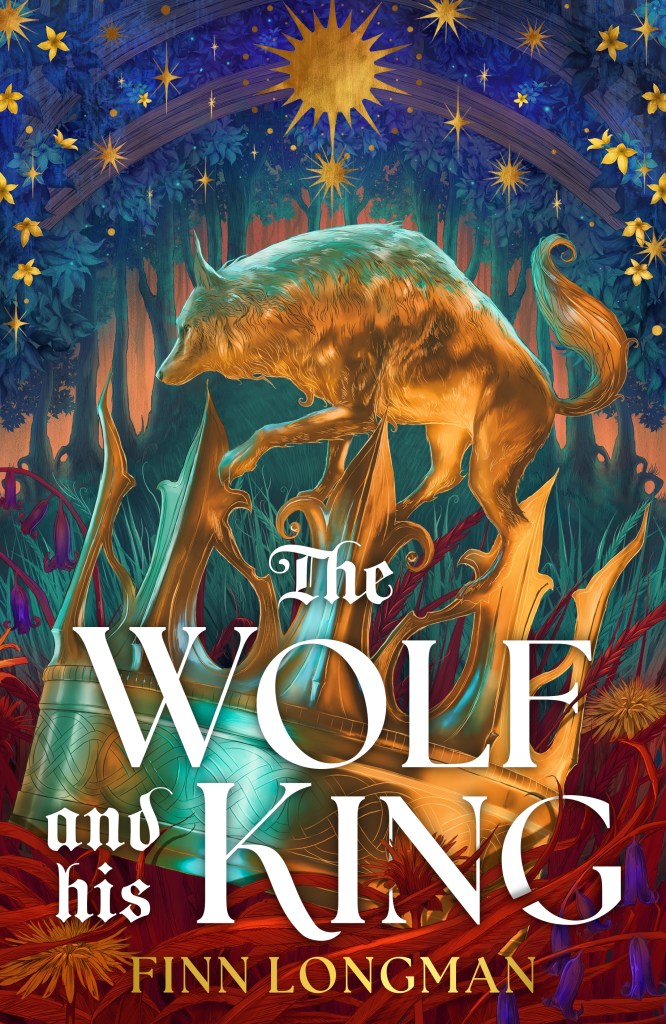
This book was a match made in heaven for me. Queer yearning? Check. Unconventional and bespoke prose? Check. Thematic depth without being preachy? Check. The Wolf and His King I’ve read in a long time. I didn’t love how they tackled writing the ending, but The Wolf and His King is a book I will be happily shoving into the hands of my friends.
As a note, those looking for a traditional Romantasy story will be disappointed. There are absolutely romantic elements to the tale, but you won’t find the story focusing on Bisclavret and the King’s developing relationship. The book is more interested in each of their personal journeys, despite their mutual affection for each other. Like other books that are sort-of-technically Romances that don’t read like most books in the genre, The Wolf and His King is best viewed as a book that happens to include some romance elements, which I think will help temper some misplaced expectations based on how the book has been pitched.
The Premise Bisclavret lives in a self-imposed exile. He turns into a wolf against his will, and fears that venturing to court will put himself and others in danger. When the King dies and the new King returns from his own exile though, Bisclavret has no choice to but venture forth and swear fealty to the King. The King, meanwhile, is awash with self-doubt and a search for meaning about what type of King he’d like to be. He is taken immediately with Bisclavret, and the two form a close bond while each struggles to find a good path forward with their life. And the Wolf? The Wolf is always present, waiting to come out.
Read If Looking For: dreamlike prose, characters exploring their own self-doubt, a marriage of theme and structure
Avoid If Looking For: critical examinations of monarchies, fleshed out female characters, leads who are proactive
Comparable Media: Song of Achilles, This is How You Lose the Time War, Spear (by Nicola Griffith)
I’ve been feeling like 2026 is going to be a very good year for books featuring queer men. The Iron Garden Sutra is my first of the lot, and I enjoyed it a lot! The book has a bit of a weak opening 100 pages, but once it hit its stride I loved it. Unconventional Gothic settings have been growing more and more on me, and this book did a great job of blending a tense atmosphere with the portrait of a man facing an existential crisis. Kind of feels like a darker, more serious Becky Chambers book. It’s not going to be for everyone, but it sure was for me.
The Premise: Iris is a monk of the Starlit Order. He is a Vessel. As he travels the universe, he performs funeral rites, comforts those about to die, and helps their loved ones mourn. His newest assignment is to perform last rites for a Generation Ship that has turned up after it’s long voyage and, like all other Generation Ships, don’t have any living humans aboard. He is greeted by carpets of moss, curtains of vines, and a cohort of academics intent on studying and exploring the ship. Yan, an engineer who specializes in AI negotiations, has a special hatred for Vessels; Iris is of course forced to spend some uncomfortably close time with him. It becomes clear that someone – or something – doesn’t want them to leave alive.
Read If Looking For: haunted spaceships, characters coming to terms with death and mortality, explorations of autonomy and personhood, the crumbling of religious conviction
Avoid If Looking For: flawless prose, logical worldbuilding, characters who can put the pieces of the puzzle together
Comparable Media: A Psalm for the Wild Built, Mexican Gothic, A Botanical Daughter
Interview with The Vampire has been on my read list for a while. Actually, I’ve been interested in exploring the history of vampires a bit more deeply once I realized that the three original vampire novels (The Vampyre, Carmilla, and Dracula) are all super queer. Interview with the Vampire represented a shift in how modern vampires were written. Rice placed them at the center of the tale instead of as an antagonist to be vanquished. As with its predecessors, it’s also super queer-coded. I think I came into the novel with incorrect assumptions about what this book would be, which led to this being a more disappointing read than I was hoping for. In the end I enjoyed it, but I wish discussion about the book was more accurate to the reading experience.
The Premise: Louis is a vampire who has agreed to sit down for an interview. In it, he describes the story of his creation in New Orleans at the hands of the vampire Lestat, the creation of his daughter Claudia, and his flight away from his cruel creator. In his journey he grapples with what it means to take a life, to be a good person, to never die.
Read If Looking For: musings on the nature of immortality, immoral protagonists, interesting monologues
Avoid If Looking For: two gay-coded dads raising their vampiric daughter together, main characters who didn’t own slaves, traditional plot structures