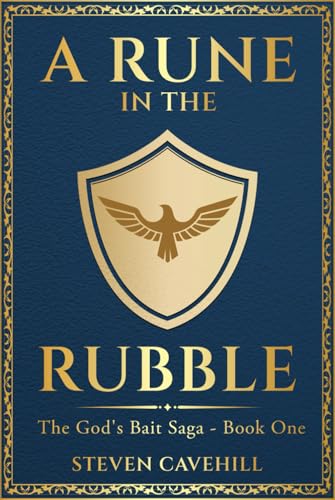
The Vessel’s Blood

I was asked to read this book by the author. I did not receive any payment for this review, and the book was purchased with my own money. My review is my honest opinion about the book.

Compared to many readers, my taste in books can verge on the unknown. For others, my reviews are remarkably mainstream. I can say with certainty though, that this is the least-reviewed book I’ve ever read (with the sole exception of a book of poetry retelling the story of Cronus written by a friend). It also happened to have a rather intriguing premise: what would the story of a man whose destiny is to turn into a god, their own soul consumed, when everything goes wrong? Throw in a pair of gay protagonists who don’t immediately fall in love, and it should be right up my alley. In general, I loved the ideas behind this book, but have some large reservations about the writing craft elements that didn’t work for me. Thankfully, craft can be workshopped.

The Premise:
Vulfrey is The Vessel. He is destined to die, subsumed by his god’s power when he sacrifices himself for the god’s return. He has lived his entire life in a citadel dedicated to him and his god. But when things go horribly wrong the night before his own death, he finds himself on the run with the Kail, son of a man who tried to kill him. The two search for a path to salvage the situation and bring their god into the world, even though it means Vulfrey losing his life.

Read if Looking For: non-romantic gay epic fantasy, spoiled brats acting like soiled brats, books that focus on scenework over narration, expansive worldbuilding

Avoid if Looking For: books tackling existential questions, romantasy, breakneck prose

Continue reading “The Vessel’s Blood”

Two who Live On (Branches of Past and Future #2)

Sequel review here! If you want to learn more about a fun, but perhaps not terribly deep, urban fantasy about a teacher of magic at a high school, see my review of Three Meant to Be. I was a little unsure of where I sat with Book 1. I enjoyed it certainly, but found it wasn’t quite giving me the depth or grittiness I was looking for in an adult magic school story, nor the sense of mystery from magic schools of my childhood, nor even the epic fight scenes of progression fantasy schools. About 50 pages into this book though, I shifted my brain fully into popcorn romance urban fantasy mode, and it really clicked. This series isn’t cracking my all time favorites, but I’m having a really wonderful time.

The Premise:
This book picks up right where book 1 left off. At the start of second semester, without the threat of one student being brutally murdered, Dorian is able to focus a bit more on himself and his relationship with his celebrity boyfriend (and childhood ex) Milo. He also needs to keep his students on track for a talent showcase, which might open doors for many of their future prospects. Of course, what would a semester of Dorian’s life be without the threat of constant demon attacks?

Read if Looking for: Magic School Teacher protagonist, escapist fantasy, bad puns, romance/fantasy elements balanced well

Avoid if Looking for: deep themes, unpredictable twists, realistic portrayals of teaching

Continue reading “Two who Live On (Branches of Past and Future #2)”

Regicide: Saints of Firnus

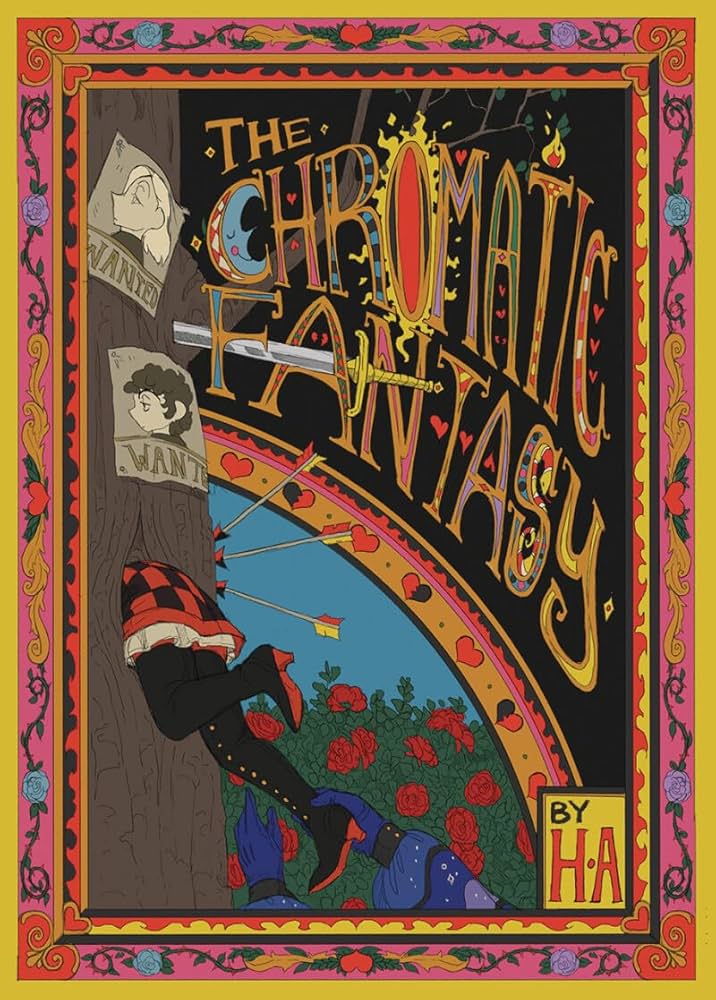
Every once in a while a book recommendation passes beneath your nose that captures your attention. Regicide was that way. It started with a compelling cover, a blurb that promised grimdark fantasy elements, and a lack of clear romance plotline. It lived up to some of those promises and had some legitimately interesting developments, but was undercut by a dire need for another readthrough and round of proofing and edits.

The Premise:
This is the story of Holt, a member of the ‘vermin’ beastkin whose lands were colonized by the Panthera. He now lives as a beggar, supported only by his partner, whose untimely death pushes Holt. towards new connections with the underground resistance and old traditions of his people. However, this is Holt’s story told after he’s become an infamous legend. An elder shares the ‘real’ story of Holt to others of his kind. They live underground, still firmly under the paw of the Pantheran government, meaning you know from the very beginning that the ending of the story wouldn’t be a happy one.

Read if Looking for: Redwall for adults, morally upright protagonists in dystopian worlds, author-created illustrations, characters who happen to be gay

Avoid if You are Looking for: polished prose, multi-POV stories, deep themes or nuance, romance, books without depictions of intense racism, lots of magic

Continue reading “Regicide: Saints of Firnus”

The Seven Moons of Maali Almeida

Sometimes, incredible books fall in your lap for no seeming reason (and by no seeming reason, I really mean Audible’s algorithim has learned that I like books about gay men). It’s certainly not my normal fare: I don’t read a ton of magical realism, and even less that pushes more on the literary end of things than the genre fiction side of that subgenre. Yet I’m so incredibly thankful I indulged the whim to dive into this book. It isn’t perfect, and likely won’t crack my favorite reads of the year, but it’s going to stick with me for a long time.

The Premise:
Maali is dead, stuck in a queue to find his way to the next life. He doesn’t know how he died, but he knows that he has unfinished business in the land of the living. He’s a war photographer in 1990 Sri Lanka, a gambler who loses more money than he makes, and a slut who has trouble remaining monogamous to the boyfriend he really does dearly love. He learns he has seven days before he is stuck forever in the in-between, and promptly sets off to try and get his partner and best friend to find his photographs, which have the power to topple a government.

Read if You Like: Magical Realism, ghosts, critiques of colonialism, dry humor

Avoid if You Dislike: tight plotting, morally upright characters, books lacking answers hard questions they bring attention to

Continue reading “The Seven Moons of Maali Almeida”

Dark Moon Shallow Sea

I’m slowly beginning to think that David Slayton may not be the author for me. My reactions to this book feel very similar to his fairly popular series (by gay fantasy standards at least) White Trash Warlock. I don’t want to say that I don’t have any concrete issues with the book, but the biggest one is that the writing style just didn’t resonate with me. It just ended up being the type of story I likely won’t remember in a month.

The Premise:
In the recent past, knights of the sun god killed the moon goddess and her priests, accusing her of consorting with demons. Now the tides have stopped, bloodthirsty shades haunt the night, and poverty is rampant. Rafe was raised in a temple to the moon goddess, and barely escaped with his life. Now a thief, he hears rumors of a strange container being moved by the Knights embossed with the symbol of his goddess. Inside he finds a human named Kinos, and the who escape in hot pursuit by the Knights, including Seth. Seth is an impure Knight, who can call the fire of his god, but isn’t protected from it like the other Knights. And Seth will do anything to claim his god’s favor, including hunting down a thief and a mysterious boy sought out by the church.

Read if Looking For: thief protagonists, dead gods, insta-love triangles, eldritch fire dogs that are absolutely a good boy

Avoid if You Dislike: characters who are part of police forces, twists that feel coherent, breakneck pacing

Continue reading “Dark Moon Shallow Sea”

The Brightness Between Us (The Darkness Outside Us #2)

The Darkness Outside Us is one hell of a story. If you’re in the mood for a truly captivating existential thriller with heavy romance elements, then it’s a great pickup. You should absolutely not read any review that spoils twists (mine doesn’t), and know that the remainder of this review will spoil details from the first book.

When I heard Darkness was getting a sequel, I had mixed feelings. On one hand, Schrefer earned my trust, and I love reading more by authors who have won me over. On the other hand, Darkness was a great standalone – ending included – and I was worried that anything else would be a disappointment. In the end, I thought this book was a rather large step down from the first, but it wasn’t bad by any means. Just not perfect, you know?

The Premise:
This book bounces back and forth in time. Most of the story takes place 17 years after Darkness, following the teenage children of Ambrose and Kodiak, the only two who survived the early years. And just like in the original story, some strange and unexpected things are happening. It also tells the story of the original Ambrose and Kodiak in the events after they learned about the cloning scheme, right as the world is on the brink of nuclear war.

Read if Looking For: Ambrose and Kodiak falling in love all over again, kids going on adventures without permission, asshole Yaks

Avoid if Looking For: gay parent POVs, jaw dropping twists, the dangers of settling a new planet

Continue reading “The Brightness Between Us (The Darkness Outside Us #2)”

The Effaced

I don’t watch much TV, but when Arcane dropped in 2021, I was hooked. I’m not even a League of Legends player and think it’s some of the best fantasy TV to come out this decade. The Effaced felt a lot like watching the first season of Arcane: steampunk meets magitech, a city with a class-war brewing, great fight scenes from a talented protagonist, and a rapidly escalating situation. This book isn’t going to win any awards innovation or complexity, but it was an incredibly fun read, and Tobias Begley remains one of my favorite authors.

The Premise: Axel Font is an airship technician haunted by his past as a child gladiator and assassin, now trying to live a quiet life. When a Senator is murdered and he gets framed for the crime however, he finds himself wrapped up in a city-wide conspiracy far above his pay grade. This happens right as his old ‘mother’ has arrived back in town with a new child soldier who has been conditioned to unconditional violence. Axel grapples with needing to pick back up the skills of his old life and struggling to maintain the humanity he’s clawed back as an adult.

Read if Looking for: easy reading, action-packed fantasy, hard magic systems, a surprisingly wide variety of assassins

Avoid if you Dislike: the occasional typo, easter eggs to author’s other series, characters that don’t grow in power

Continue reading “The Effaced”

Greenwode

Robin Hood is not a story that I’m particularly fond of. I don’t dislike it, but the story doesn’t have a place in my heart – even as childhood nostalgia. Being a take on Robin Hood, I wasn’t sure if Greenwode was going to be a good fit for me, but thankfully it avoided being a campy retelling. Instead, this was a delightful story of romance, internalized homophobia, and the politics of rural England. It’s rare for me to want to pick up a sequel quickly, but I definitely want to tackle the next installment this year.

The Premise: Rob and his sister Marion are destined to take the mantle of Hunter and Maiden in the Old Religion, holding great power and sway over the traditional practices in a country rapidly being consumed by Christianity. Gamelyn is the son of the local lord and is fairly sure he wants to join a local monastery. After a chance meeting brings Rob and Gamelyn into contact and an easy friendship, both of their faiths will be tested by their growing attraction and duties. Their romance sits underneath the growing tension between the old and new religions, and it seems like war is close to breaking out.

Read if Looking For: star crossed lovers, characters grappling with religion, beautiful forest scenes, romantic yearning, ancient gods

Avoid if Looking For: lots of dramatic archery sequences, books with few sex scenes, positive depictions of Christianity

Continue reading “Greenwode”

Toward Eternity

It’s been a while since I read a book whose back cover so poorly represents what is in the book itself. Anton Hur was done dirty by his publisher on this one, because the premise for the book is much more interesting than what’s shared. I expected a story about how society is adapting to technology that turns people immortal, with a focus on a patient/researcher and his poetry AI bot. While all that is indeed there, this story is actually a millennia spanning reflection on what it means to be a person, a unique individual, and how choices can echo across time. It has at least seven different POV characters who almost never repeat past a single chapter. A much more ambitious novel than it appears; it reminded me a lot of The Vanished Birds by Simon Jimenez, which is about as high of praise as I can possibly give.

The Premise:
Okay, let’s try to do a better job than the publishers. This book starts in a near-future world where emerging research shows nanomachines can turn you immortal and cure pretty much any ailment. Dr. Beeko runs this lab with Yonghun (who has undergone the research) and who has disappeared mysteriously. One of the only witnesses is Panit, Yonghun’s AI poetry-analysis machine who has been collecting dust for years. From this setup, we start exploring these events from these character’s points of view, then shifting to other patient’s experiences with nanotherapy, before jumping forward in time to explore a new version of the world where we see how these nanobots have shifted the world again … and again … and again. To give some sense of scope, the book is split into five sections: near future, future, distant future, very distant future, and eternity, and the choices of the original cast filter down into later storylines, they aren’t lead characters continuously throughout the novel.

Read if Looking For: books spanning millennia, philosophical musings, epistolary novels

Avoid if Looking For: straightforward stories, single POVs, everything explained in the end

Continue reading “Toward Eternity”

The Black Hunger

As part of pride month, I’ve been doing a lot of thinking and discussing about how avoiding problematic tropes can lead to more problematic tropes. Bury Your Gays (other than being a Chunk Tingle novel I very much want to read) is a classic example of authors, playwrights, and screenwriters killing off queer characters as a way of saying this person was bad and immoral sort of like how literally every Disney Villain dies due to their own character flaws. That trend is bad and problematic, but its backlash led to such predictable happy endings that I didn’t get the same beautiful tragedy and sadness in queer speculative fiction that I could find in cis/het works. Thankfully, I think this is being seen and rectified, mostly by queer authors themselves. I’m all for tragic gays making a comeback.

The Black Hunger is a great example of how bad endings for queer characters isn’t problematic on its own. It’s only bad when used as a way to demonize queer folks. And while I had some issues with the book, I had a great time with it as part of my continued exposure therapy to the horror genre after being traumatized by watching The Mummy when I was five (I still don’t like beetles to this day). Unfortunately, this book struggled in other areas, mostly related to depictions of Buddhism, which will rightly be a dealbreaker for many.

The Premise:
John Sackeville is dying from a mysterious curse eating away at him. His partner is dead, and something horrible has happened to the world. He’s being interrogated for key information about a strange cult (partially of a dark sect of cannibalistic Buddhists, mostly Russian), but he starts at the beginning and takes his time getting to the juicy bits, spending a good among of time on his childhood, his years at Oxford, and his time in the British service in India. Part of his story also involves diary entries of a Jewish psychologist visiting the home of his ex-love to diagnose her with madness, and a letter said ex-love’s dead husband wrote to her about his experiences as a prisoner in Russia to a particularly Spooky count and his family.

Read if Looking For: older gay male representation, evil cultists (and Russians), far too many teeth, slow burn gothic horror

Avoid if You Dislike: multiple narrators, Epistolary novels that don’t read like letters, authors taking liberties with real-world religions without getting it quite right

Continue reading “The Black Hunger”