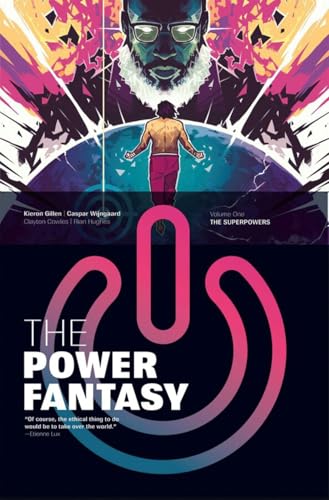
The Power Fantasy

When I explored the idea of using comics in an Ethics class I’m putting together for high schoolers, The Power Fantasy was one of the most-recommended titles. It’s easy to see why, as the whole series is one big thought experiment on whether people with extreme superpowers can exist ethically (notice I said exist, not behave). It’s also got a clear thematic lineage with Watchmen, taking the superhero deconstruction presented by Moore in directions that feel much more 2025. Ultimately, I don’t think it’s quite straightforward enough for me to want to use as a whole-class read with high schoolers, it’s great for anyone looking for something to chew on.
Elevator Pitch:
In this version of earth, Atomics (people with superpowers) began appearing in the 1940s with a woman gave birth to a literal angel. While most Atomics have minor powers, there are six Superpowers currently alive; the book defines a Superpower as “an individual with the destructive capacity of the nuclear arsenal of a major world power.” These six characters form the core of the main cast. There’s a psychic and moral philosopher, the idealistic angel reminiscent of Superman, a gravity manipulator who hosts a floating commune, a girl who transforms into a kaiju when angry, a woman with deep connections to Hell, and a man whose technology borders on magic. They don’t all get along, and each has their own idea about what a good and just world looks like. 

Read if Looking For: ensemble cast of morally dubious supers, cigars that defy gravity, non-sequential storytelling

Avoid if Looking For: authors who hold your hand, heroes vs villains storylines, dramatic fight scenes
Continue reading “The Power Fantasy”

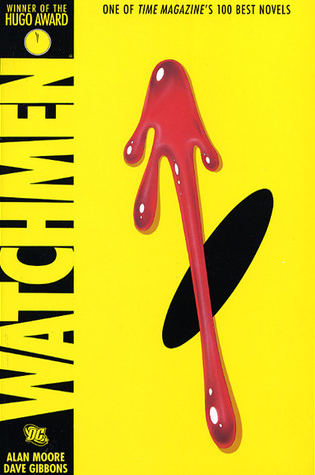
Watchmen

Watchmen has been touted as one of the best comics to come out of all time. Historically, many such novels lauded as ‘all time bests’ in the fantasy and science fiction genres have not lived up to the hype for me. Watchmen however, feels like the real deal. It’s dark and gritty, a take on superheroes that feels more nuanced than other deconstructions of superhero stories I’ve seen (such as Hench, Steelheart, or The Boys, all of which I very much enjoyed). It’s tough to read in a lot of places, and not a story I was interested in binge-reading. However, the juice was absolutely worth the squeeze, and I think it has a lot of important things to say about America and its fascination with superheroes. 

The Premise:
This story bounces back and forth in time, but mostly sticks in an alternate version of the 1980s. It follows the lives of superheroes far past their prime, and after the practice has fallen out of style. Woven in between their individual stories (including plenty of flashbacks to the not-so-good old days) is an investigation/conspiracy theory that these former-supers are being targeted , a brewing nuclear war between the US and Russia, and in-universe texts ranging from memoirs to news articles to pirate comics.

Read if Looking For: layers of theme, episodic chapters, cold war stories, low powered supers (mostly), comics that get studied at colleges, epistolary comics

Avoid if Looking For: mindless fun, protagonists who are good people, books free of sexism and homophobia, diverse protagonists

Continue reading “Watchmen”

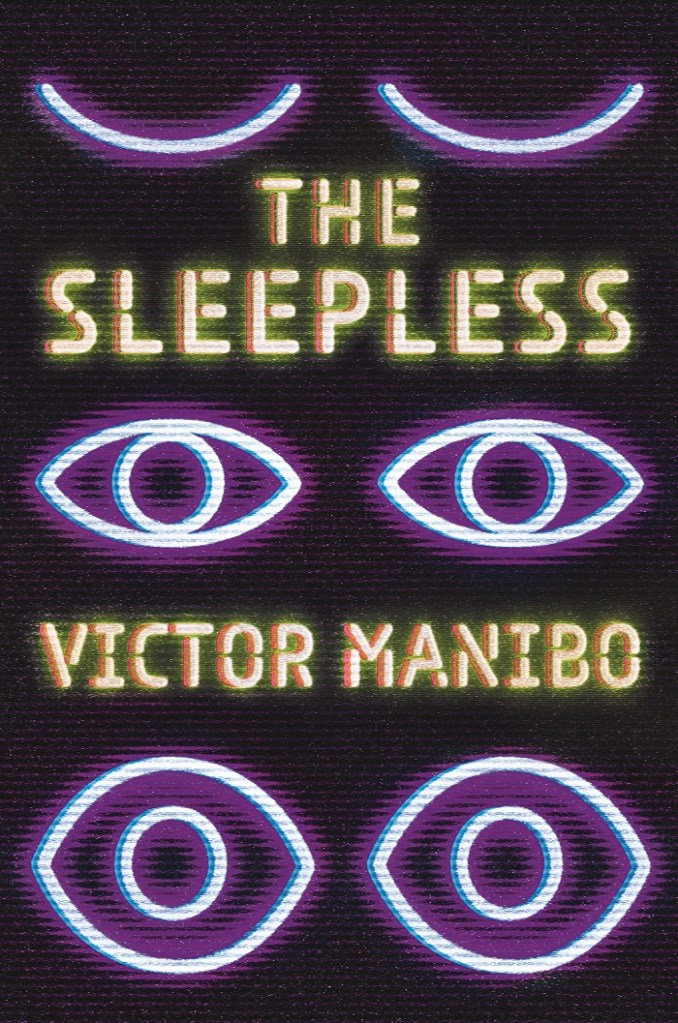
The Sleepless

Going to sleep is probably one of my favorite things in the world; that said, I also feel like I’m constantly craving just a few more hours in the day. The Sleepless by Victor Manibo tackles the premise of what a world without sleep might look like, wrapped up in a cyberpunk-noir trenchcoat. I appreciated a lot about this book, and it surpassed my expectations knowing that this book both grew out of NanoWrimo and also is written by an author whose later work I have DNF’d. It’s a solid read, especially for people interested in exploring how a Cyberpunk society might come to be.

The Premise
Jamie is one of the Sleepless: the quarter of humanity who stays awake 24/7, one medical professionals are still scrambling to understand. He’s also an investigative journalist on the cusp of publishing a major corruption story when his boss Simon is murdered. Not only did Jamie find the body, but he’s also the last man to see Simon alive, making him a prime suspect in Simon’s death. Unfortunately, Jamie also seems to have a mysterious bout of amnesia, where he can’t remember going to work that night, even though the video footage clearly shows he was there.

Read if Looking for: near-future cyberpunk, greedy CEOs, chaos bisexual best friends, jacked drug dealers

Avoid if Looking for: scientific rigor, happy endings, multidimensional side characters, romance plotlines

Continue reading “The Sleepless”

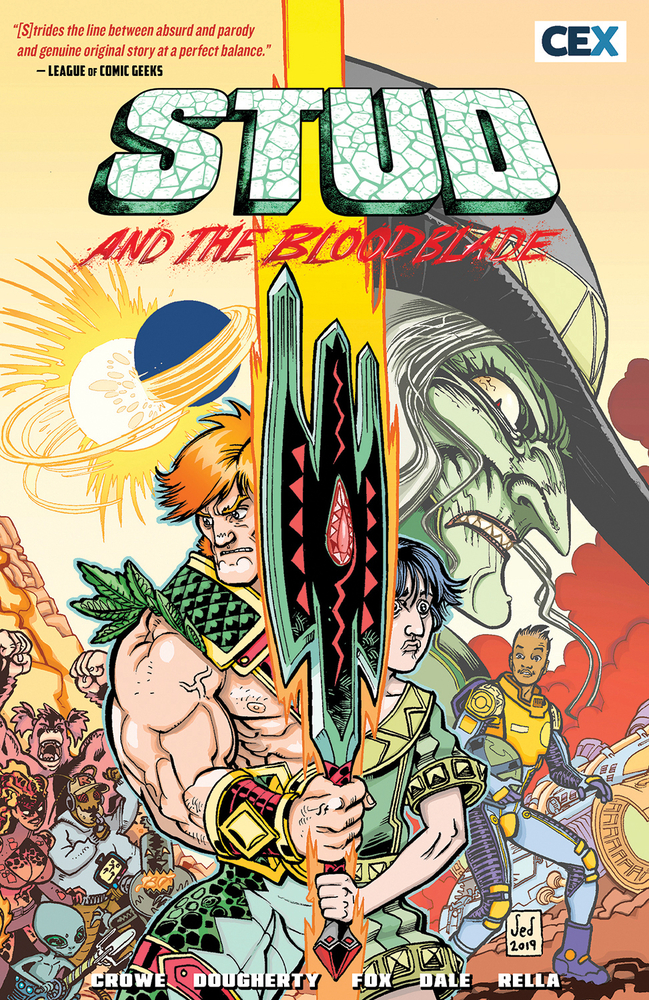
Stud and the Bloodblade

It’s been a while since I read a good batch of comics, but ever since I picked up Fables and Abott the urge has been growing in me. While Queer graphic novels are having a real moment right now – and I should probably do some writeups of my favorites – most of the ones I read are for my teaching job. I’m lucky enough to have two comics electives on my rotation (one middle school, and one high school) which keep me fairly busy. Stud didn’t seem like a safe bet for a school-purchase, so it took a lot longer for me to get around to this fabulous looking comic. At 144 pages, it’s tough for me to find reasons to not recommend something as quick and fun as Stud and the Bloodblade. 

Elevator Pitch
Stud is the hero of his world, a world which plays hosts to refugees from across the multiverse. It is home to the Ouroboros, and Stud protects the citizens from the evils that find their way in. Unfortunately, he and his sword are also cursed by a witch whose son Stud accidentally killed. If he doesn’t sate the sword’s thirst for blood, he finds himself trapped in his sword while the dead child temporarily returns to life. After saving the life of an Astronaut and falling in love at first sight, Stud’s priorities begin to shift. Unfortunately, the man’s ship also supposedly contains a Demon Egg, which the Witch hopes will kill Stud once and for all.

Read if You Like: Corny superhero vibes, the intersection of satire and seriousness, He-Man references, 

Avoid if You Dislike: American Superhero story structures and art style, lack of emotional depth, plots that aren’t airtight, quirky character designs

For more examples of the art, see the bottom of this post. 

Continue reading “Stud and the Bloodblade”

Several People are Typing

Put simply, this book is a shot of adrenaline. I want to give a big shout out to u/diazeugma for recommending one of my new favorites during the r/fantasy pride month event in June. It took me a while to pull the trigger on this workplace comedy/horror book about a man stuck in the Slack chat of his workplace, a PR firm. When I did, I consumed the book in around 4 hours. At 250 pages, this reads a lot more like a novella because of how sparse the pages are. It’s not a book without flaws, but this book contains a level of joy few authors are able to capture.

The Premise:
Gerald is an underperforming grunt at a PR form who works for (mostly) horrible clients. His brain gets sucked firm’s Slack chat, unable even to check his emails, and Gerald finds himself with only unbelieving coworkers and an annoying help-bot for company. Be a fly on the wall for secret workplace affairs, existential crises prompted by sunsets, THE HOWLING, and a bidding war for Gerald’s now empty desk.

Read if You Like: The Office meets Twilight Zone, comedy from the absurd, the distillation of existential dread, captivating characters, train wrecks in slow motion

Avoid if You Dislike: not getting physical descriptions of characters, mysteries that never get explained, strong romance plotlines

Continue reading “Several People are Typing”

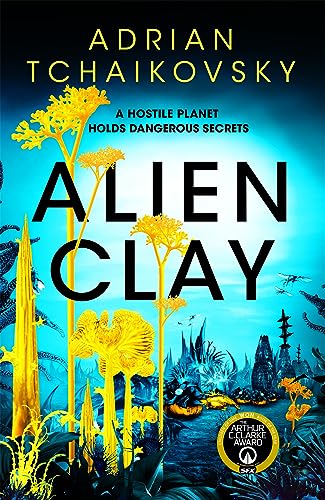
Alien Clay

For someone who reads as much as I do, the fact that I’ve gotten so far through life without reading a single Tchaikovsky novel is astounding. I blame my father in part: he stole Children of Time from me while visiting and never returned it. Alien Clay arrived as part of my never ending processional of Libby Audiobook holds, most of which get shunted back another few months until I have time for it. And I see why Tchaikovsky is so popular. I understand why it was nominated for a Hugo, and why it didn’t win. I liked it, but didn’t love it, and suspect that if I read Tchaikovsky he’ll be a reliably good author when I need a solid page-turner to get me off a reading slump.

The Premise:
Mildly rebellious Xenobiology professor Arton Daghdev has been caught by the Hegemony. As punishment, he is sent to Kiln, a extrasolar planet with the most advanced forms of life yet discovered. While there, he falls in with former rebel contacts, grows fascinated with the interchangable nature of Kilnish biology, and wonders what the point of life is when he’ll never be able to return home.

Read if Looking For: delightful alien ecology, characters with realistic skillsets, hopeless situations, readable prose

Avoid if Looking For: something new to say about fighting hegemony and fascism, books without bloat

Continue reading “Alien Clay”

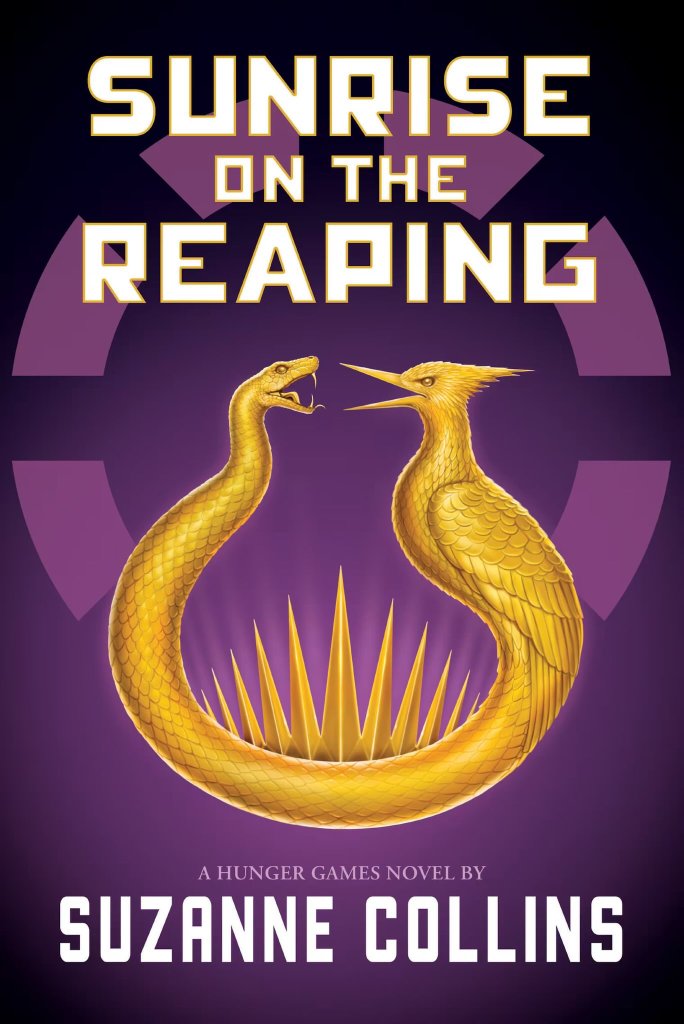
Sunrise on the Reaping (Hunger Games 0.5)

The Hunger Games was part of my high school experience. I’m part of the generation that grew up with Harry Potter, reaching high school right as YA as a genre was beginning to coalesce into something more than a target audience, instead a grouping of stylistic decisions that led to a rather depressing homogeny. Hunger Games has stood the test of time, and for good reason I think. It’s one of the best of the era, and is a phenomenal book to use in a 7th grade Dystopian book club unit, especially when paired with data on mental health and suicidiality of those who go on reality television programs for our enjoyment. I didn’t pick up the other prequel, as Snow never interested me much as a character. When kids started raving about this though, I figured Haymitch intriguing enough for me to return.

The Premise: Not a lot to say here assuming you’ve read the original trilogy. This is Haymitch’s Hunger Games. We already knew from the earlier books that there’s double the number of tributes and an arena themed around utter beauty where everything is poison. The only little tidbits to throw into this are that we’ll see some early apperances of Capitlol characters like Effie and Plutarch, as well as some of the Champion Tributes of Catching Fire (Mags, Beetee, and Wiress all make appearances), and that Haymitch wants to find a way to break the arena, sort of like the returning tributes ended up doing in Catching Fire.

Read if You Like: Hunger Games content, bits of District 12 Lore, Books you know the end of

Avoid if Looking For: the adreneline of the original series, a ‘normal’ hunger games, exploring new thematic depth in the series

Continue reading “Sunrise on the Reaping (Hunger Games 0.5)”

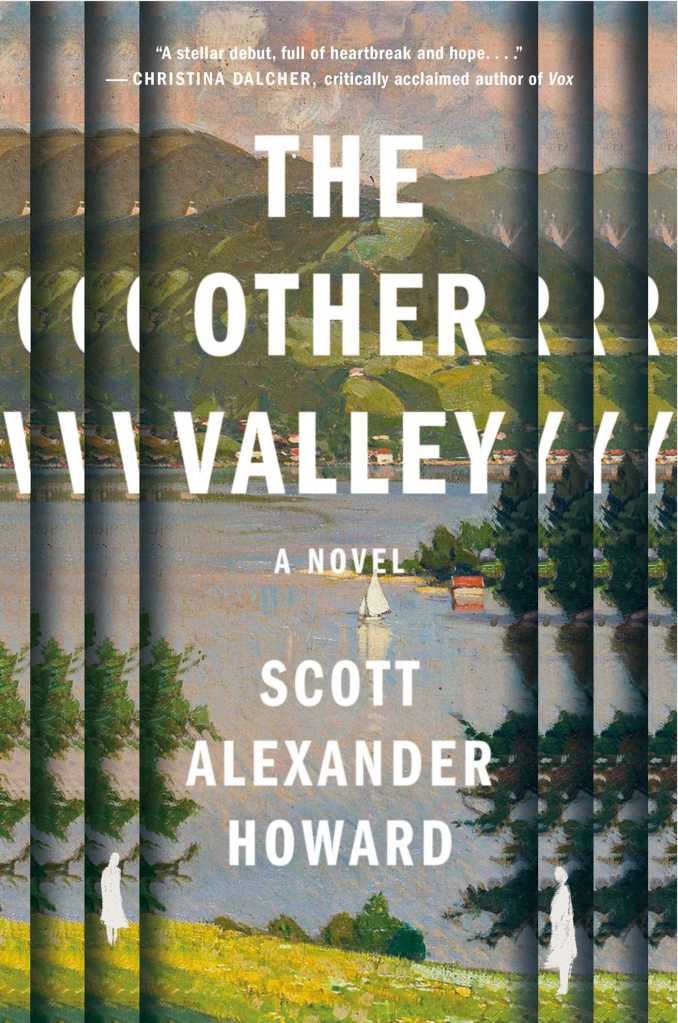
The Other Valley

Literary Fantasy/Science Fiction isn’t something I read a ton of, but after this year I’m starting to think I should be reading more of it. The Other Valley wasn’t on my radar at all until it starting coming up repeatedly by reviewers I trust as one of the top books of 2024. As someone who read a lot of books published last year, this book is going to be my go-to example for how there are more phenomenal books coming out every year than you will ever be able to read. This is a frustrating and humbling thought, and one I’m slowly beginning to accept. It’s also the type of book that gave me a small existential crisis on whether I was doing anything meaningful with my life, which I’m still in the process of working through.

The Premise:
Odile lives in a small, unnamed town surrounded by villages, mountains, and a lake. The only thing distinguishing it from any part of rural France is that it is neighbored by it’s own past and future. Travel and visitation is highly regulated by the Conseils, who approve requests to visit only from family members who have lost a loved one, or who know their impending death will mean they miss important milestone’s in their family’s life, and even then visits are anonymous and highly monitored to avoid changing the timeline. Odile applies to apprentice as a Conseil, mostly at the request of her overbearing mother, even though she isn’t sure what she wants to do with her life. Normally quiet and tepid, she begins to open up to some other teens, right when she identifies a visitor from another valley, which shifts her trajectory in life forever.

Read if you Like: stoic protagonists pushed to their limits, snapshots of emotional intensity, books that feel like indie-films

Avoid if You Dislike: Time travel that makes very little sense when you pick it apart, fast-paced novels

Continue reading “The Other Valley”

The Brightness Between Us (The Darkness Outside Us #2)

The Darkness Outside Us is one hell of a story. If you’re in the mood for a truly captivating existential thriller with heavy romance elements, then it’s a great pickup. You should absolutely not read any review that spoils twists (mine doesn’t), and know that the remainder of this review will spoil details from the first book.

When I heard Darkness was getting a sequel, I had mixed feelings. On one hand, Schrefer earned my trust, and I love reading more by authors who have won me over. On the other hand, Darkness was a great standalone – ending included – and I was worried that anything else would be a disappointment. In the end, I thought this book was a rather large step down from the first, but it wasn’t bad by any means. Just not perfect, you know?

The Premise:
This book bounces back and forth in time. Most of the story takes place 17 years after Darkness, following the teenage children of Ambrose and Kodiak, the only two who survived the early years. And just like in the original story, some strange and unexpected things are happening. It also tells the story of the original Ambrose and Kodiak in the events after they learned about the cloning scheme, right as the world is on the brink of nuclear war.

Read if Looking For: Ambrose and Kodiak falling in love all over again, kids going on adventures without permission, asshole Yaks

Avoid if Looking For: gay parent POVs, jaw dropping twists, the dangers of settling a new planet

Continue reading “The Brightness Between Us (The Darkness Outside Us #2)”

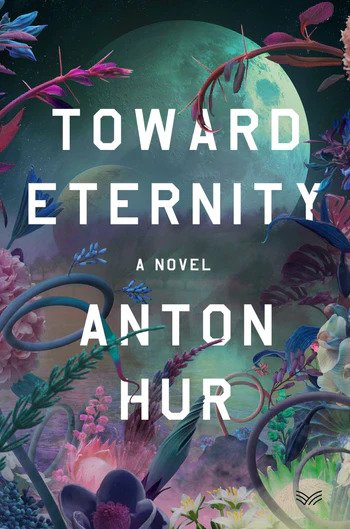
Toward Eternity

It’s been a while since I read a book whose back cover so poorly represents what is in the book itself. Anton Hur was done dirty by his publisher on this one, because the premise for the book is much more interesting than what’s shared. I expected a story about how society is adapting to technology that turns people immortal, with a focus on a patient/researcher and his poetry AI bot. While all that is indeed there, this story is actually a millennia spanning reflection on what it means to be a person, a unique individual, and how choices can echo across time. It has at least seven different POV characters who almost never repeat past a single chapter. A much more ambitious novel than it appears; it reminded me a lot of The Vanished Birds by Simon Jimenez, which is about as high of praise as I can possibly give.

The Premise:
Okay, let’s try to do a better job than the publishers. This book starts in a near-future world where emerging research shows nanomachines can turn you immortal and cure pretty much any ailment. Dr. Beeko runs this lab with Yonghun (who has undergone the research) and who has disappeared mysteriously. One of the only witnesses is Panit, Yonghun’s AI poetry-analysis machine who has been collecting dust for years. From this setup, we start exploring these events from these character’s points of view, then shifting to other patient’s experiences with nanotherapy, before jumping forward in time to explore a new version of the world where we see how these nanobots have shifted the world again … and again … and again. To give some sense of scope, the book is split into five sections: near future, future, distant future, very distant future, and eternity, and the choices of the original cast filter down into later storylines, they aren’t lead characters continuously throughout the novel.

Read if Looking For: books spanning millennia, philosophical musings, epistolary novels

Avoid if Looking For: straightforward stories, single POVs, everything explained in the end

Continue reading “Toward Eternity”