The Outcast Mage

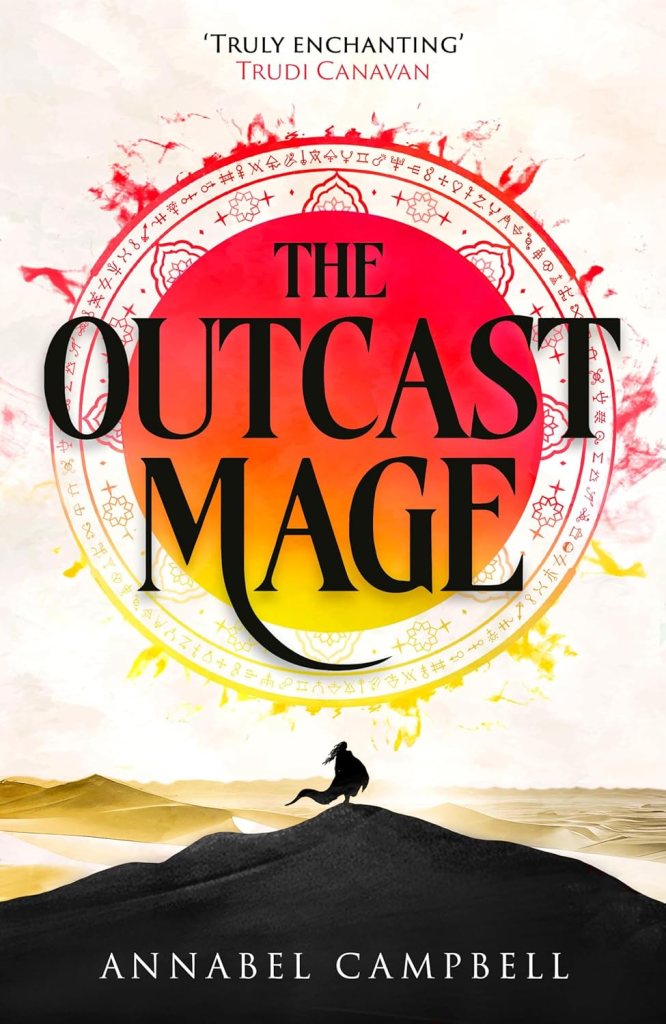
Will February be the month of aggressively mediocre reads? Unclear, but if the last few books I finished are any indication it might be. The Outcast Mage reminded me that I need to DNF more, but kept luring me back in with interesting little tibits. Just as I was about to quit I learn that the spy priest is gay and eyeing up his bodyguard. I can’t stop there! Sadly, this book never quite came together for me, but I think could be a good fit for someone looking for a straightforward and modern take on Epic Fantasy. 

The Premise:
Amoria  is a city in a glass dome, a refuge for mages who fled persecution. Now however, they perpetrate many of the same crimes against those without magic. Naila lives between: she has the power to sense magic – and is thus a mage – but has now power herself. She is both with and without magic, trapped between two worlds who both view her with suspicion. This is mainly her story, but we also follow the city’s most powerful and arrogant mage, a senator who is Aunt to Naila’s best friend, a spy priest from the country who long-ago hunted down mages, and a strange woman wandering the countryside investigating mysterious calamities.

Read if Looking For: chosen ones, magic as an analogue for xenophobia, straightforward writing

Avoid if Looking For: intense characterization, nuanced villains, lots of dragons (more in the sequels?)

Continue reading “The Outcast Mage”

Children of Time

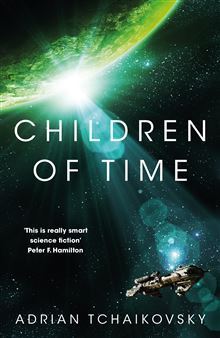
I meant to read this book ages ago, but my dad (who never reads) picked it up off my bookshelf while visiting and took it back to Kansas. I finally resigned myself to not getting it back and grabbed another from a used bookstore. I’ve only read one other book from Tchaikovsky, and this confirmed that I like his books a lot, but they’re probably only for when I’m in the mood for something on the more breezy/readable end of things. 

The Premise:
A planet was terraformed, meant to be home to monkeys infested with an evolutionary super-virus to help them prepare a civilization for humans to inherit. Things went wrong, and invertebrates ended up with the virus instead. We follow two societies across thousands of years: the spiders who raise from a simple hunter/gatherer society into spacefaring astronauts, and a spaceship carrying what may be the last of humanity, seeking one of the homeworlds. They will only briefly interact in this book, as their storylines largely remain separate but for a few discrete moments in time. 

Read if Looking For: so many spiders, batshit crazy worldbuilding, spaceship politics

Avoid if Looking For: inhuman narration, stories focusing on first contact, messy thematic work

Continue reading “Children of Time”

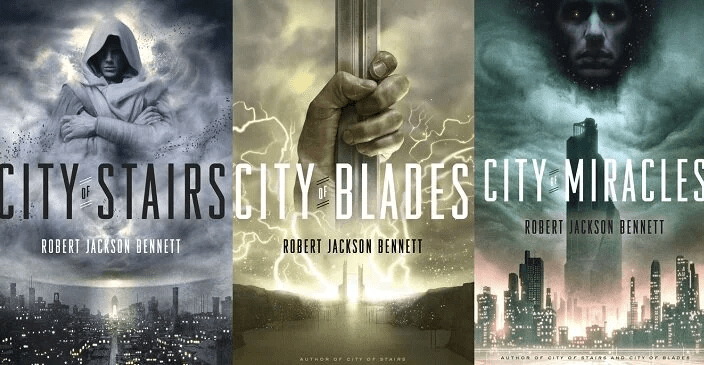
The Divine Cities Trilogy

Robert Jackson Bennett is currently getting laude for his Shadow of the Leviathan series (which are quite good on the whole). However, I think his Divine Cities Trilogy is by far the superior work, even if it’s taken me about four years to read the entire thing (I wrote in my review of book 2 that the finale would be ‘a priority for 2024’ yet I’m only getting around to it in 2026). These books are unlike anything I’ve read. The prose is straightforward enough, Bennett’s thematic work is ambitious and so very different from the examinations of imperialism we see in the 2020s, including his current series. It’s the type of mind bending and ambitious fantasy I love to read, and it safely sits as some of my favorite books in the genre. 

Read if Looking For: spycraft/action hybrids, competent protagonists, weird gods, thorny questions without easy answers

Avoid if Looking For: direct sequels, purely happy endings, John le Carre style bureaucracy spycraft, straightforward morality

Continue reading “The Divine Cities Trilogy”

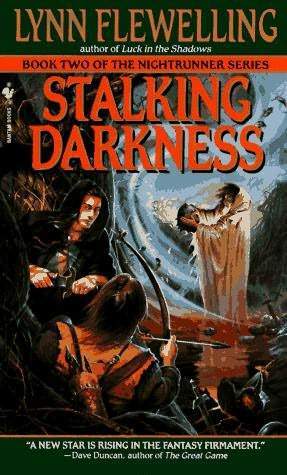
Stalking Darkness (Nightrunner #2)

If you’d like to see my review for book 1 in this gay epic(ish) Fantasy series from the 90s, see Luck in the Shadows.

It’s been a long time since I read a Mass Market Paperback, or enjoyed the smell of an old book. While my hand suffered some cramps during the final 100 pages, it was a nice hit of nostalgia for what reading used to be like. I enjoy reading on e-readers well enough, but the larger-sized paperbacks and hardbacks of our modern printing era are definitely more comfortable to curl up with. That said, I miss how inexpensive books used to be!

Anyways, this was a great sequel to a great opening of a series. As with book 1, be prepared for elements that feel dated and gross in our modern era. This book was a lot less of that than the original though, especially since I’d accepted and and compartmentalized from my significant qualms about how Flewelling set up the relationship between Alec and Seregil in book 1.

The Premise:
This book is a hodgepodge of Alec and Seregil’s adventures as the growing threat of war with Pleminar develops. Seregil goes hunting for more dangerous necromantic relics, Alec starts to do spy jobs solo, and they both keep feeling like people are following them. Alec learns about his past, we get a cryptic prophecy, and the villains make their move. Lots of classic fantasy elements, though this book continues to place a heavier focus on political or urban exploration elements than extended travel across fantastic terrains or grand battles you see in other epic fantasy works of the time like The Wheel of Time.

Read if Looking For: political intrigue, brewing wars, so many dreams, angsty pining, a sudden awareness of breasts and pectorals

Avoid if Looking For: books without rape or torture, lots of female characters, moral ambiguity

Continue reading “Stalking Darkness (Nightrunner #2)”

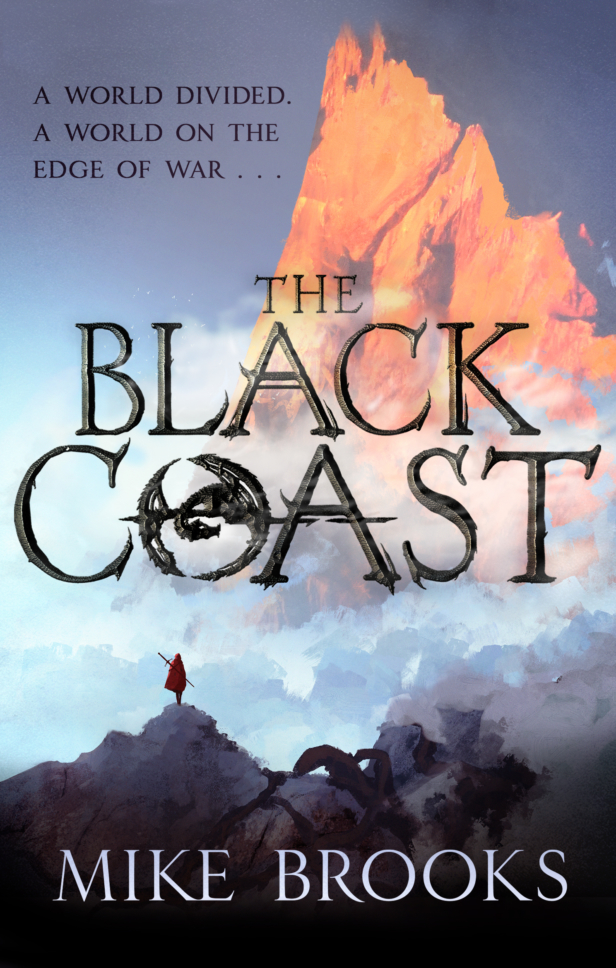
The Black Coast

I came for innovative queer worldbuilding, and I stayed for dinosaurs. This book kept coming up on lists of stories with queer worldbuilding elements, came off my shelf because I wanted to read a story about dragons. While I liked the book a lot, it didn’t succeed on either count, and folks coming to this story looking for queer representation will find themselves disappointed, despite a 5/6-gender society and cultural clashes over the morality of homosexuality being major elements of this book. Hopefully that shifts in the sequels, but right now it’s probably better to think about this as a more plot-focused Game of Thrones style story.

The Premise:
There’s two main storylines happening in The Black Coast. The town of Black Keep is visited by raiders (who are fleeing an undead monster on their home islands) who wish to settle the land instead of fight. The stepson of the town’s Thane betrays his own honor to allow them to settle, capturing his stepfather (who has anger issues) and imprisoning him to prevent a bloodbath. They must learn to live together while other raiders hunt them down and convince other Thanes that the raiders shouldn’t be slaughtered. Meanwhile, the sister of the Emperor travels to Alba (a neighboring nation) under her second life as the Queen of the Underworld to arrange the assassination of a family that claims the rightful inheritance of the God-King’s blood that (in theory) was inherited by her brother. In that same city is a thief just trying to survive.

Read if Looking for: Dinosaurs, codes of honor, more POVs than is wise, cultures inspired by Feudal Japan and Scandinavian Vikings

Avoid if Looking For: magic, character-focused stories, travel & journeys

Continue reading “The Black Coast”

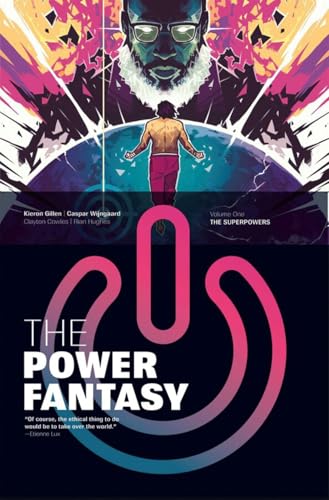
The Power Fantasy

When I explored the idea of using comics in an Ethics class I’m putting together for high schoolers, The Power Fantasy was one of the most-recommended titles. It’s easy to see why, as the whole series is one big thought experiment on whether people with extreme superpowers can exist ethically (notice I said exist, not behave). It’s also got a clear thematic lineage with Watchmen, taking the superhero deconstruction presented by Moore in directions that feel much more 2025. Ultimately, I don’t think it’s quite straightforward enough for me to want to use as a whole-class read with high schoolers, it’s great for anyone looking for something to chew on.

Elevator Pitch:
In this version of earth, Atomics (people with superpowers) began appearing in the 1940s with a woman gave birth to a literal angel. While most Atomics have minor powers, there are six Superpowers currently alive; the book defines a Superpower as “an individual with the destructive capacity of the nuclear arsenal of a major world power.” These six characters form the core of the main cast. There’s a psychic and moral philosopher, the idealistic angel reminiscent of Superman, a gravity manipulator who hosts a floating commune, a girl who transforms into a kaiju when angry, a woman with deep connections to Hell, and a man whose technology borders on magic. They don’t all get along, and each has their own idea about what a good and just world looks like. 

Read if Looking For: ensemble cast of morally dubious supers, cigars that defy gravity, non-sequential storytelling

Avoid if Looking For: authors who hold your hand, heroes vs villains storylines, dramatic fight scenes

Continue reading “The Power Fantasy”

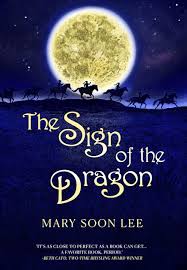
The Sign of the Dragon

I have perhaps an unreasonably high bar for books in verse. Some of my early adult reading experiences were with Jacqueline Woodson, and the few science fiction and fantasy poem books I read just didn’t live up to the standard she (and a few others) set. I think I’ve finally found a speculative fiction book in verse I can recommend wholeheartedly: The Sign of the Dragon by Mary Soon Lee was a delight, a wonderful read for the wintertime, and just generally heartwarming and heartbreaking. A great book to peruse a few poems per night, and I enjoyed reading this over the span of months, instead of my normal span of days.

The Premise:
Xau never thought he would become King. When the dragon on the mountain ate all his older siblings though, Xau passed her test and earned himself a crown he never wanted. Sign of the Dragon follows Xau’s journey as he discovers what kind of ruler he wants to be, oversees conflicts and alliance with many foreign nations, falls in love, raises children, faces supernatural threats, and tries to live a life that prioritizes kindness and acknowledging the humanity of all. The book also features many illustrations of various cinematic and/or emotional portions of the story.

Read if Looking For: epic and mythic stylings, idealistic leads, cozy books that also deal with grief, a constellation of POVs, horses (and a cat)

Avoid if Looking For: protagonists with real flaws, dragon-forward books, the thrill of battle

Continue reading “The Sign of the Dragon”

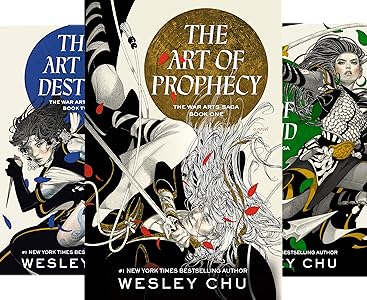
The War Arts Saga

This is a series that I find myself recommending a lot recently. Epic Fantasy meets Wuxia featuring steampunk Mongols is a really attention grabbing hook, and the series lives up to that promise admirably. I finally got around to finishing book 3 (somehow despite reading more than ever I find myself reading precious few sequels), so figured I’d do a write up for the entire trilogy. I left the series with mixed feelings, but definitely enjoyed the ride. 

Read if Looking For: protagonists of many skill levels & ages, beautifully written fight scenes, chosen one subversions, grumpy mentors, sassy assassins

Avoid if Looking For: series that end as strong as they start, zero to hero storylines, clear good vs evil plotlines

Continue reading “The War Arts Saga”

City of Strife

The City of Spires has been on my radar for a while as a great example of what ambitious queer representation can look like. It’s also gotten nods as the modern inheritor to Swordspoint, the seminal Fantasy of Manners book with pioneering queer rep in the 80s. I ended up not loving the book, but I see the appeal and am intrigued to continue at some point in the future.  But if you’re looking for a queer ensemble cast, I can’t think of something better than this.

The Premise
Isandor is a city with class problems. The rich live (quite literally) above everyone, in towers connected by bridges, holding them above the world. The poor are at the whims of the games of the noble houses. And the city plays host to an embassy of an Empire intent on conquering the world. Many different characters lives intersect in this book, connecting apprentice mages with shelter owners with idealistic nobility. Each character’s agendas and concerns are different, but this book lights the match that will set the city ablaze (quite literally). There’s enough going on that focusing on any single plotline will do a disservice to describing what the book is about.

Read if Looking For: many queer identities in one book, ethically upright protagonists, sadistic villains, impassioned monologues

Avoid if Looking For: deep characterization, flashy magic, political maneuvering

Continue reading “City of Strife”

A Drop of Corruption (Shadow of the Leviathan #2)

The Tainted Cup was one of my favorite reads of last year, and I knew that this book was going to be on my 2025 reading list. Robert Jackson Bennet is a fantastic author who has an ability to write across a wide range of styles. Though billed as traditional murder mysteries, I actually think of this series, I actually think this series lives in a hybrid between mystery, thriller, and fantasy. Overall, I liked book 1 more, but this was still a fantastic read, and I’ll happily keep gobbling them up as they come out!

For my review of book 1, see The Tainted Cup.

The Premise:
In this installment of Din & Ana’s adventures, they travel to Yarrow, a part of the world not (yet) part of the Empire, but which hosts the Leviathan dissection and processing facility known as The Shroud. When a member of the delegation supervising negotiations with the Yarrow government about joining the Empire turns up dead, Ana is called in to solve the case. 

Honestly, if you liked book 1, you’ll probably feel similarly about book 2. If you didn’t, I doubt this will solve any issues you had.

Read if Looking For: a murder mystery/thriller in a biopunk world filled with obscure and arcane grafts that modify humans into something more.

Continue reading “A Drop of Corruption (Shadow of the Leviathan #2)”