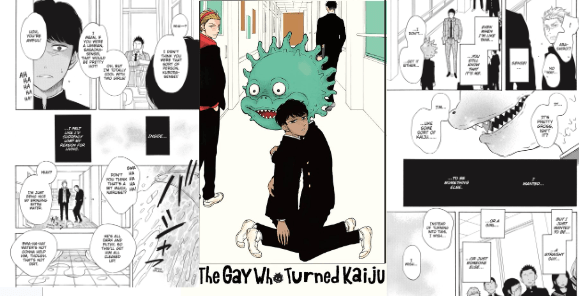
The Gay Who Turned Kaiju – Monstrosity & Internalized Homophobia

I really don’t know what to make of this manga. The Gay Who Turned Kaiju is the type of book where it makes a single really big choice, and how a reader responds to that choice is going to define their experience with the entire book. The story walks a tightrope between important (and uncomfortable) themes and wantonness. I can’t figure out which side it falls on. If protagonists committing sexual assault is a hard no for you, then avoid this one. 

Continue reading “The Gay Who Turned Kaiju – Monstrosity & Internalized Homophobia”

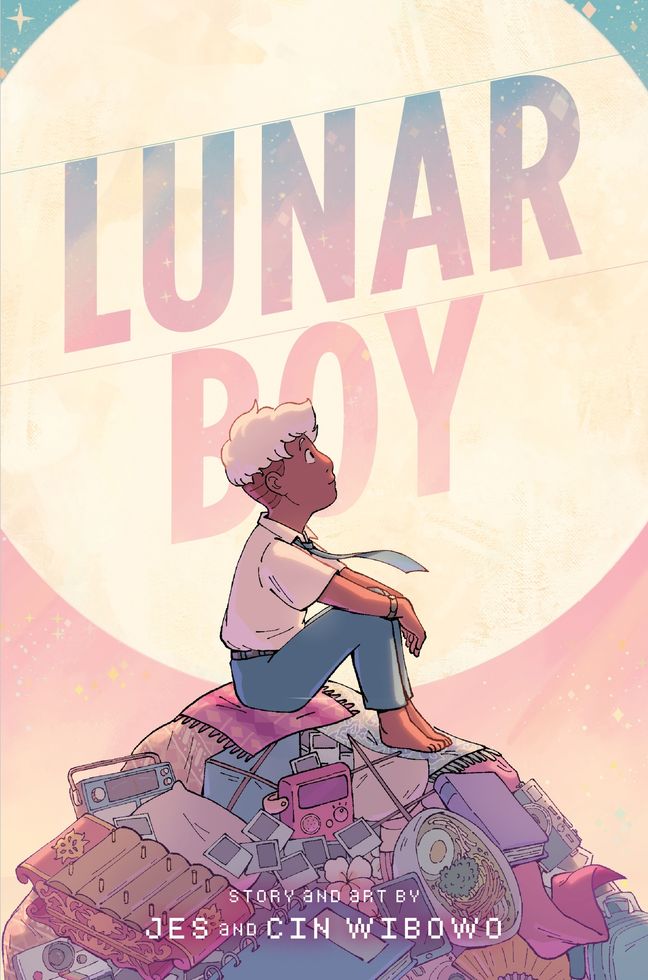
Lunar Boy – Isolation and Identity in Middle Grade Comics

Talking about books with kids is one of the best parts of my job. Unlike most adults, they’ll gush about their favorites unabashedly and rip books they disliked to pieces. This means that I get a pretty good pulse on what books are worth a look – though my tastes don’t always line up with the kids. Lunar Boy is one of those books that kept coming up as phenomenal. Since nobody was reading it, I took my classroom copy home to read as a way to kick off my Spring Break. The kids were right; it’s good. 

Elevator Pitch:
Indu grew up on The Moon before being rescued and adopted by an astronaut. When his new mother takes him home to Earth to join a new family, Indu deals with not knowing the language, siblings who don’t want him there, and feeling like he doesn’t know how to belong somewhere anymore. 

Read If Looking For: immigrant narratives, a focus on inner conflict, familial struggles & triumphs, adorable pen pals

Avoid If Looking For: hard sci fi, adult fiction (this is very middle grade, with all the tropes and idiosyncrasies that come with that label), books that ask difficult questions

Comparable Media: Aristotle and Dante Discover the Secrets of the Universe, A Song for You & I, Root Magic

Continue reading “Lunar Boy – Isolation and Identity in Middle Grade Comics”

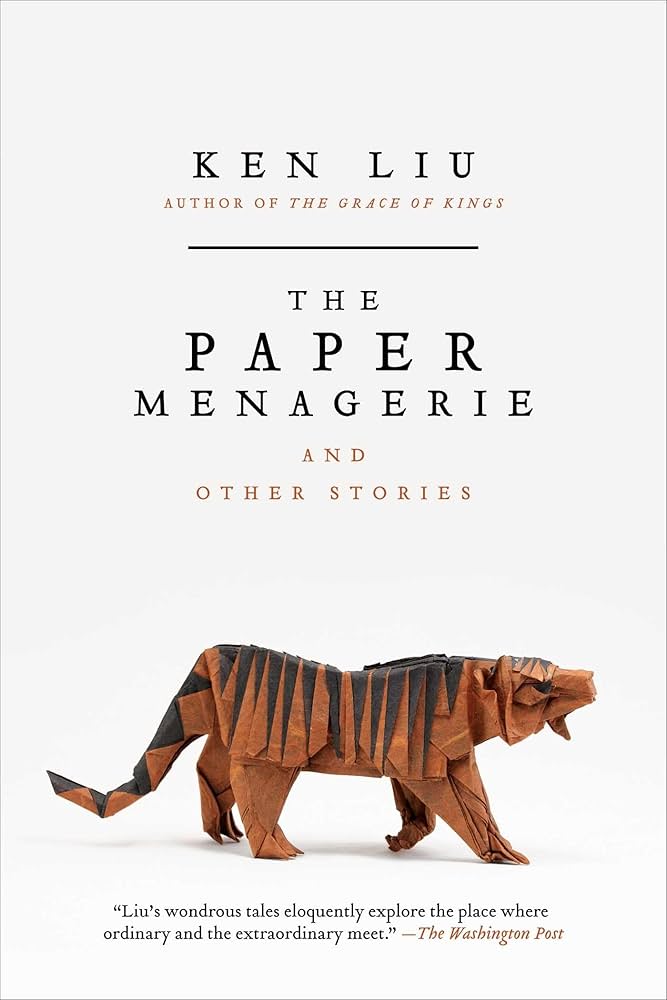
The Paper Menagerie and other Stories

One of my 12 Must Read Books of the year, The Paper Menagerie and Other Stories is the type of collection that gets spoken alongside Stories of Your Life and Others, by Ted Chiang. I think this is a classic example of when I need to divorce my own reading experience from the hype a title collects as it gets recommended and re-recommended. Ultimately, this was a good collection (especially in the midpoint and back half). However, it didn’t match the pedestal I had placed the book on. In fact, I don’t think it would hit my top 5 anthologies of all time, and I haven’t read that many. I think I was expecting a bit more magic, a bit less of a history lesson. And while history lessons aren’t bad, Liu’s approach in some of these stories felt less like storytelling and more like lecturing. It didn’t help that some of the weaker stories (in my mind) were placed up front, and that Liu is perhaps too fond of parallel narratives as a framing device for his shorter work. Not a bad technique, but tiring and predictable when they come in a constant stream.

The collection was at its most successful when it explored ambiguity, moral nihilism, and the complexity of family relationships. All of my favorites explored various familial ties (an estranged father and daughter, a woman navigating the grief of her dead daughter, a son’s reflection on how he treated his mother, etc. There’s some emotional gut punches, interesting thought experiments, and moments of wonder here. Had I entered the collection with no prior knowledge, I think I’d have enjoyed it more.

Below are my short thoughts on each story. However, my highlights were Simulacrum, The Regulator, The Paper Menagerie, and The Man Who Ended History: A Documentary

Continue reading “The Paper Menagerie and other Stories”

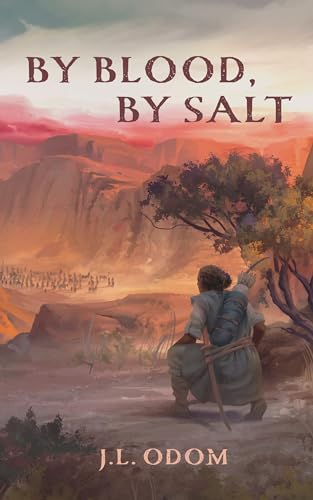
By Blood, By Salt – Slow and Nuanced Political Fantasy

I haven’t read a ton of the books in the Self Published Fantasy Blog Off competition. Some of the finalists I’ve liked(Wolf of Withervale) others I found supremely disappointing (By a Silver Thread), but the winners I’ve read have been universally good. By Blood, By Salt is the most recent winner. Its political and military pitch sounded very different from a lot of the self-published work I normally read, and there was enough in the blurb for me to grab a copy. The story feels surprisingly traditional and old-school, but Odom does a good job of layering fresh thematic elements on top of a tried-and-true framework. Imagine if Game of Thrones focused on a single storyline and was set in an Arabic-inspired society, and you’ve got a good portrait of By Blood, By Salt.

The Premise:
Azetla is a Jackal. His land and people are forbidden from carrying weapons, from holding positions of power, and from living free from violence. He serves as an unofficial commander in an archaic military unit free from much oversight. When a bastard prince decides to make a play for the throne, Azetla finds himself hunting a creature (demon, djinn, or devil he doesn’t know) in the southern deserts. But when they capture her, she has just as much of an agenda as he does, and Azetla’s first priority is to his people, not his country. 

Read if: you appreciate minority cultural groups not being written as monoliths, scarily competent protagonists are up your alley, you want complex fantasy cultures influenced by West Asia

Avoid if: you like your books fast paced, want heavy supernatural elements, or are hunting for fight scenes, you want a breadth of female characters

Comparable Media: Game of Thrones, Traitor Baru Cormorant

Continue reading “By Blood, By Salt – Slow and Nuanced Political Fantasy”

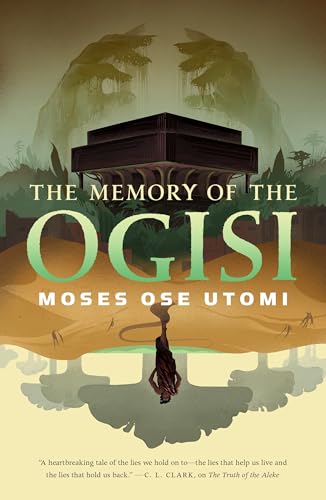
The Memory of the Ogisi – A Haunting Conclusion to the Forever Desert

I’ve been chewing on the Forever Desert Trilogy since 2023. Books that are interested in the art of storytelling are candy for me, and this trilogy takes a different approach than most. I actually use the first book in the Speculative Fiction course I teach to high schoolers. This series benefits from gaps between each book in the series: the way Utomi plays with history in this trilogy works best when your memory of the past book is a little bit fuzzy. I liked the first two books in this series a lot, but this book is by far my favorite of the three. It’s pretty bleak, and probably not for everyone, but it really worked for me. 

For reviews of the first two books in this series, see The Lies of the Ajungo and The Truth of the Aleke

The Premise
In this iteration of the Forever Desert, a minor historian departs from The City of a Thousand Stories in search of the famed Tomb of Osi. His journey brings him into contact with historians from other cities in search of other cities. What he finds causes him to rethink his society’s role in the world, and what he brings back sparks the change that will bring The Forever Desert into its next generation of oppression, control, and violence.

Read if: you’re looking for a blend of folkloric storytelling and epic fantasy, you’re interested in darkly thematic explorations of truth, power, and history

Avoid if: you dislike books that lack hope,you want worldbuilding to feel consistent and explainable

Comparable Titles: 1984, A Conspiracy of Truths, The Giver Quartet

Continue reading “The Memory of the Ogisi – A Haunting Conclusion to the Forever Desert”

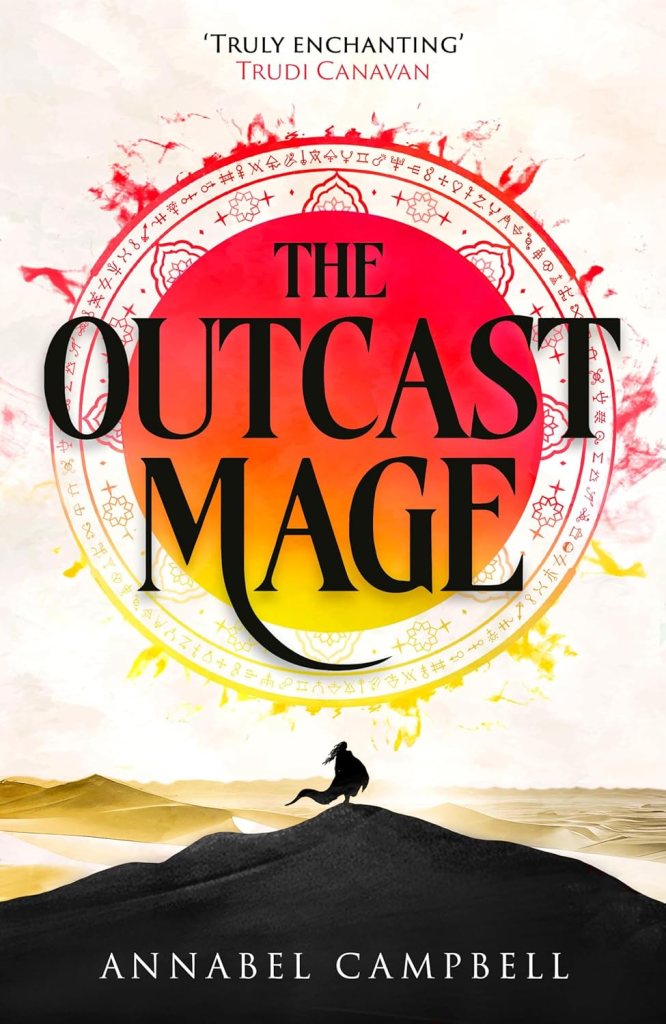
The Outcast Mage

Will February be the month of aggressively mediocre reads? Unclear, but if the last few books I finished are any indication it might be. The Outcast Mage reminded me that I need to DNF more, but kept luring me back in with interesting little tibits. Just as I was about to quit I learn that the spy priest is gay and eyeing up his bodyguard. I can’t stop there! Sadly, this book never quite came together for me, but I think could be a good fit for someone looking for a straightforward and modern take on Epic Fantasy. 

The Premise:
Amoria  is a city in a glass dome, a refuge for mages who fled persecution. Now however, they perpetrate many of the same crimes against those without magic. Naila lives between: she has the power to sense magic – and is thus a mage – but has now power herself. She is both with and without magic, trapped between two worlds who both view her with suspicion. This is mainly her story, but we also follow the city’s most powerful and arrogant mage, a senator who is Aunt to Naila’s best friend, a spy priest from the country who long-ago hunted down mages, and a strange woman wandering the countryside investigating mysterious calamities.

Read if Looking For: chosen ones, magic as an analogue for xenophobia, straightforward writing

Avoid if Looking For: intense characterization, nuanced villains, lots of dragons (more in the sequels?)

Continue reading “The Outcast Mage”

The Sign of the Dragon

I have perhaps an unreasonably high bar for books in verse. Some of my early adult reading experiences were with Jacqueline Woodson, and the few science fiction and fantasy poem books I read just didn’t live up to the standard she (and a few others) set. I think I’ve finally found a speculative fiction book in verse I can recommend wholeheartedly: The Sign of the Dragon by Mary Soon Lee was a delight, a wonderful read for the wintertime, and just generally heartwarming and heartbreaking. A great book to peruse a few poems per night, and I enjoyed reading this over the span of months, instead of my normal span of days.

The Premise:
Xau never thought he would become King. When the dragon on the mountain ate all his older siblings though, Xau passed her test and earned himself a crown he never wanted. Sign of the Dragon follows Xau’s journey as he discovers what kind of ruler he wants to be, oversees conflicts and alliance with many foreign nations, falls in love, raises children, faces supernatural threats, and tries to live a life that prioritizes kindness and acknowledging the humanity of all. The book also features many illustrations of various cinematic and/or emotional portions of the story.

Read if Looking For: epic and mythic stylings, idealistic leads, cozy books that also deal with grief, a constellation of POVs, horses (and a cat)

Avoid if Looking For: protagonists with real flaws, dragon-forward books, the thrill of battle

Continue reading “The Sign of the Dragon”

The War Arts Saga

This is a series that I find myself recommending a lot recently. Epic Fantasy meets Wuxia featuring steampunk Mongols is a really attention grabbing hook, and the series lives up to that promise admirably. I finally got around to finishing book 3 (somehow despite reading more than ever I find myself reading precious few sequels), so figured I’d do a write up for the entire trilogy. I left the series with mixed feelings, but definitely enjoyed the ride. 

Read if Looking For: protagonists of many skill levels & ages, beautifully written fight scenes, chosen one subversions, grumpy mentors, sassy assassins

Avoid if Looking For: series that end as strong as they start, zero to hero storylines, clear good vs evil plotlines

Continue reading “The War Arts Saga”

Breath of the Dragon

I was a little hesitant when I heard Fonda Lee announced she was writing a book with Bruce Lee’s daughter. In part, I’ve put Jade City on a bit of a pedestal, which is always a dangerous proposition. However, I tend to be leery when children pick up the work of their parents (Lord of the Rings, Dune, etc), and this book was advertised as an homage of Bruce, as is most (but not all) of Shannon’s books. I’ll admit this isn’t necessarily rooted in anything particularly logical, and some people do it better than others.

Early reviews were that it was a fun, mindless, YA martial arts story that was a pleasant read. Thus, I picked it up on vacation and shelved it for when I needed something to read without putting too much energy into a book. Cue the week I go on 4 field trips in 6 schooldays, supervise 80 kids making pancakes, and generally don’t get any breaks to do the administrative parts of the teaching job that never end. This book met my expectations, meaning I don’t regret reading it, and probably won’t grab the sequel when it comes out.

The Premise:
A once great country was cut in half by civil war. The East prohibits an martial training except by those blessed by the Dragon with magic powers, killing those who do any training in secret. The West celebrates martial prowess to the point where a bloodthirsty general is a breath from taking power and toppling the world into war. Jun grew up in the East, but he and his father were exiled when their martial training was discovered. Now 16, he seeks to enter the tournament to be the new Guardian, tasked with keeping the great Scroll of Earth safe and enshrining his name in history as one of the greatest warriors of all time. He’s got no magic powers, no rich patron, and a dad who wants to live without violence.

Read if Looking For: Fight scenes, tournament arcs, over the top villains, tropes on tropes on tropes

Avoid if Looking For: depth in any aspect of the story

Continue reading “Breath of the Dragon”

The Rage of Dragons

Recently, my epic fantasy books have been political and social in nature. They’re wonderful, but I’ve been itching for the style of Epic Fantasy featuring big armies and world-ending cataclysms. The Rage of Dragons lived up to that promise admirably. It’s more action-heavy than a traditional epic fantasy, with less emphasis on worldbuilding than is traditional. It lived up to the hype, and while I’m not planning to rush into a sequel, its a series that’s on my list to return to sometime in the next few years.

The Premise:
Tau is a Lesser, one of the grunt class who is used as pawns in the great war of the Omehi people. He is smaller, weaker, and slower than the nobility, even before the ability of some nobles to turn into The Hulk with the help of the mages (who can also call dragons). His plans to join the military and earn early retirement with his sweetheart via grievous injury are ruined when his father is murdered by the nobility. Now, he swears to work tirelessly to grow stronger, and to kill the three men who are responsible for his father’s death. At the same time, the war grows more dire, and best laid plans will go awry.

Read if Looking For: lots of fight scenes, quick pacing, the power of friendship & hard work, African-inspired fantasy settings

Avoid if Looking For: chosen one protagonists, unproblematic romance subplots, dragons as a major part of the story (probably more in sequels though)

Continue reading “The Rage of Dragons”