The Other Valley

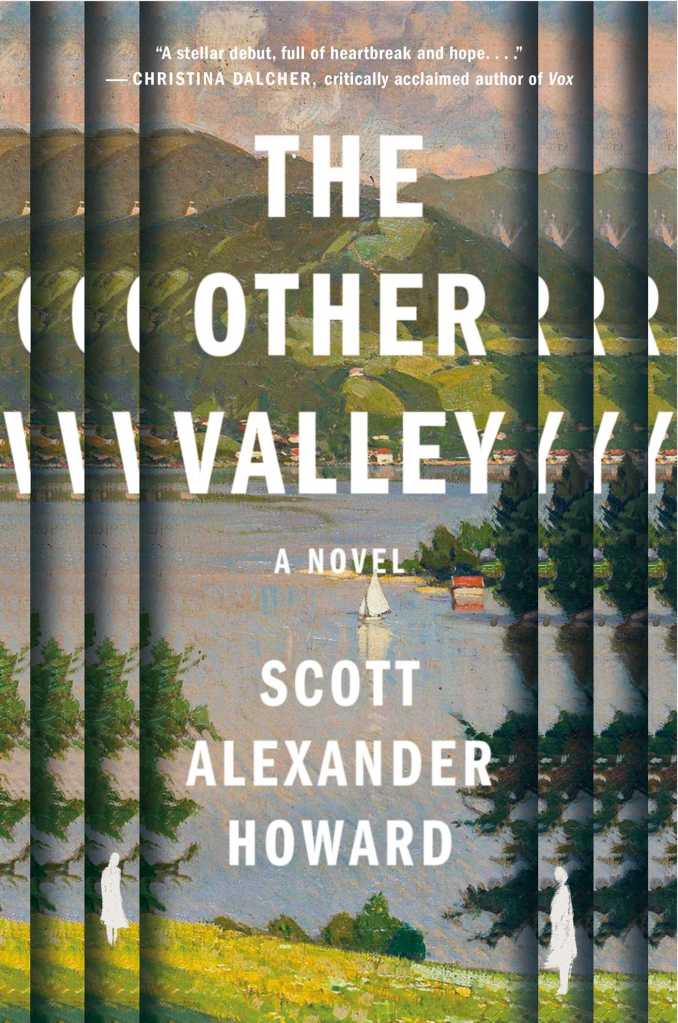
Literary Fantasy/Science Fiction isn’t something I read a ton of, but after this year I’m starting to think I should be reading more of it. The Other Valley wasn’t on my radar at all until it starting coming up repeatedly by reviewers I trust as one of the top books of 2024. As someone who read a lot of books published last year, this book is going to be my go-to example for how there are more phenomenal books coming out every year than you will ever be able to read. This is a frustrating and humbling thought, and one I’m slowly beginning to accept. It’s also the type of book that gave me a small existential crisis on whether I was doing anything meaningful with my life, which I’m still in the process of working through.
The Premise:
Odile lives in a small, unnamed town surrounded by villages, mountains, and a lake. The only thing distinguishing it from any part of rural France is that it is neighbored by it’s own past and future. Travel and visitation is highly regulated by the Conseils, who approve requests to visit only from family members who have lost a loved one, or who know their impending death will mean they miss important milestone’s in their family’s life, and even then visits are anonymous and highly monitored to avoid changing the timeline. Odile applies to apprentice as a Conseil, mostly at the request of her overbearing mother, even though she isn’t sure what she wants to do with her life. Normally quiet and tepid, she begins to open up to some other teens, right when she identifies a visitor from another valley, which shifts her trajectory in life forever.

Read if you Like: stoic protagonists pushed to their limits, snapshots of emotional intensity, books that feel like indie-films

Avoid if You Dislike: Time travel that makes very little sense when you pick it apart, fast-paced novels
Continue reading “The Other Valley”

Red Dot

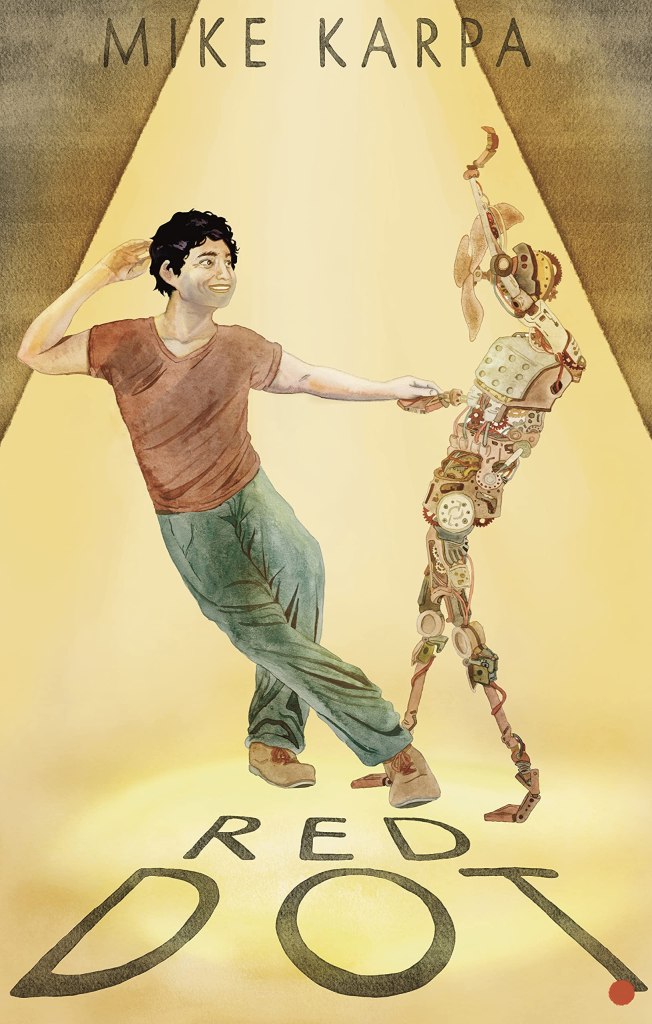
Sometimes, a single determined soul can hype a book so much that you reluctantly put it on your TBR. Usually, I end up never reading these books if they don’t keep popping up in various places. My reading list will already take 4 years to get through if I don’t add anything to it or read any sequels. In Red Dot’s case, the cover didn’t do it any favors. It isn’t particularly enticing (though in hindsight, I actually think it captures the book perfectly). For some reason, this was the month that Red Dot came off the bookshelf, and I found myself lost in the life of an artist with severe imposter syndrome. This is definitely a contender for my favorite book of the year so far, and I will proudly be the 24th person to rate this book on goodreads. It’s a hidden gem that I would love to see gain some new readers; it sucked me in and didn’t let go.

The Premise:
Mardy is an artist in a vaguely utopian future. Humanity banded together to help heal from the climate crisis, universal basic income is standard, and people eagerly volunteer their time for the good of the earth. Mardy’s main medium is machine tooling: manipulating metal and animatronics that are both functional and artistic. However, he’s constantly beaten by his rival Smith, and he’s wondering if he really has a future in art. Cue a chance meeting with Smith’s mysterious twin brother Wes, and slowly pieces start to slot into place for his next big step. Layered on top of all this is the single snag in the idyllic (if overheated) world: artificial intelligence is essential to the survival of the earth. Naming them, acknowledging their personhood, or encouraging independent decision making is a crime, out of fear they will abandon their duties keeping the world from tottering into destruction. Mardy disagrees and hopes his art is subversive enough to start making people rethink their beliefs.

Read if Looking For: character-driven sci fi, utopian-adjacent climate change futures, accurate gay sex scenes

Avoid if Looking For: action focused stories, believable romance arcs, pessimistic views of the future

Continue reading “Red Dot”

Heart of Stone

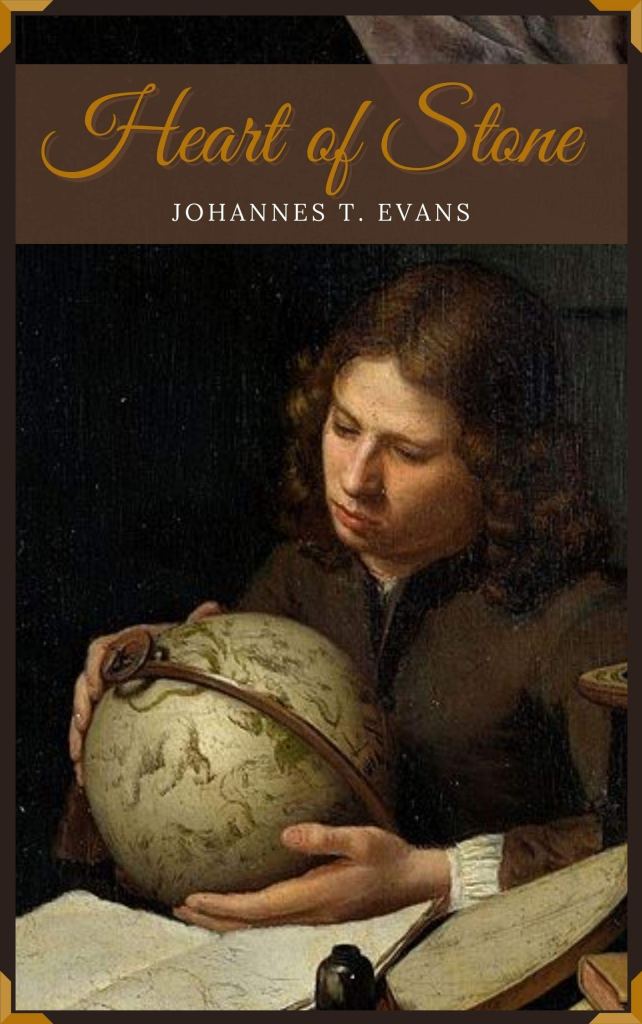
Vampire love stories are a dime a dozen. And while vampires can capture my attention, it’s pretty rare. I was part of the Twilight generation, and have gone full circle from ‘binge read all four’ to ‘these suck’ to ‘actually for YA they’re fine, and the first movie is delightful with a glass of wine’. Some other stories that lean more into the horror or gothic history of vampires, such as The Book Eaters by Sunyi Dean, left me extremely impressed. Heart of Stone, however, is a pretty straightforward vampiric romance, and thus not something I was enthused to pick up. Enough people had praised it, however, that I decided to give it a shot. It was a pleasant surprise, and one of the better fantasy romances I’ve read, if nothing else than because it wasn’t trying to be like every other fantasy romance out there.

The Premise
Henry is a vampire. Every few decades he moves, starting a new life, a new set of hobbies, and bringing some household staff who are ‘in the know’ with him. Theophilus is his new secretary, terse and introverted, frighteningly competent, unwilling to give any indication of his personal ideas and ideals. Both are gay, yearning for connection, and generally unwilling to speak about that part of their lives because London in the mid 1700s isn’t a great place for gay men. The book chronicles the growth of relationship into friends, and then into something more.

Read if you Like: contemplative and slow books, romances without hamfisted setups, extended conversations that exist without the need to push plot forwards

Avoid if you Dislike: characters who refuse to talk about their feelings, magic age gap romances, low spice books

Continue reading “Heart of Stone”

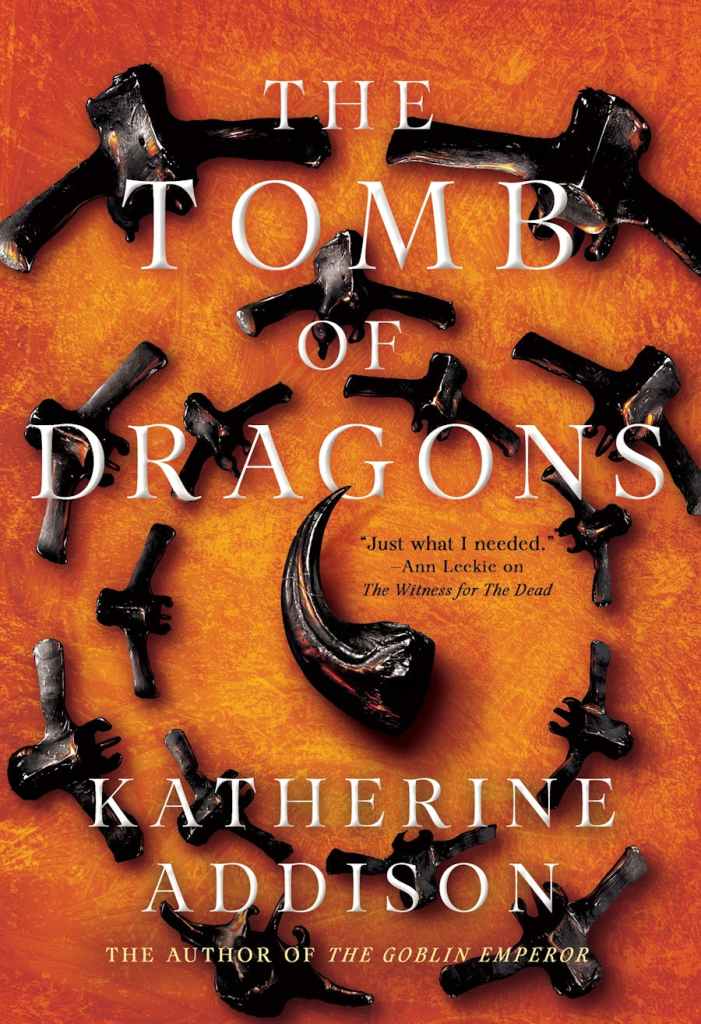
The Tomb of Dragons (Cemetaries of Amalo #3)

The ghost of a dead dragon; a tragic backstabbing in an opera; a man finally beginning to summon the will to move past condemning his own love to death. The Tomb of Dragons finishes the trilogy that Witness for the Dead started. In the end, I thought this was the weakest entry of the series, but it was well worth the read, and Addison continues to stand out as an author who staunchly refuses to adhere to modern conventions of how fantasy books ‘should’ read.

The Premise:
Book 2 of this series ended with Thara’s magic destroyed after a traumatic incident. It picks up with a death in an opera house, the disappearance of a noble in danger of fomenting rebellion, and a completely dysfunctional cemetery that Thara has been set by the Archprelate to get back on track. As with the other books in this series, it floats between plotlines smoothly, but the central one concerns a graveyard of dragons, and a ghost that seeks justice for its death hundreds of years ago.

Read If Looking For: slice of life following a death priest with depression, comically evil corporations, gay leads in non-romance books

Avoid if Looking For: books without cross-series references, mysteries, fast pacing

Continue reading “The Tomb of Dragons (Cemetaries of Amalo #3)”

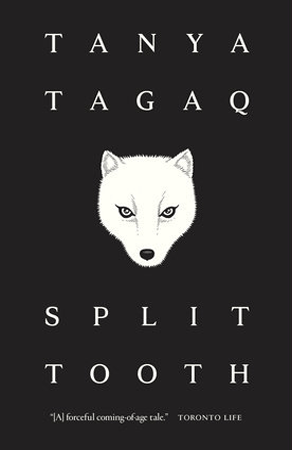
Split Tooth

Split Tooth is not a novel I should have enjoyed. Despite being an English major in college, Literature with a capital L has always rubbed me the wrong way. Even the more experimental Fantasy stuff I love tends to have strong roots in genre fiction tropes, like The Spear Cuts Through Water. Split Tooth was none of what I typically love, but I found that it became my first five star read of 2025.

The Premise:
Split Tooth follows a girl in Nunavut through her childhood and adolescence. While the story defies traditional plot arcs, you’ll find reflections on her family life, navigating school, pregnancy and motherhood, and the bridging of spirit and physical worlds.

Read if Looking For: books that blend poetry and prose, sparse magical realism stories, books with sharp edges, indigenous voices

Avoid if Looking For: traditional fantasy plot structures, easy reading

Continue reading “Split Tooth”

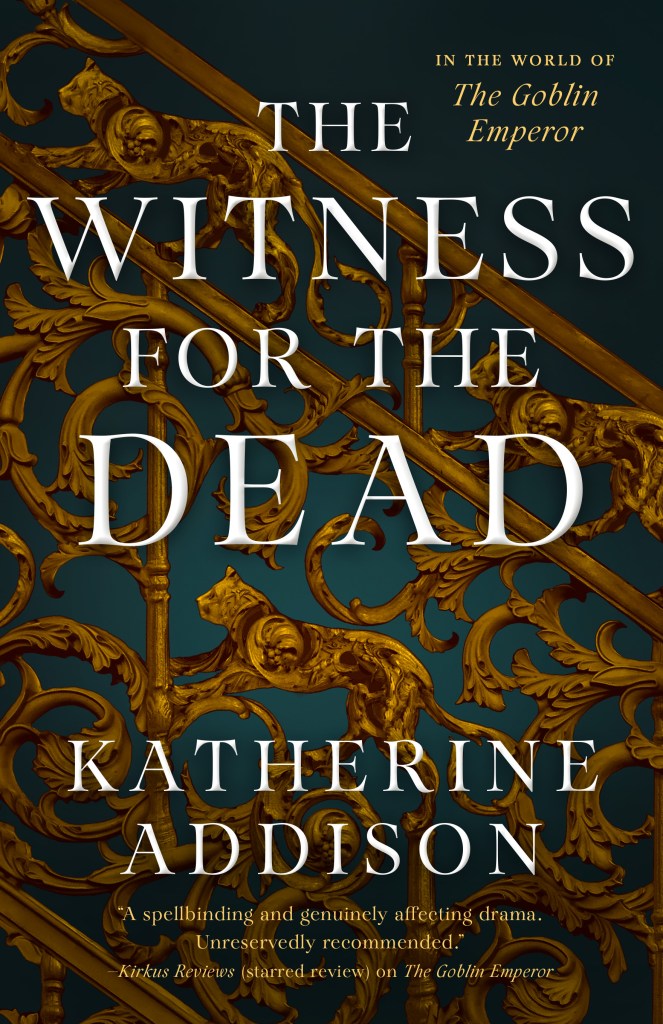
The Witness for the Dead

The Goblin Emperor won me over with its baroque tangle of royal ettiquette, its optimistic worldview, and a wonderful inversion of typical portrayals of monarchies. It’s sibling series is none of those things, and presents a story that feels very familiar in style, yet the polar opposite in tone. A subdued noir novella, Witness For the Dead does not require reading The Goblin Emperor to enjoy; it follows a side character far from the action and events of the previous story. In fact, there were surprisingly few easter eggs connecting the two.

The Premise:
 Celehar is a Witness for the Dead, a priest with some small ability to connect with the souls of the recently deceased. He lives far from the courts of power, and mostly uses the skill to solve murders, arbitrate wills, kill ghouls, and make sure the dead are treated with respect. This book follows a nasty noble house dispute, an accusation of spousal murder, and the death of a famed opera singer. And all the while, Celehar hides his homosexuality from a world which despises him for it.

Read If Looking For: gloomy priests, representations of internalized homophobia, simple and careful prose

Avoid if Looking For: upbeat stories, highly structured mysteries

Continue reading “The Witness for the Dead”

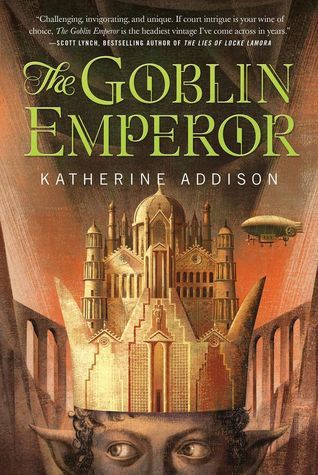
The Goblin Emperor

I like to think of myself as a fairly intelligent person. I was an English major in college. I read lots of fantasy books with invented words in them. I enjoy puzzles. And yet, never have I loved being so utterly lost in the beautiful red tape of titles and ranks in the Elven royal court in The Goblin Emperor.

Elevator Pitch:
The child of a marriage of alliance between an Elven Emperor and a Goblin Princess, Maia has lived his entire life in exile simply for who he is. When his father and siblings all die in a mysterious airship accident, he finds himself thrust into the role of the emperor, and finds himself in a world he is utterly unprepared for. Lost and confused and just trying to be happy, Maia must learn to accept being Emperor, because it is all he will ever know for the rest of his life.

Read if Looking For: the daily life of an unassuming Emperor, hopeful books, baroque invented fantasy language use

Avoid if Looking For: political intrigue as a developed plotline

Continue reading “The Goblin Emperor”

Mana Mirror

I’ve been a big fan and advocate of Tobias Begley’s previous series (Journals of Evander Tailor) in the progression fantasy space.  I appreciated how they balanced small scale magic-school stuff with overarching plots, included quality queer rep, and had a clear grasp on characterization within a breezy writing style.  So after binging book 3 in that series and seeing he had a new one coming out, I was overjoyed to see he had a new book coming out!  Mana Mirror is not going to be everyone’s cup of tea, but it was definitely mine.  

r/Fantasy - Mana Mirror review (for my ‘Published in 2024’ Bingo Card)

The Premise:
When Malachi got tested for magic and had the opportunity to pick opposing mana types for his spellcasting, he went with life and death mana.  This caught the attention of a morally-questionable magi looking for a successor/experiment subject, and Malachi quickly ended up becoming apprenticed to one of the most powerful spellcasters on the planet.  He’ll visit the local quest board often, learn about down payments on buying brooms, and meet a variety of cute folks along the way as he pursues a path towards magic that (among other things) will let him fully transition.

Read if Looking For: side quests, magic systems, wholesome family dynamics

Avoid if Looking For: action heavy, plot driven, or deeply thematic books

Continue reading “Mana Mirror”