
This is a sequel to Striker V: Elements of Change, which I enjoyed as a a great innovation on an enjoyable but played-out superhero formula. This book stays that course, and I think most people will have a similar reaction to both. Technically, this collection could probably be read as a standalone, but Vidmar doesn’t give a ton of backstory/context that would help ground readers. I also thought Elements of Change was the stronger book overall, despite this entry having more consistent high points throughout the book.
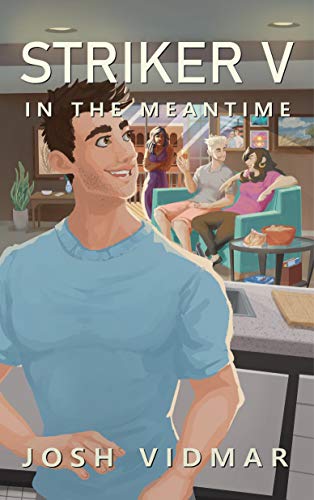
The Premise: This collection of stories and novellas follows various characters from the first Striker V book. They range from mundane conversations full of found family to stories with a more traditional superhero action focus.
Read if You Like: the humanity of superhumans, slice-of-life elements, bittersweet resolutions
Avoid if You Dislike: superhero stories, combat to be the primary driver of plot, mediocre combat scenes
What Worked For Me:
In general, this book was very much what I expected it to be, and I don’t know that my thoughts around Vidmar’s strengths and weaknesses have changed that much. Generally speaking, I think he’s great at bringing some humanity and dimensionality to a genre that usually either plays heroics as something epic and glorious, or it deconstructs the genre into something dark and psychologically tortured. Vidmar doesn’t take either approach.
Instead, his characters feel remarkably chill and realistic. Most are going through it, because anyone who has to enter life or death scenarios on the regular will have some element of trauma. However, the characters are making it work, finding ways to seek out the bright spots in life, and showing up for each other in important ways. Found Family isn’t an uncommon trope in Queer stories, but Vidmar has a way of making it feel unremarkable and normal, especially since many characters don’t know their birth families.
Of the stories, my favorites all focused on this more empathetic portrait of superheroics that Vidmar adopts. We get to see the antagonist of book 1 in counseling as he tries to … well not go crazy and destroy the world again. A super gets some help time-travelling to reconnect with her birth mother, which isn’t at all what she had expected or hoped for. A group of supers lobby for the government to provide enrichment activities, resulting in professional cooking lessons. Striker’s husband (who has no powers) considers a career change. A man destined to balance Heaven and Hell investigates strange occurrences. Striker gives advice to a dad in rural Wisconsin whose kid just came out, and then proceeds to help the kid ask out his crush.
This little peeks behind the curtain into their everyday lives aren’t something I’ve seen much outside the fanfiction scene. Candidly, I think its an approach to superhero’s that’s been long overlooked, and I definitely want to keep reading for this alone. Looking forward, it seems like Vidmar has no plans to change how he uses Superheroics as a set of clothing for intimate and personal stories. I am absolutely here for it.
What Didn’t Work for Me:
Because Vidmar isn’t fully deconstructing the superhero genre, that means we get more than a few fight scenes. This isn’t a bad thing. I’m actually on a bit of a mindless action kick right now (great for the stress of the school year starting). However … I just don’t think Vidmar is very good at them. I often found myself tuning out of combat and waiting for things to get good again, which is the opposite of how fights should feel!
He’s at his best when linking combat up with some of his more serious topics. The opening of Striker V (the first book in the series; the roman numeral is used because Striker is the fifth in his ‘lineage’ of the superhero line Striker) follows him lamenting that regeneration is intensely painful, and hating how there are promotional coupons that give away free sandwiches after he’s been thrown off a building enough in fights. Or when Striker observes his new apprentice uses a new way of breaching into doors and we learn about how super heroic harm-prevention training has evolved over time. When combat is a vessel for exploring the world or characters, Striker V shines.
When Vidmar writes a straightforward fight though? I hate to be cruel, but they put me to sleep. And this book’s combat had far less innovation and thematic commentary than his original book. Thankfully, there was also not a ton of it.
Conclusion: continues to be unique in how it focuses on the humanity and mental health of superheroes. The fights are subpar though.
- Characters: 4
- Setting: 4
- Craft: 3
- Themes: 4
- Enjoyment: 4


One thought on “Striker V: In the Meantime”