
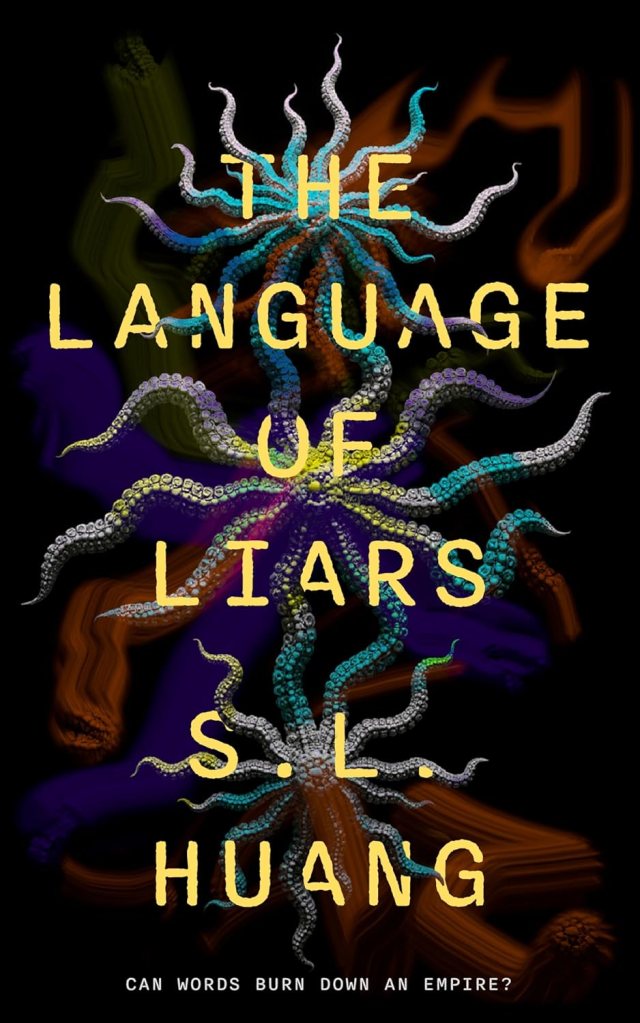
This book has all of the elements that typically appeal to me: it’s a novella, engages with questions of linguistics and ethics, and it asks the reader to be uncomfortable. The Language of Liars blew me out of the water. The opening sections left me with the feeling that this would be a good book, worth reading and recommending, but it got better and better. Every chapter sucked me in a little bit more until I sat in bed, story finished, thinking about the ending and its implications. I was not super enthralled by the 2025 novella nominations from most major awards. The Language of Liars has the right blend of thematic ambition, accessible writing, and the backing of a traditional publisher that make it an excellent candidate, and I will be happily advocating for it to make some waves on the awards circuit this year. To anyone who likes their stories to shine a mirror on our world without being too obvious about it, this is for you. There’s enough here for me to happily teach this novella in my Genre Fiction elective, and I’m desperately hoping one of the book clubs I participate in picks it up, because there’s so much to talk about from the last few chapters.
Really, truly an excellent piece of writing. Plus, the book is short and straightforward enough that the content-to-time-investment ratio is one of the best I’ve read this year.
The Premise:
Ro is a talented linguist, hoping to be the first in generations of his species to jump into another’s body. He succeeds, possessing a Star Eater who, like all of their race, mine the cosmic space dust necessary for faster than light travel. He has been trained for this moment, hoping to gather the information and skills needed to save the slow death of the universe’s society, which depends on the service (exploitation?) of the enigmatic aliens.
Read if You Like: autism-coded characters, uncomfortable questions about how you (the reader) live life, musings on linguistics
Avoid if You Dislike: straightforward prose, lack of clear solutions to problems, monolithic intergalactic governments
What Worked For Me:
I was in linguistic heaven for this book, especially the opening chapter, where Ro is in school as a linguist. Huang includes all sorts of translations for doubt and lying in different fictional languages, showing how they are reflective of different cultures and biological imperatives. There’s musings on how translating words into another language often strips them of the deep connotative meaning of the original word. It reminded me a bit of Ken Liu’s The Bookmaking Habits of Selective Species, except it anchors the explorations of alien languages in a single character’s perspective, biases, and goals. Ro himself feels very autism-coded to me. However, where does the line between coding and unlabeled representation get drawn? To me, this leans into the ‘depicting autism in a culture that doesn’t have a label for autism’ side of representation. In a lot of ways Huang handles this topic with care, such as discussing how the perceived displays of linguistic gloating were instead meant from Ro as complimentary discussion topics. After all, he assumed senior students would understand language at least as well as him. I could see accusations leveled at this book of being an autistic savant stereotype, which are overrepresented by orders of magnitude in autistic characters. All I can say is that it felt honest and earnest to me, and I reveled in Ro’s love of language, a trait present even after he takes of a Star Eater body.
I didn’t come into this book expecting the thematic directions it took. The blurb portrays the book as one of discovery, learning, and espionage. Instead, it delves into a species that was stripped of autonomy for its unreplaceable role in mining FTL travel materials. They are now ‘full citizens’, sort of, but the portrayals of them as ecstatic workaholics with no sense of individual identity are simply convenient tools to depersonify the greater universe’s abuse of them. Sound familiar to our world? Ro’s growing understanding of the Star Eaters was handled excellently, the sort of slow dawning horror that everything you knew was a lie. It was a delicious and smooth transition.
Like all good metaphors, Huang doesn’t beat you over the head with what it all means. Similarly, they also don’t limit themselves to studying legalized slavery made palatable via propaganda and distance. One of the most powerful lines in the book was when Ro was contemplating the declining reproductive rates of the Star Eaters, foreshadowing the catastrophic end of faster than light travel in a few centuries. Ro notes “Most continued to ignore such a slow death, trusting that someone, somewhere, would solve it.” If that isn’t an accurate representation of how we’re treating our world – myself included – I don’t know what is. The book also starts each chapter with a non-prose element: an interview, excerpt from a book, transcript of a meeting, etc. In some books this could be flavorful filler, but Huang leverages it to seed setting details and thematic ideas before the reader truly needs to know them, building up the story without relying on huge infodumps.
The further along the book goes, the more that Huang shifts the thematic focus to reflect the reader’s evolving understanding of the situation. I won’t get into specifics, because I don’t think I can even obliquely reference the ideas Huang eventually reaches for without spoiling the book horribly. However, I think Huang is bold enough in their conclusions that this book’s implications will spark a lot of big reactions from readers in both directions. It’s rare that I pause a book to really question and interrogate my gut reactions to a book’s theme, but I absolutely did that here. For those who have read it, there’s a very similar reaction to Ted Chiang’s The Lifecycle of Software Objects. For how many different thematic ideas Huang touches on, they all felt woven together so naturally into the story that it felt tangible and real, all without descending into a narrative dissection of what the reader is supposed to be taking away in connection to the world we live in.
What Didn’t Work for Me:
Representing non-human minds and speech is a sliding scale. The closer you bring their experience to humans and rely on narrative exposition to tell the reader about alien nature, the more comprehensible the text. The further you drift from traditional structures and language, the more your writing truly reimagines something alien, immersing the reader in something less immediately appealing while allowing for greater depth (in my opinion). Huang laid out a particularly challenging task for themself, as the book seeks to represent an alien mind’s interpretation of an even more eldritch set of sensory organs. The story relies heavily on ambiguity and references to alien culture/senses that encourage the reader to extrapolate their own version of xenobiology and xenopsychology. However, you won’t find Huang playing with format, prose structure, or other more unusual techniques to represent alien language or mindset.
I think Huang’s decision to strike a middle ground is a good one overall. However, with how intentional they were about some of the linguistic discussions at the start, it would have been interesting to see this novella push into something more experimental, sort of like what Dolki Min did in the excellent (and grotesque) Walking Practice. To be clear, this would have made the book far less marketable, so I can’t be upset by the path Huang took. However, it is the choice keeping this book from being a serious contender for my favorite story of the year.
Conclusion: a truly excellent novella with lots of interesting and contentious things to say, wrapped up in a fairly accessible package.
- Characters: 3
- Setting: 5
- Craft: 4
- Themes: 5
- Enjoyment: 5


One thought on “The Language of Liars – Award-Worthy in all the Right Ways”