
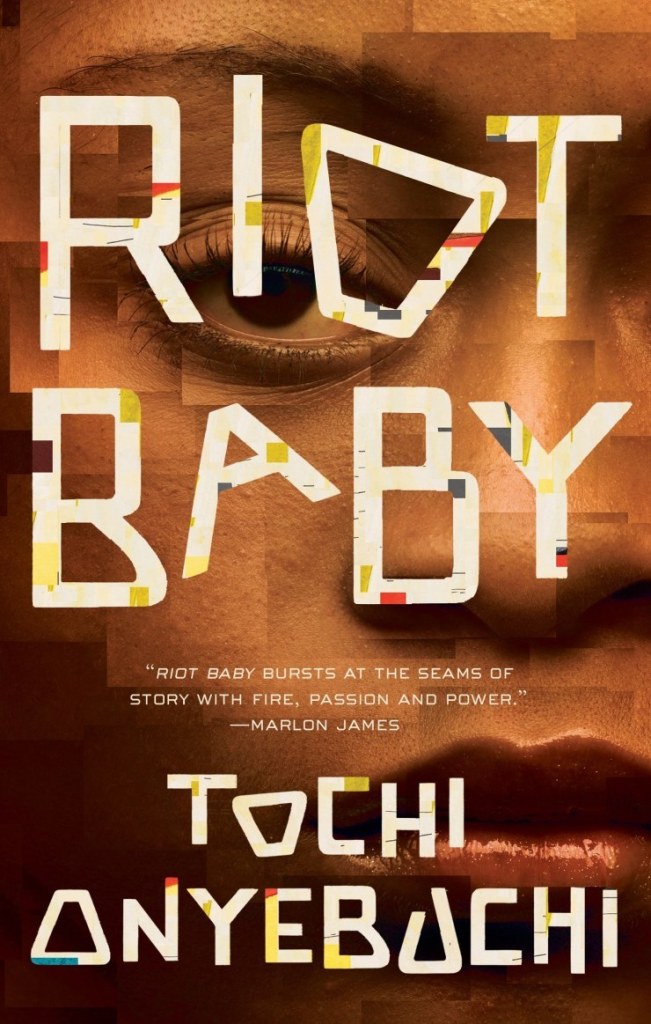
Platonic love is a topic that I’ve been craving more and more of in my reading, especially this month. Riot Baby has been languishing on my shelf for three years, and my craving for sibling bonds explored better than in my previous few reads finally got me to pick it up. I left the story conflicted. What Onyebuchi does well, he does phenomenally. However, I almost liked this story more as vignettes rather than as a cohesive novella.
The Premise:
This book follows siblings Ella and Kev throughout their childhood and early adulthood. Ella has powers akin to Jean Gray (a wide swath of extremely powerful abilities including precognition, destructive telekinesis, astral projection, etc), and Kev is a techie. The book’s main plot comes when Kev goes to jail, warping both his and Ella’s conception of what living in such a world looks like. However, the book doesn’t follow a traditional plot structure (you won’t find overarching antagonists here other than society itself), instead keeping Ella and Kev’s emotional journey as the focal point of the story.
Read If: you want a story about familial – not romantic – love, character centered stories are enjoyable to you
Avoid If: clear plot structures or well-executed speculative elements are important to you
What Worked for Me:
When this book focused on specific moments in time, Onyebuchi’s prose was captivating. From the streets of Harlem to the moment of grief and anger for a stillborn baby, Riot Baby captures moments with clarity that’s crystal-clear. Ella and Kev each go through hell in this book, and Onyebuchi makes their pain tangible. It’s the specificity of detail in an individual moment that make these portions of Riot Baby so compelling. It feels like we have been brought into this world to experience life with this pair of siblings, and it’s the connection with the personal experiences of these two that make the theme’s Riot Baby is chasing (the injustice of power in America, namely) shine through the brightest.
It’s hard to understate the emotional intensity of these scenes. Sometimes this is expected: when we witness Kev preparing to commit suicide from his prison cell, his cellmate giving him privacy to end his life without an audience was a moment of kindness that forced me to walk away from the story for an hour before returning. However, more often Riot Baby uses specific scenes to bring tension, fear, and anger to everything that comes after. One of the early pages I marked included the line “She remembers Mama telling her not to egg that dog on, not to tease it because one day the chain around its neck and the chain-link fence it sometimes throws itself against won’t be enough.” The story in this book is that dog, and you become Ella in the analogy; Riot Baby builds and builds upon itself as you wait for that inevitable moment when the characters break free of the chains and release the built up tension upon the setting and its readers.
What Didn’t Work for Me:
While I enjoyed moments of this story in isolation, I don’t know that I liked it as a full novella. The connective tissue between scenes didn’t help build on any of the foundation laid in Onyebuchi’s scenework. It felt scattered, trying to do too many things at once. This book wanted to be a portrait of life in American cities, an exploration of the injustice of our justice system, a magical realism story of power and revenge, a dystopian imagining of America’s racist future, and a deeply personal story of a family. It’s too much in 160 pages, and the book as a whole suffered for it.
Additionally, I’m not sure what the speculative elements added to this story. You’ve got the magical powers – most prominently of Ella – which are both ill defined and not leveraged in the storytelling very often. As the book progresses, it shifts a bit into a technological dystopia of robocops and surveillance implants. Unfortunately, this never got fleshed out enough to be anything other than a shallow commentary on what might be. Similarly, the emotional impact is far lower than the personal vignettes, abandoning Onyebuchi’s greatest strengths in this novella.. I left the book feeling like it would have been better as realistic fiction, because the speculative elements were more a distraction than an asset to the story.
Conclusion: An emotionally intense story, but not the most coherent plot I’ve seen
 Marked for Plot
I read this book and I loved the blending of “mutant” (think X-Men) plots with notable historical moments in Black America. Yes, the plot and the pacing are all over the place, the ending serves as a warning for the audience.
LikeLiked by 1 person
X Men came to mind for me too! He’s an author I want to read more of; I enjoy it when authors take big swings and break away from the default assumptions of the genre. I felt like I was on a roller coaster with this book, but the bits that worked for me were masterpieces
LikeLiked by 1 person