
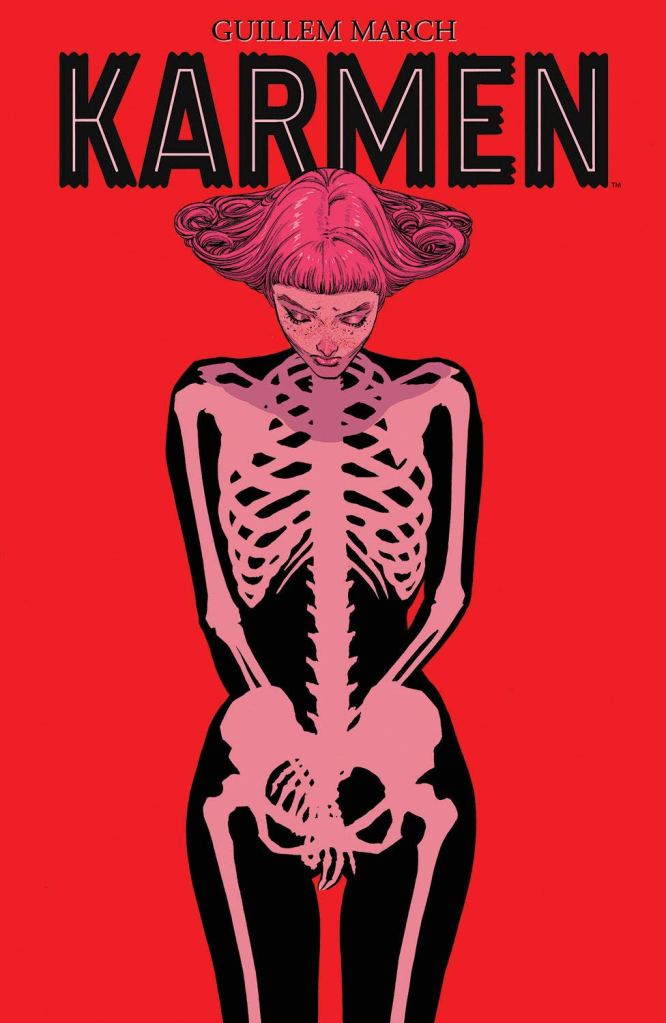
After loving my time with The Many Deaths of Laila Starr, I decided to chase down some comics that people have shared are comparable. I can see why Karmen was mentioned: it asks a character to confront death as they grow and change. Despite being published in 2020, the book felt dated. It’s an enjoyable enough read if you don’t think about things at all. Plus, its a short and quick read. However, it definitely irked me in ways that modern media rarely does. This story triggered thematic red flag after thematic red flag despite being a great book to read on a long car ride.
The Premise
This comic follows Cata, who commits suicide after learning that her longtime best friend (since elementary school) Xisco is cheating on his girlfriend with Cata’s roommate. Turns out Cata’s been in love with him the whole time and this was the last straw. At this point, she turns into a ghost and meets Karmen, an immortal responsible for helping souls pass from one life to the next, determined by how they have cultivated their virtues in their life. Cata is destined to reincarnate as a lower life form. Karmen asks Cata to confront various parts of her personality, eavesdrop on others to learn lessons from them, all in an effort to help Cata’s soul improve in her next incarnation.
Read If You Like: meddling immortals, confronting your character flaws, cat ladies, emotional conclusions
Avoid If You Dislike: men and women unable to have a close platonic relationship, lots of female nudity (all non-sexual, but it’s nonstop), committing suicide because a man didn’t love you
Comparable Media: The Many Deaths of Laila Starr, It’s a Wonderful Life
What Didn’t Work For Me:
Let’s get into the things that bugged me. First of all, we don’t see nearly enough close friendships between heterosexual men and women. This is true in media – no, friend groups and ensemble casts don’t count – and also is reflected in real life attitudes that men and women couldn’t possibly be platonically close without having romantic inclinations. This is something the queer community has solved for ages, as tons of queer folks are friends without it being an issue. So that was the first strike against my perception of the situation, because of course she was secretly in love with Xisco the whole time! Even though we got a panel in the first few pages where Xisco told his then-girlfriend that his friendship with Cata was platonic and there was nothing to be worried about.
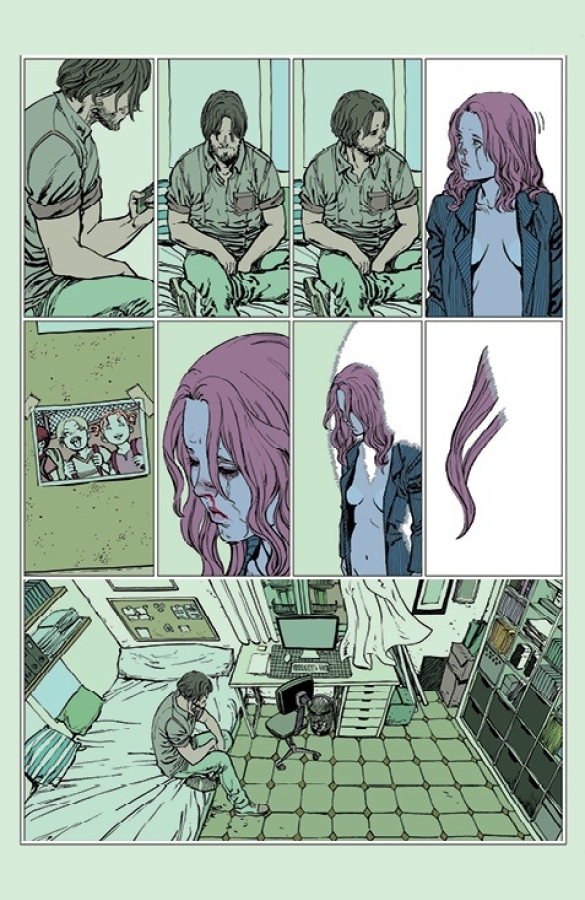
Turns out there was something to worry about, because Cata actually loved him so much that she commits suicide. Literally commits suicide because her longterm crush turned out to be a cheater who didn’t even have the dignity to pick her as the girl to cheat with. No exploration of mental health struggles beyond that. This felt like a remarkably cavalier and lazy way to write a suicide story. There wasn’t even a lecture from our meddling angel on how her life shouldn’t revolve around a man, and that it might be important for her to not place all her eggs in a single basket when the basket has historically shown 0 interest in having said eggs placed there.
For the rest of this section, there will be spoilers for the end of the book.
It gets worse!
Turns out Xisco was actually also in love with Cata. This can happen in real life of course; two of my close friends were besties for nine years before they started dating, and now are one of the happiest married couples I know. But the vast majority of Cata’s character development, her desire to make changes in her next life, revolve around the fact that the man loves her back! Life is truly not worth living without a man in it, I guess. Karmen makes Romeo and Juliet look progressive
Thus, dated and frustrating. I’m perhaps underplaying a few other character development moments, such as Cata realizing the pain she put her parents through, but these tended to be fleeting in comparison with the thematic mountain that the Xisco/Cata storyline took up.
What Worked for Me:
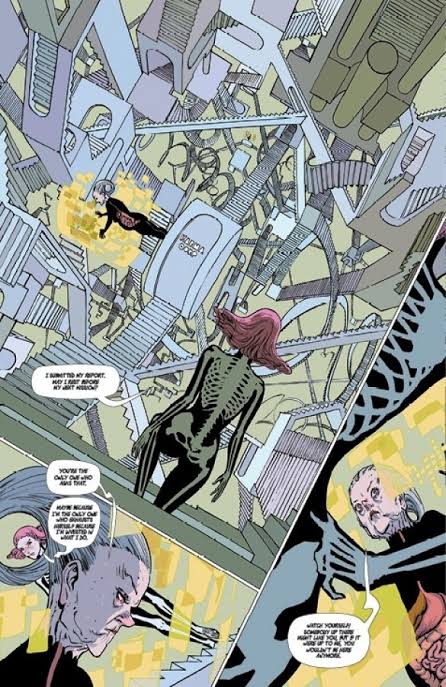
Why did I finish such a backwards story? For one the art is phenomenal. As long as you aren’t mad at constant female nudity, there’s a lot to love here. She’s nude because she committed suicide in a bathtub … but this was definitely a choice on the author’s part. It didn’t bug me, but it’s a pretty common refrain amongst those who dislike the book. The landscapes in particular were gorgeous, and I appreciated how many drawings felt like the author were applying warping effects (such as a fisheye lens) to how he framed panels. Beautiful buildings, a great sense of scale and how small humans really are, and a color palette that suited the story. I especially loved our immortal Karmen, whose bright personality was a great contrast to her skeletal design.
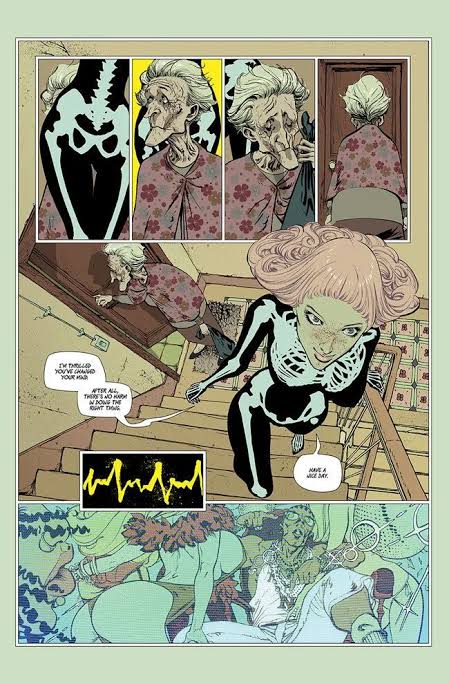
Honestly, Karmen stole the show. I think I would have liked this book a lot more had she been the protagonist. There’s a whole side-plot about how she’s breaking a ton of rules to try and help the souls she shepherds between lives, and a series of vignettes from her view on different souls would have been a much more interesting story, in my opinion. The other heartless (capitalist?) Karma angels were fun too, even if they were fairly two dimensional foils to Karmen.
Lastly, as much as I hated most of the choices that got us to the epilogue, the epilogue itself was quite wonderful. It tied up a lot of loose threads, finally took a few tentative steps beyond romantic love being the end-all of a person’s life. It encapsulated all the little flashes of potential I saw in the art and emotional beats. Was it enough for me to read more by March? Not sure, but he isn’t a comic I’ll be hustling to return to.
Conclusion: a thematic train wreck, but enjoyably if you don’t think about it too hard
 Marked for Plot
One thought on “Karmen – Deadly Bad Decisions”