
This book has been sitting on my desk as a potential whole-class read for high school level comics classes. It’s award-nominated and generally has a phenomenal reputation. At 128 pages, this story is absolutely worth a look if you’re in the mood for something contemplative with some light humor elements. It feels very much like an Autumn book, in that it asks readers to think about their own relationship with death, but it remains pretty accessible throughout. Plus, it’s popular enough that you can likely nab a copy from your local library!
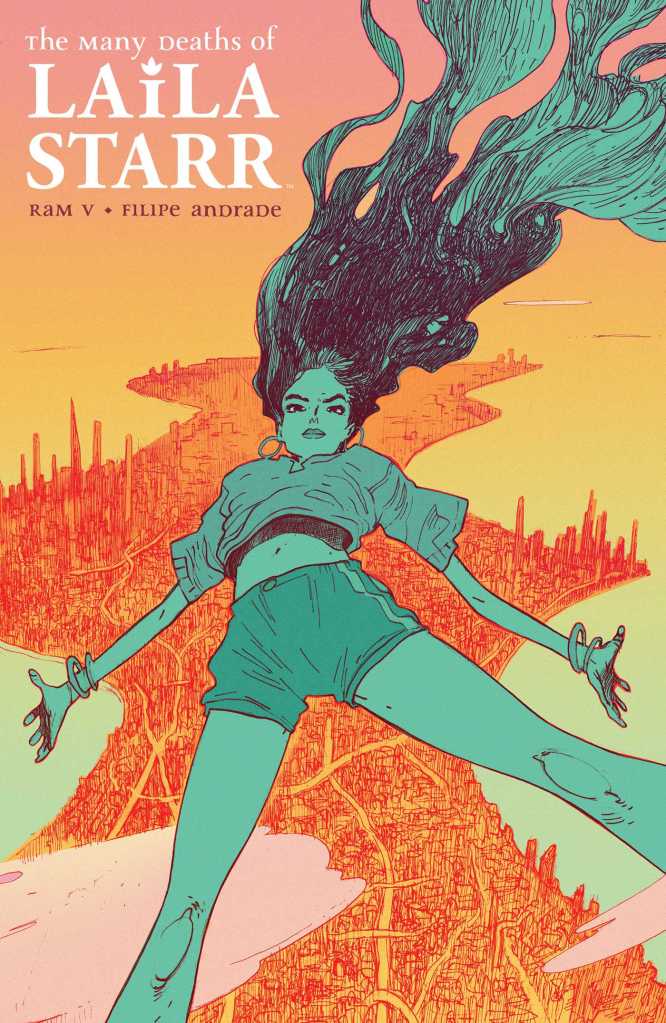
The Premise:
A child destined to discover immortality is born, and with it comes layoffs. Death finds herself without work, trapped in a human body and the pesky mortality that comes with it. This comic covers her many lives (she gets brought back by her companion Life often) as she comes into contact with the child (and later teen, adult, and elderly man) who caused her downfall.
Read If Looking For: a god experiencing mortality, episodic story structures, casual cigarettes, quiet storytelling with vibrant colors
Avoid If Looking For: the political machinations of gods, experimental art, novel and original endings
Comparable Media: Cloud Atlas, Sandman. I’ve also heard that it pairs delightfully with Daytripper and Karmen, both of which I’m intent on reading soon.
What Worked for Me:
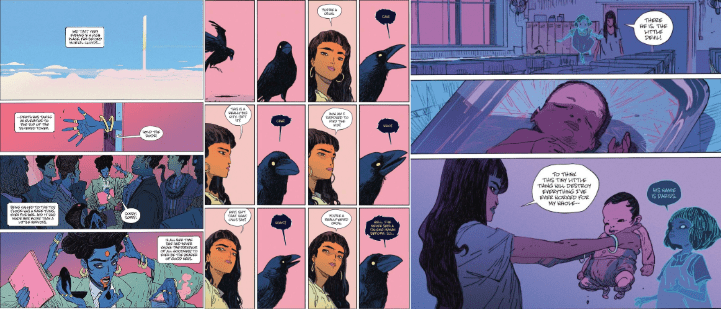
Oh but this story was a delight! I didn’t quite realise how this book was going to be closer to a series of connected vignettes rather than a traditional plot, but it really worked for me. Laila’s journey through mortality brings her into contact with a few recurring characters (notably the man who invents immortality, along with the personification of Life), but each chapter brings us something new, and typically melancholic. A Chinese temple seeking out the last man who cared for it. A crow who shepherds the souls of the dead to the afterlife. A college party where a young man learns of heartbreak for the first time (narrated by a cigarette). While the book’s ending gets a little bit more direct in how it builds theme, the journey to get there simply asks us to exist alongside other humans. Death herself comes to terms with the emotions of mortality a little bit at a time, confused at why things are so different for her now that she’s on the ‘other side’. It’s the type of comic that would make a great TV show, I think. A short run with a single episode per chapter, lots of violin in the score, and something to watch when you want to feel a bit melancholy.
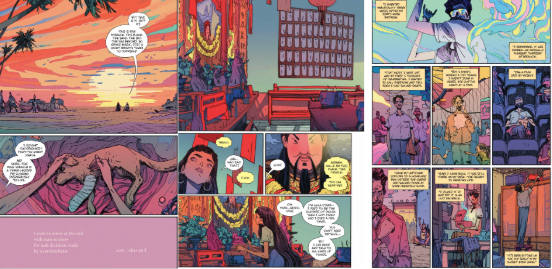
On the art front, I think Filipe Andrade (Illustrator) and Inês Amaro (Colorist) did a phenomenal job. A lot of the emotional weight in this story rests on their gorgeous execution of Mumbai. Their work here is a bit of a moving target, consistent in style while swimming in a constantly shifting sea of color. At times the depictions of Laila and the world stay fairly realistic. However, the story slips into washes of red and blue with ease, proportions shift from mundane to exaggerated, and the amount of detail ebbs and flows. The art is driven more by affectiveness than consistency. The panel layouts weren’t terribly innovative, but each panel feels meaningful to the story. The story is clear, quick moving, and emotive. Without the art, I think the story would still be solid, but the art definitely elevates the story.
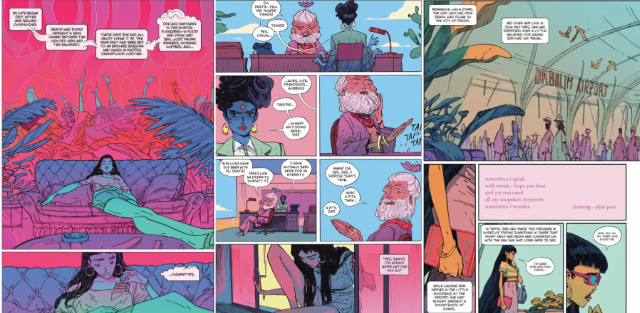
Overall, I found The Many Deaths of Laila Starr to be a great comic. It’s packed full of wistfulness, and it feels timeless. A bit like floating in a sensory deprivation tank (or at least, I imagine. I haven’t actually done that yet). It’s intentional without being dense, reflective without hitting you over the head with a hammer, and vibrant without being overwhelming.
What Didn’t Work For Me:
For its length, I don’t have any major complaints with The Many Deaths of Laila Starr. However, I think that many will look at the book’s ending and struggle with the conclusions/message that Ram V is getting at. This story is very much one about embracing life and the beauty of a fleeting existence. This is nothing new – characters coming to terms with death is a well-worn trope – and The Many Deaths of Laila Starr doesn’t add anything particularly new to that conversation. However, it’s so tightly executed that I didn’t mind the cliches popping up near the end of the story, even if I kind of want to see the version of the story where Death spends the whole run masquerading as an assassin.
Conclusion: a poignant, beautiful, and perhaps slightly unoriginal story about the meaning of life and death


2 thoughts on “The Many Deaths of Laila Starr – Vignettes on Death”