
After Works of Vermin, I wanted something light and simple. The Daily Grind has been on my Progression Fantasy radar for a while, and it felt like a great book to read while mildly burnt out and stressed about dry rot on windows. It absolutely scratched that itch, and I’m definitely going to keep reading more of this series as a palette cleanser between heavier reads. Is this book going to satisfy anyone’s desire for carefully wrought stories brimming with meaning and subtext? Absolutely not. But for a casual fun trip into an eldritch dimension watching normal people fight animated post it notes, this is a great pick. It has big beach read vibes despite most of the book happening in an unending void of cubicles.
The Premise:
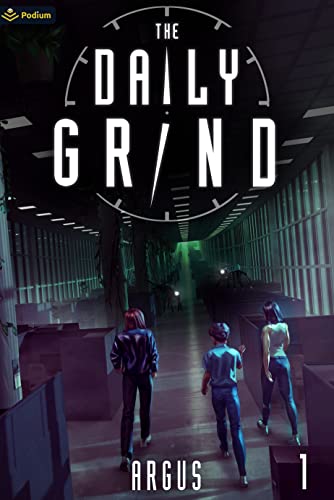
James hates his job. To be fair, who would enjoy vague IT support where you get yelled at because the customer lost their remote and can’t change the channel anymore. On his way out one night, he discovers a staircase turns into an alternate dimension for a few minutes – though time works differently on the inside. The endless rows of cubicles seem to be randomly generated by some eldritch mind, and the maze is filled with stapler crabs, computers with jaws in strange places, and bills that come in far more denominations than you can find in the real world. When he learns that killing monsters drop skill orbs (typically for stuff like Excel Spreadsheets or French History) he quickly grows addicted to delving in this bizarre dungeon.
Read If Looking For: something simple, repetitive, and chill, casual bisexual representation, uncanny valley office supplies
Avoid If Looking For: dramatic power-ups, careful prose, epic fight scenes
Comparable Media: Several People are Typing, Mana Mirror, Triangle Agency
What Worked for Me:
Oftentimes in Progression Fantasy stories, especially ones serialized on Royal Road, the main character is … special. Usually right away. They generally have a broken power, rocket ahead of the curve in terms of skills and abilities. This is true even in stories where the main character gets powers that are theoretically drawbacks and/or take a long time to pay off. The Daily Grind has none of that. James is a bog standard dude, and remains so by the end of book. His skill upgrades rarely give him any advantage in the corporate dungeon. Knowing how a phone book is formatted isn’t going to stop you from being strangled by animated power cords. He gets a few ranks of martial arts skills over the course of the book, but even those aren’t particularly relevant. You plan on punching your way through the ceramic shell of a potted plant? I don’t think so. No, the biggest power James – and his eventual companions – get is money. They happily rob wallets of cash while leaving gift cards for businesses that don’t exist. If James was a superhero, he’d be Robin at the very start of his training. There are plenty of parts of this book that aren’t realistic – such as how characters respond to injuries and combat – but I liked the slower pacing and ‘everyman’ feeling of our heroes. Throw in a couple of adorable sidekicks (a stapler crab and a drone), and the book gives a really solid foundation for an adventuring party.
Another way The Daily Grind surpasses the admittedly low standards of Progression Fantasy is how the narrative voice is wildly misogynistic. This is a low bar, I know, but I cannot count the number of stories I’ve dropped because of how women are written. There aren’t a ton of female characters, but the cast is fairly small overall. They’re treated with the same casual humanity that the guys get, and I don’t know their boob sizes. Actually, this book was a breath of fresh air in a lot of ways. James and Anesh – the main two delvers for the majority of the book – are becoming aware of their own bisexuality in a really offhand way (there are precious few gay progression fantasy stories, as they often get reviewbombed by the reading base). James struggles with depression, which neither magically vanishes nor overwhelms the story. It’s just part of who he is. I wouldn’t call any of our cast phenomenally deep or complex characters, but they are treated with respect by Argus, who expects the same of the reader.
If a lot of this feels like comparisons to the rest of the Progression Fantasy genre, that’s definitely because I don’t think I’d recommend this book to people unless they’re actively seeking that kind of story. This won’t satisfy many fantasy or sci fi readers, but it’s a good option for those in the mood for something that feels a bit like a video game.
What Didn’t Work For Me:
I enjoyed The Daily Grind a ton, but I also can recognize that, if I held it to the standard of many of the other books I read, it would probably come up short. The prose is relatively unremarkable, not keeping me from enjoying the story, not drawing me in with each sentence. The plot repeats without too many variations: every few chapters we get a new and interesting monster, but the core framework remains the same. There aren’t any deep themes, and Argus doesn’t seem to be setting their characters up for any major growth arcs. It doesn’t even have the epic and badass fight scenes or magic that so many progression fantasy books hang their hat on. The Daily Grind satisfied my desire for something simple, like a midnight snack. But if you come in expecting any sort of hearty meal, you’ll probably leave disappointed.
Conclusion: a fun and grounded progression fantasy, but not so addicting I’d give it to people who aren’t asking for a book in that genre.


One thought on “The Daily Grind – When Corporate America becomes the Dungeon”