
It’s unsurprising that the AIDS epidemic has been notably absent from Fantasy and Science fiction novels. There are lots of reasons for this: many read for escapism, the 80s/90s isn’t a common time period for fantasy or science fiction in general, and AIDS doesn’t fit neatly into the cute love story narrative that traditional publishers have historically leaned on when writing books about gay men. Things are improving – traditionally published trans protagonists exist, though they’re still rare – and there are a few novels that have tackled the idea (though I couldn’t bring myself to keep reading the train wreck that was Disco Witches of Fire Island). I live in hope, but my hopes aren’t very high.
Comics have actually done a much better job of engaging with the topic, though not always well. I got to teach a few lessons on the representation of AIDS in superhero comics a few years ago, and I’m hoping I’ll have the chance to expand it into a full unit soon. Barbalien was part of that journey, and a great example of how mainstream comics have evolved on the issue over 30 years. Barbalien is set in the The World of Black Hammer, a superheroverse more or less analogous to DC or Marvel. You really don’t need any previous context for the story, so don’t feel like you need to jump in ‘at the start’ if you aren’t interested in the cute and satirical set of villain interviews that form the universe’s first installment. Barbalien is a more serious story, but not so bleak as to suffer accusations of torture porn.
Finally, it’s important to note that while Jeff Lemire seems to be listed as the main author, the story is a collaboration between him and Tate Brombal. The actual script (dialogue, panel by panel story descriptions, etc) is all Brombal, an openly gay comic writer.
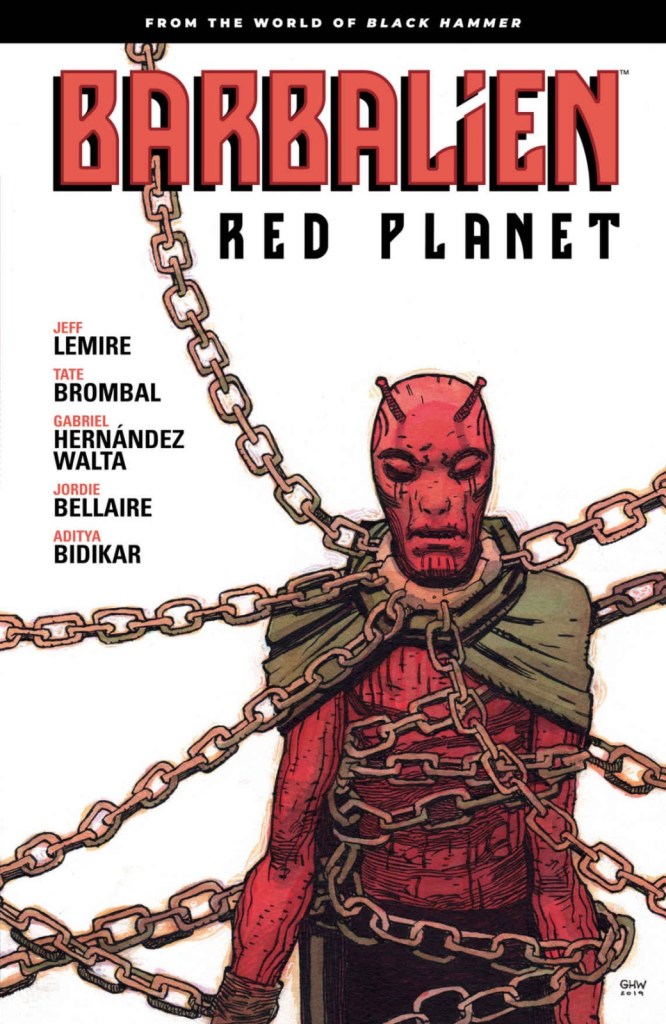
The Premise
Mark Markz is from Mars. When masquerading as a human, he works as a cop trying to do good. When openly martian, he fights crime as Barbalien. When both personas are needed at an AIDS protest, Mark comes into contact with Miguel, a young activist whose partner recently died of AIDS. As they fall in love, Mark grapples with his growing realization of how the system he works for is a force of oppression, finds connections in the queer underground, and is hunted by a rival from Mars.
Read If Looking For: queer joy, queer pain, and queer love
Avoid If Looking For: sympathetic cops, cinematic fight scenes, fleshed out supporting characters
What Worked for Me:
Despite everything my above pitch says, Miguel is the star of the show and the driving force of the plot (dare I say this is the rare novel where the protagonist and viewpoint character differ? Probably not, but it’s close). To a certain extent, Miguel isn’t the most nuanced portrait of an eventual AIDS victim you’ll see; he’s a young Puerto Rican man with a joyfully loud voice. I liked him the most when he was calling Barbalien out on his privilege and not understanding what it’s like to know your life is on a timer. With a few interwoven storylines, the story didn’t have the opportunity to go as deep as I’d have liked.
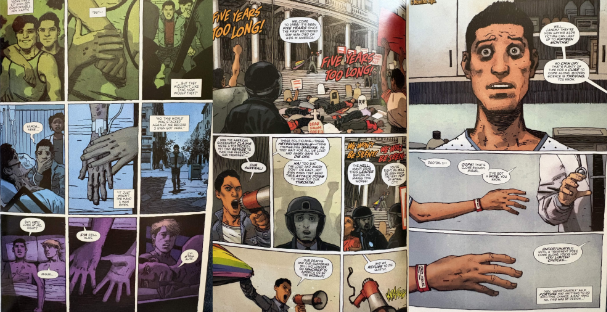
What it lacked in nuance, Barbalien made up for with heart. It’s relentlessly humanizing. It refuses to sink into trauma porn while also engaging in a very frank and serious look at the life of someone with AIDS. The moments that caught me the most were the casual ones, such as Miguel getting his diagnosis in the hospital. The chipper doctor flinches away when Miguel seeks a human connection, being clear to Miguel that he has a wife at home. It shouldn’t be a spoiler that Miguel doesn’t survive the series, but his story is a powerful one.
What Didn’t Work For Me:
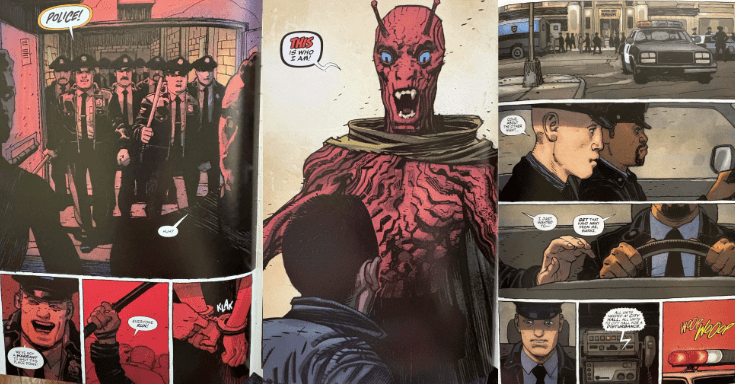
Candidly, Mark’s storyline is the weakest part of the novel. Brombal includes a lot of classic superhero elements common to alien heroes – most notably a brutal alien villain to serve as his foil, but largely fails to iterate on that formula in meaningful ways, with the notable exception of his growing disillusionment with the US police state. Mark is our viewpoint character but not our protagonist. He is merely a vessel for us to experience Miguel’s story through, which is the true beating heart of the Barbalien comic run. This isn’t really a complaint necessarily; I liked the focus exactly where Brombal put it. However, it’s notable that the actual superhero portions are kind of bland. It didn’t help that Walta’s rendering of the martians were less clear and emotive than I’d have liked. Something about the way he handled the shading and texture of their skin made it difficult to parse sometimes.
Overall though, this was a comic I read in a single night and don’t have any substantive complaints about it. This is an honest and earnest story that honors the past without getting lost in its misery – though there’s absolutely a place for that too.
Conclusion: A superhero story that serves mostly as an exploration of the AIDS epidemic and one mans’ (alien’s) shifting views on what justice looks like.
 Marked for Plot
One thought on “Barbalien: Red Planet – An Optimistic Story set in a Tragic Past”