
This book was pretty far out of my wheelhouse, but it’s relentlessly good press plus my desire to stretch outside my comfort zone – this is so close to being realistic fiction in entirety – got me to pick it up. Octopuses are awesome, so what’s not to love? I left the book pretty torn: I understand why it worked for so many people, and I think if I were a bigger fan of realistic fiction I’d have enjoyed it. As it is, this was a slog to finish, despite really enjoying some significant chunks of the book.
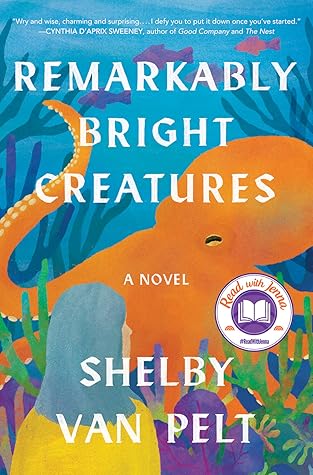
The Premise
Brandon’s mother abandoned him at 9, and he never knew his father. After getting dumped by his girlfriend, he follows clues left behind to try and find his family. Tova is an aging woman who enjoys her knitting club and cleaning at the local aquarium, where she’s befriended the Giant Pacific Octopus. Marcellus is said octopus, who is desperately trying to find stimulation and enjoyment in his life.
Read If Looking For: heartfelt family stories, lovable old ladies, an octopus smarter than the humans who are stumbling through the plot
Avoid If Looking For: xenofiction to be the focal point, characters to communicate with each other
Comparable Media: A Man called Ove, Shadow Life
What Worked for Me:
Remarkably Bright Creatures is surprisingly cozy for how much dark content exists in characters’ backstories. Both Tova and Brandon have family trauma, Marcellus is eyeing death in his old age, and Pelt does a good job of finding joy in small moments. Her rendering of most characters is tropey but enjoyable. Tova and Marcellus in particular have really powerful character-voices, fleshed out arcs, and great moments with others. I wish Pelt would have done a better job of exploring Brandon’s trauma and its connections to his current situation; he doesn’t quite seem to get the same benefit of the doubt that everyone else does in the story.
Despite that blip though, I can see how over a million people fell in love with these characters, and I was invested in their happy ending, even if the end point was fairly obvious after a few chapters. The blurb on Goodreds says the book is “an exploration of friendship, reckoning, and hope” and that’s a pretty darn good encapsulation of the vibes in the story (maybe minus the reckoning). Good vibes, and mostly lovable characters.
What Didn’t Work For Me:
I wanted Marcellus’s plotline to be more important so, so badly. Perhaps this is a mismatch of expectations: I came in assuming he would be the main character, but sadly he was a fairly minor part of the book all things considered. Yes, he is instrumental in some key plot points and pushing the story forward, but his chapters are short and he doesn’t get much character development. I also didn’t particularly buy that this was how octopi think, but that I’m willing to forgive because I enjoyed his character voice quite a bit. More octopus please!
On a larger scale, I simply cannot stand overuse of miscommunication plot points. I don’t mind it being used in the story, but there were so many times when characters would try to share information only for the other person to walk away before that moment happened. Or for them to tell an intermediary instead of texting. I had to step away from the story for a day because I was so goddamn frustrated. Marcellus even commented on how Tov and Brandon just needed to talk to each other, so Pelt seemed aware of how much she was using this technique. It didn’t really feel like there were other tools in Pelt’s toolkit to create tension or avoid resolving the plot before she wanted to. Is this bad writing, or just a personal pet peeve getting in the way of my enjoyment? I’m not sure, but it made the second half of the story a very unpleasant read for me.
Conclusion: Too little octopus! Too much plot contrivance!
 Marked for Plot