Tongues

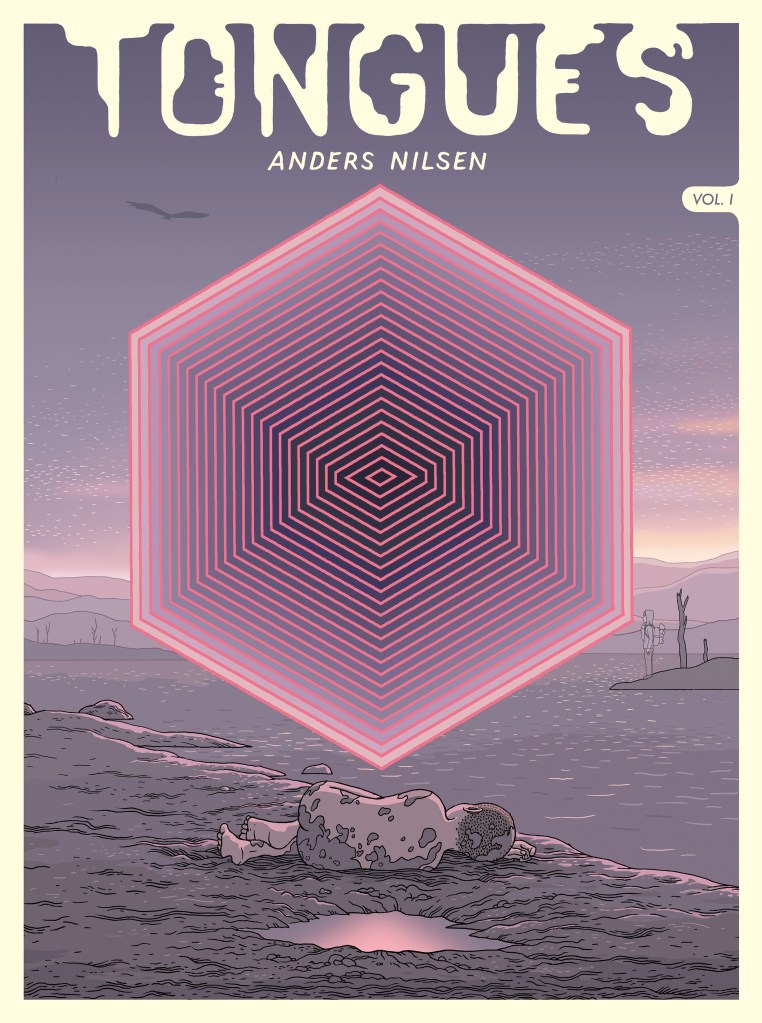
It has taken me much longer to write this review than is normal. It’s tough to figure out how to talk about this book, or why I enjoyed it so much. I found this to be a bit like trying to point out a bird in the forest. The problem lay not with getting a friend to find the bird on the tree, but rather trying to get them looking at the right tree in the first place. Too zoomed in on specifics and a review loses any sense of cohesion, but too zoomed out and you have nothing interesting to say. There’s a lot to say about Tongues. Even when I end up disliking the choices an author makes in stories like this, I appreciate the gradual blurring of lines between Literary Fiction and Genre Fantasy. Thankfully though, I ended up liking Tongues a lot.

The Premise
This is a book that takes a bunch of elements from Greek myth (or, our cultural ideas about Greek Myth smashed into something eldritch and ancient) and fast-forwards the see how they’re interacting with the modern world. Prometheus befriends the Eagle who eats his liver each day. A teenager with a teddy bear on his back wanders through the war-torn landscape of Afghanistan. A girl is tasked by eldritch creatures to kill a god. A mysterious cult is gaining prominence in the region.

Read if Looking For:
– something weird
-something disturbing
– something baroque

Avoid if Looking For:
– something quick
-something sweet
– something simple

Continue reading “Tongues”

The Divine Cities Trilogy

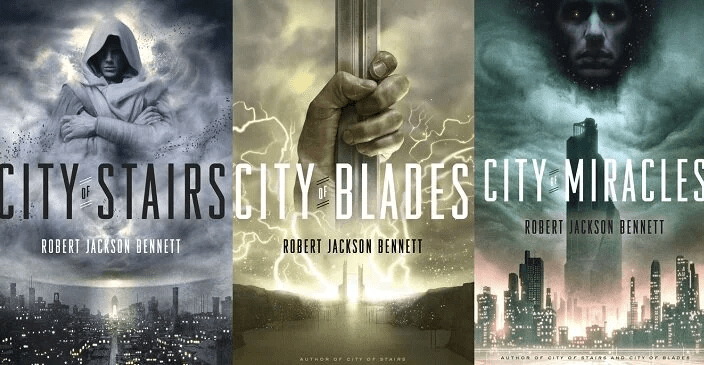
Robert Jackson Bennett is currently getting laude for his Shadow of the Leviathan series (which are quite good on the whole). However, I think his Divine Cities Trilogy is by far the superior work, even if it’s taken me about four years to read the entire thing (I wrote in my review of book 2 that the finale would be ‘a priority for 2024’ yet I’m only getting around to it in 2026). These books are unlike anything I’ve read. The prose is straightforward enough, Bennett’s thematic work is ambitious and so very different from the examinations of imperialism we see in the 2020s, including his current series. It’s the type of mind bending and ambitious fantasy I love to read, and it safely sits as some of my favorite books in the genre. 

Read if Looking For: spycraft/action hybrids, competent protagonists, weird gods, thorny questions without easy answers

Avoid if Looking For: direct sequels, purely happy endings, John le Carre style bureaucracy spycraft, straightforward morality

Continue reading “The Divine Cities Trilogy”

Shirewode

December this year has, apparently, been the month of mildly disappointing sequels. If you’d like to see my review of book 1 in this take on gay Robin Hood, see Greenwode. It lost a lot of the things that made it interesting, rehashed old ground, and didn’t succeed in raising the stakes of book 1 in a satisfying way. Just frustrating all-around. I think it’s a good recommendation for people who want fantasy gay yearning, but I needed the series to move past that.

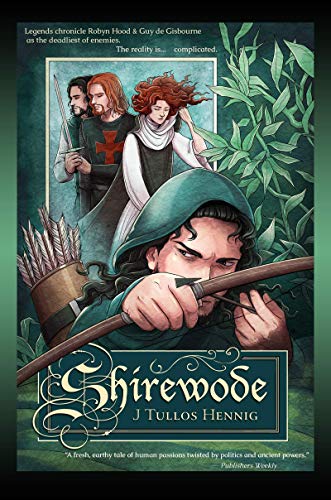
You would think from this cover art that archery and action were going to be at least a little more prominent in this book? Too bad! Think again!

If you loved and wanted more of the ‘enemies by fate and religion’ vibes in book 1, you may like this one a lot more than I did. It remains the focal point of the series.

The Premise:
Book 1 ended pretty tragically. Gamelyn thinks his first love is dead. Rob thinks his first love betrayed him and is responsible for the death’s of his parents and sister. The Abbess and Sherriff are just generally horrible people. Book 2 picks up several years later as Gamelyn returns from his time in the Crusades as a Templar. Meanwhile Rob is finally the bandit we all knew he’d become. Gamelyn is assigned to hunt down the false pretender to the pagan god’s power by the Templars, not realizing the love of his life is actually alive and the very man he’s hunting. Meanwhile, Rob’s sister Marion is also alive, has amnesia, and is the kept pet of the evil Abbess.

Continue reading “Shirewode”

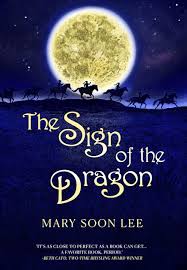
The Sign of the Dragon

I have perhaps an unreasonably high bar for books in verse. Some of my early adult reading experiences were with Jacqueline Woodson, and the few science fiction and fantasy poem books I read just didn’t live up to the standard she (and a few others) set. I think I’ve finally found a speculative fiction book in verse I can recommend wholeheartedly: The Sign of the Dragon by Mary Soon Lee was a delight, a wonderful read for the wintertime, and just generally heartwarming and heartbreaking. A great book to peruse a few poems per night, and I enjoyed reading this over the span of months, instead of my normal span of days.

The Premise:
Xau never thought he would become King. When the dragon on the mountain ate all his older siblings though, Xau passed her test and earned himself a crown he never wanted. Sign of the Dragon follows Xau’s journey as he discovers what kind of ruler he wants to be, oversees conflicts and alliance with many foreign nations, falls in love, raises children, faces supernatural threats, and tries to live a life that prioritizes kindness and acknowledging the humanity of all. The book also features many illustrations of various cinematic and/or emotional portions of the story.

Read if Looking For: epic and mythic stylings, idealistic leads, cozy books that also deal with grief, a constellation of POVs, horses (and a cat)

Avoid if Looking For: protagonists with real flaws, dragon-forward books, the thrill of battle

Continue reading “The Sign of the Dragon”

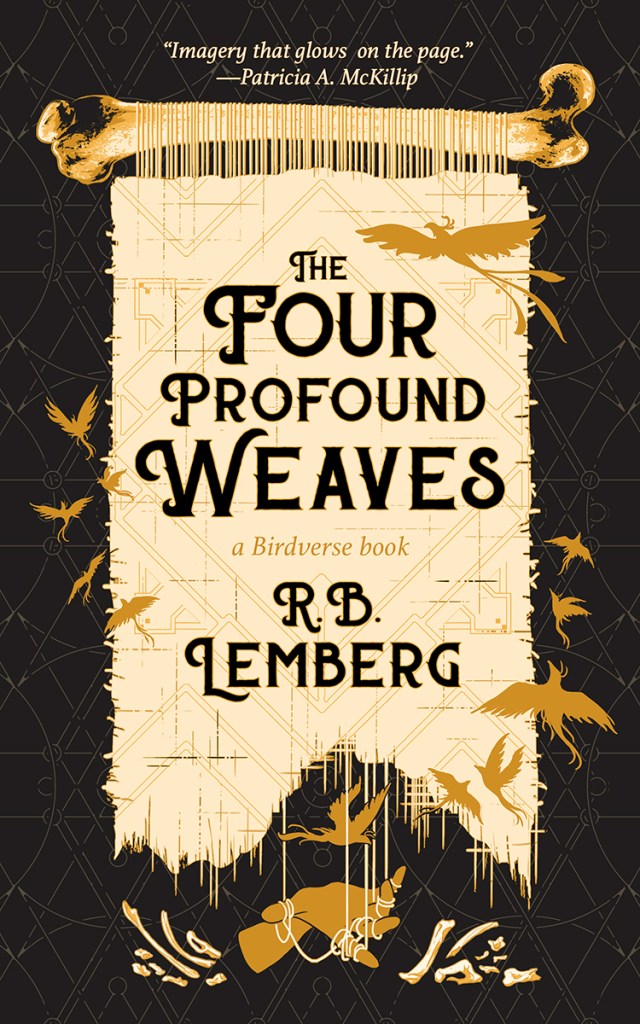
The Four Profound Weaves

I’d been hearing a lot of buzz about the Birdverse series, and when a book club picked up The Four Profound Weaves for November, it was time for me to take it off the shelf as well. This book hearkens back to magic as mystical, inspects the internal journeys of an elderly trans man’s late transition, and takes us on a jaunt through several different cultures. Ultimately, I was disappointed in this despite liking a lot of individual pieces, and I’m curious to see if RB Lemberg’s short fiction will capture me more than this did.

The Premise
This book follows two main protagonists: the nameless man who struggles with what it means to be a man after transitioning late in life in a culture with rigidly defined gender roles (which map not at all onto our own, including as a reversal) and Uiziya a weaver who never realized her potential, and whom now seeks out her powerful and terrible Aunt to teach her the secrets to the weave of death. The two travel together, learn from each other, and must eventually face The Collector, who seeks to own all that is unique or special.

Read if Looking For: platonic bonding, characters with profound self-doubt, desert landscapes, magic carpets

Avoid if Looking For: novellas with a clear focus, nuanced villains, action scenes, happy queer stories

Continue reading “The Four Profound Weaves”

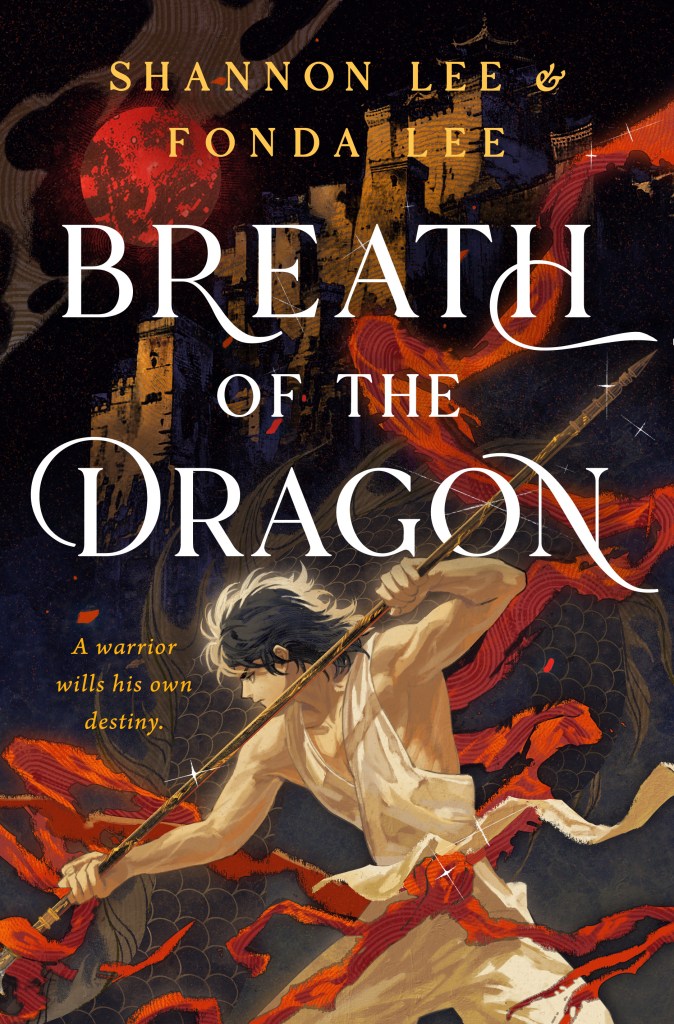
Breath of the Dragon

I was a little hesitant when I heard Fonda Lee announced she was writing a book with Bruce Lee’s daughter. In part, I’ve put Jade City on a bit of a pedestal, which is always a dangerous proposition. However, I tend to be leery when children pick up the work of their parents (Lord of the Rings, Dune, etc), and this book was advertised as an homage of Bruce, as is most (but not all) of Shannon’s books. I’ll admit this isn’t necessarily rooted in anything particularly logical, and some people do it better than others.

Early reviews were that it was a fun, mindless, YA martial arts story that was a pleasant read. Thus, I picked it up on vacation and shelved it for when I needed something to read without putting too much energy into a book. Cue the week I go on 4 field trips in 6 schooldays, supervise 80 kids making pancakes, and generally don’t get any breaks to do the administrative parts of the teaching job that never end. This book met my expectations, meaning I don’t regret reading it, and probably won’t grab the sequel when it comes out.

The Premise:
A once great country was cut in half by civil war. The East prohibits an martial training except by those blessed by the Dragon with magic powers, killing those who do any training in secret. The West celebrates martial prowess to the point where a bloodthirsty general is a breath from taking power and toppling the world into war. Jun grew up in the East, but he and his father were exiled when their martial training was discovered. Now 16, he seeks to enter the tournament to be the new Guardian, tasked with keeping the great Scroll of Earth safe and enshrining his name in history as one of the greatest warriors of all time. He’s got no magic powers, no rich patron, and a dad who wants to live without violence.

Read if Looking For: Fight scenes, tournament arcs, over the top villains, tropes on tropes on tropes

Avoid if Looking For: depth in any aspect of the story

Continue reading “Breath of the Dragon”

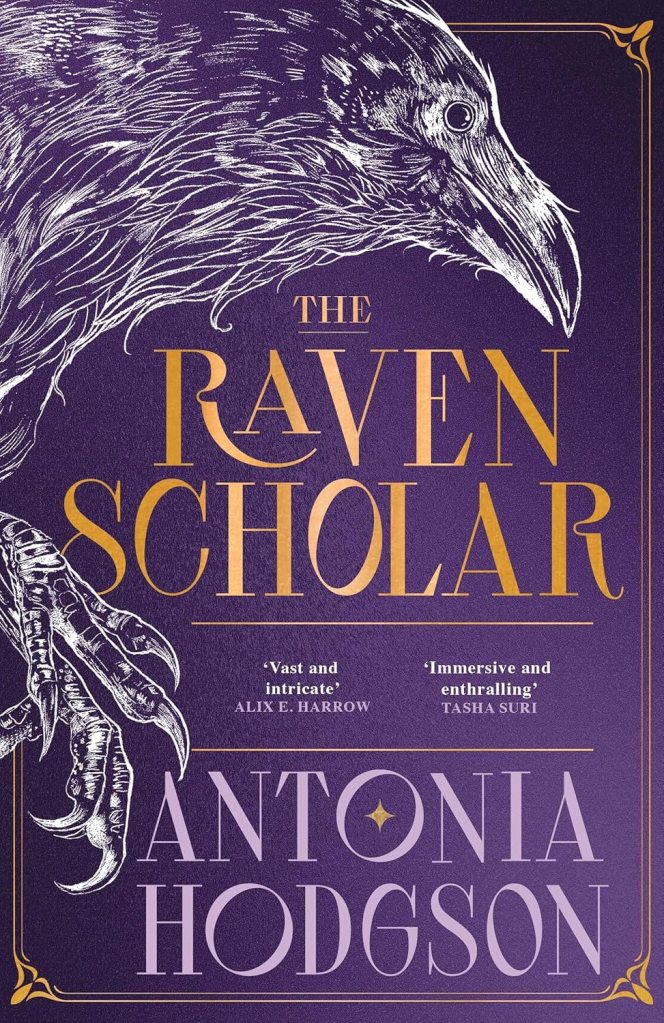
The Raven Scholar

Much like Will of the Many last year, The Raven Scholar has taken my little corner of the internet by storm. It’s a mystery, but not a mystery. A tournament arc, but for adults not teenagers. It’s got a scholar main character, but feels as ambitious as epic fantasy! The hype is real, and I’m seeing a lot of people rave about this as their book of the year.

I’m a little bit more pessimistic than most. It’s a good book, and I absolutely intend to pursue the sequels. However, I think there are more issues than a typical review is ready to admit. If you’re willing to commit to the premise and enjoy the ride, I think it’s absolutely worth a read. If you like internal consistency, this book may get under your skin.

Elevator Pitch:
Neema rose to the leader of the Ravens through her research that captured the eye of the Emperor. She also wrote an execution writ for a 16 year old daughter of a noble family living in squalor after her father’s attempted coup. The time has come to select a new Emperor. The Raven representative is her childhood nemesis, the Fox contender is her ex-boyfriend, the Hound contender carried it out, and the Tiger contender is the dead girl’s twin brother. When a contender turns up dead, Neema is thrust into an investigatory role, into the competition to decide the next Emperor, and into the attention of the gods she resolutely believes don’t actually exist.

Read if Looking For: readable prose, sassy ravens, tournament(ish) arcs, mystery(ish) plots, political maneuvering to set up for an epic fantasy trilogy, tropes executed in fun ways

Avoid if You Dislike: the nagging voice in the back of your head reminding you that the explanations for badass twists don’t make sense if you think very hard about what’s happening, a protagonist whom everyone hates for no discernable reason

Continue reading “The Raven Scholar”

The Vessel’s Blood

I was asked to read this book by the author. I did not receive any payment for this review, and the book was purchased with my own money. My review is my honest opinion about the book.

Compared to many readers, my taste in books can verge on the unknown. For others, my reviews are remarkably mainstream. I can say with certainty though, that this is the least-reviewed book I’ve ever read (with the sole exception of a book of poetry retelling the story of Cronus written by a friend). It also happened to have a rather intriguing premise: what would the story of a man whose destiny is to turn into a god, their own soul consumed, when everything goes wrong? Throw in a pair of gay protagonists who don’t immediately fall in love, and it should be right up my alley. In general, I loved the ideas behind this book, but have some large reservations about the writing craft elements that didn’t work for me. Thankfully, craft can be workshopped.

The Premise:
Vulfrey is The Vessel. He is destined to die, subsumed by his god’s power when he sacrifices himself for the god’s return. He has lived his entire life in a citadel dedicated to him and his god. But when things go horribly wrong the night before his own death, he finds himself on the run with the Kail, son of a man who tried to kill him. The two search for a path to salvage the situation and bring their god into the world, even though it means Vulfrey losing his life.

Read if Looking For: non-romantic gay epic fantasy, spoiled brats acting like soiled brats, books that focus on scenework over narration, expansive worldbuilding

Avoid if Looking For: books tackling existential questions, romantasy, breakneck prose

Continue reading “The Vessel’s Blood”

The Jasmine Throne

The Burning Kingdom’s Saga is a great example of what modern Epic Fantasy looks like, and it’s been on my to-read list for several years. There’s quite a few ambitious sapphic fantasy series that have made waves in the 2020s, and this is a great addition to that list. I didn’t love everything about The Jasmine Throne, and am very excited to see where the series heads.

The Premise: set in an analogue of India, this series focuses on the people of a small territory under the rule of an oppressive empire. Their religious temples have been destroyed, their spiritual leaders killed. Rebel groups fight for freedom, and those in power respond by punishing all who live in the province. Our story focuses on two lead characters: Priya, a temple child with mild supernatural powers who escaped the fate of her elders and temple siblings; and Malini, a princess living in exile as punishment for refusing to burn herself alive at her brother’s throne When Priya becomes Malini’s maidservant, both see an opportunity to change the fate of themselves and their people.

Read if Looking for: creepy plant gods, worldbuilding set up to explore sexism and racism, varied depictions of what female strength can look like, characters making hard (and not always ethical) choices

Avoid if Looking for: epic fight scenes, deep political scheming, instalove romance

Continue reading “The Jasmine Throne”

Regicide: Saints of Firnus

Every once in a while a book recommendation passes beneath your nose that captures your attention. Regicide was that way. It started with a compelling cover, a blurb that promised grimdark fantasy elements, and a lack of clear romance plotline. It lived up to some of those promises and had some legitimately interesting developments, but was undercut by a dire need for another readthrough and round of proofing and edits.

The Premise:
This is the story of Holt, a member of the ‘vermin’ beastkin whose lands were colonized by the Panthera. He now lives as a beggar, supported only by his partner, whose untimely death pushes Holt. towards new connections with the underground resistance and old traditions of his people. However, this is Holt’s story told after he’s become an infamous legend. An elder shares the ‘real’ story of Holt to others of his kind. They live underground, still firmly under the paw of the Pantheran government, meaning you know from the very beginning that the ending of the story wouldn’t be a happy one.

Read if Looking for: Redwall for adults, morally upright protagonists in dystopian worlds, author-created illustrations, characters who happen to be gay

Avoid if You are Looking for: polished prose, multi-POV stories, deep themes or nuance, romance, books without depictions of intense racism, lots of magic

Continue reading “Regicide: Saints of Firnus”