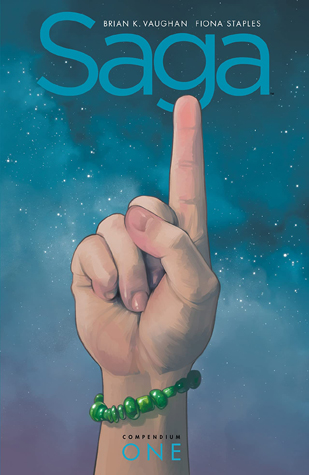
How have I not read this before? I understand! I get why this book was dominating the Hugos for years at a time. This is a phenomenal comic for fans of speculative fiction novels (though with its Eisner Awards, its also great for Comic fans too). I’d probably pitch this as akin to Star Wars, but written without feeling the need to limit itself to PG13 visuals or themes.
This review is of Compendium 1, which was 1300 pages long, covered 54 issues, and was a wild ride. No major spoilers are below, but this does represent over half of the published comics. General consensus is that the beginning is the best, and the series has been on/off hiatus for almost a decade, so I’m a bit worried about choppy waters ahead. Definitely continuing, however!
The Premise:
This is the story of Hazel, a girl born from a pair of star-crossed lovers. Marko and Alana come from a warring planet and moon, one whose conflict has spiraled out to the greater galaxy more than the original planets themselves. Their baby is an abomination of two species, so Hazel’s life begins with assassination attempts and goes downhill from there. Hazel is our narrator, but for much of the first half her parents are the protagonists (though we shift POVs often)
Read if You Like: science fantasy, space operas with expansive casts, the power of sex (in a storytelling way, not an erotic one), stories with lots of casual queer representation, clear and expressive art
Avoid if You Dislike: aliens mostly being humanoid, the narrator spelling out the themes, kids that don’t act like kids
What Worked For Me:
Saga’s got a magical combination of elements that makes it a ton of fun. It’s simple and relatable in the ways that matter; you’ve got plenty of touchstones to classic Science Fantasy stories. A group of bounty hunters are major players in the series, for example. Corrupt governments, rebels, and magic powers that run on hard to find ingredients. While the story is mostly about a family trying to survive the forces tearing it apart, there’s a lot that feels like you are walking on familiar ground. Within that, Saga throws a bunch of ideas at the wall, such as focusing on parents as main characters, a huge variety of (mostly humanoid) aliens, and Romance authors who are secretly anti-war propogandists. The lack of focus on tearing down governments, instead trying to weather the storm, feels fresh and allows Vaughan to take the story in unconventional directions. It’s escapist science fantasy of the highest quality.
Vaughn isn’t particularly subtle with his thematic work, but he is good at delivering a message while also tugging at your heartstrings. Hazel’s narration will oftentimes explain the theme of a particular issue or plot-arc. For example, she’ll talk about how parenting is sacrifice, how parents will sacrifice anything other than complaining about what they’ve given up, and that sacrifice isn’t really selfless because they see more value in their kid than whatever they’re giving up. Had it not been executed to perfection, this pattern of fourth-wall breaking would make Saga feel like a lame fairy tale.
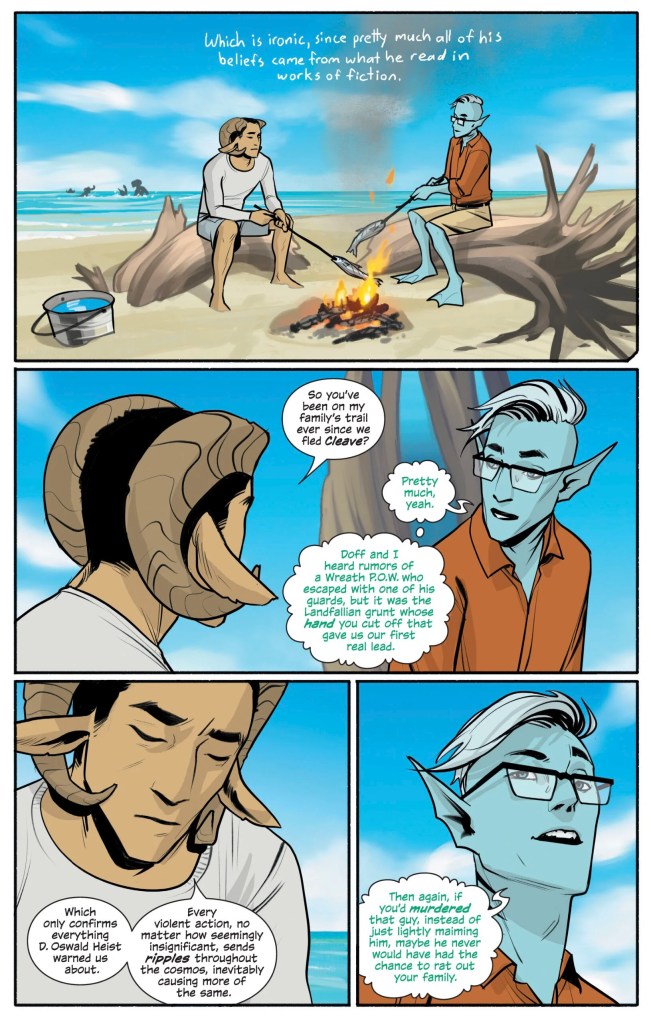
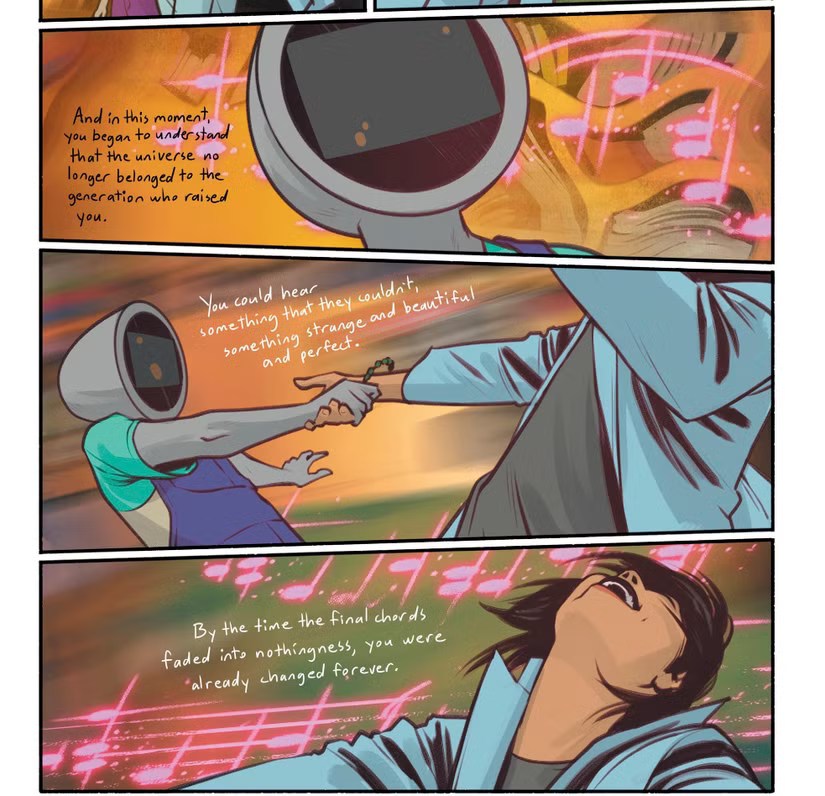
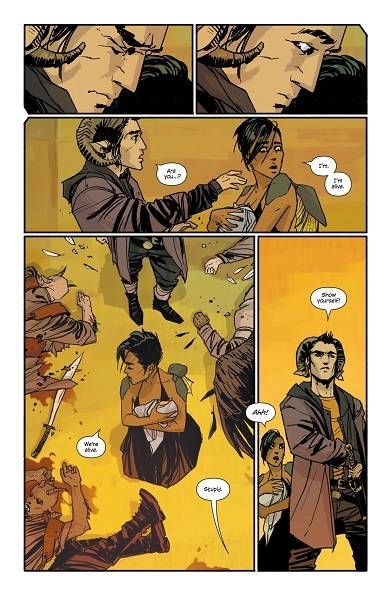
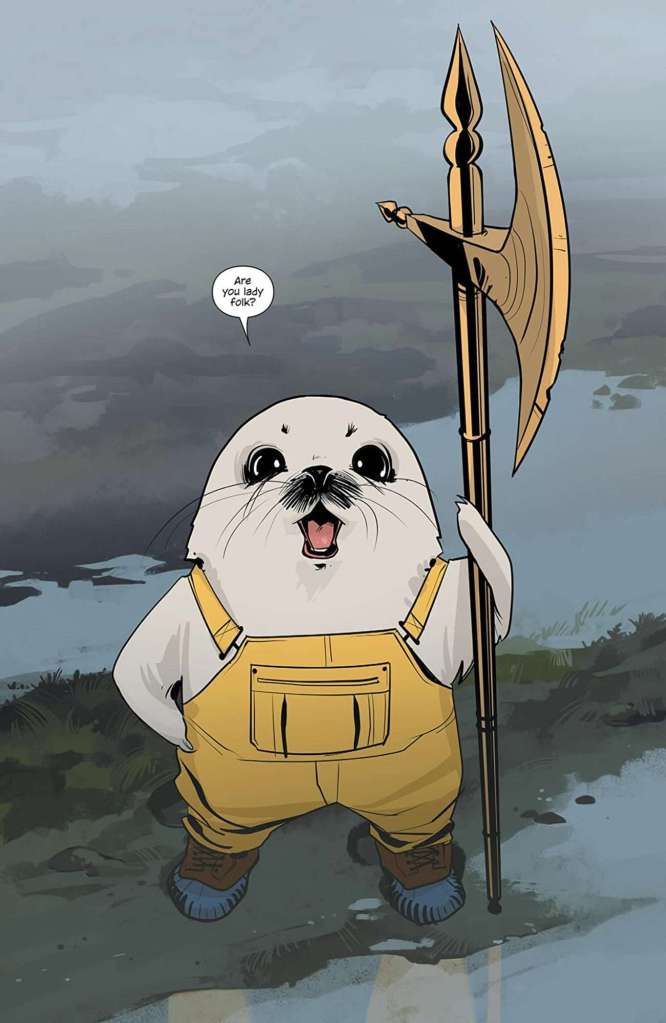
Instead, it feels more like Vaughn is simply trying to make a point about fantasy and science fiction more generally. No matter how pulpy or escapist your fight scenes, plot twists, and character arcs become, all fantasy is saying something about the world we live in. Saga is pulpy and mindless at times. One of my favorite characters is an anthropomorphic seal. Yet within the adventure, horror, and silliness are little nuggets of humane experiences. I’m a sucker for framing narratives and oral storytelling, so perhaps the method of delivery works especially well for me. Saga is a series of mirrors, asking you to reflect on your own life as you waltz past a series of epic, imaginative, and absurd scenarios. You’ll lose yourself in the story, so Vaughn is going to beat you over the head that this story is about more than fights and fucking and survival.
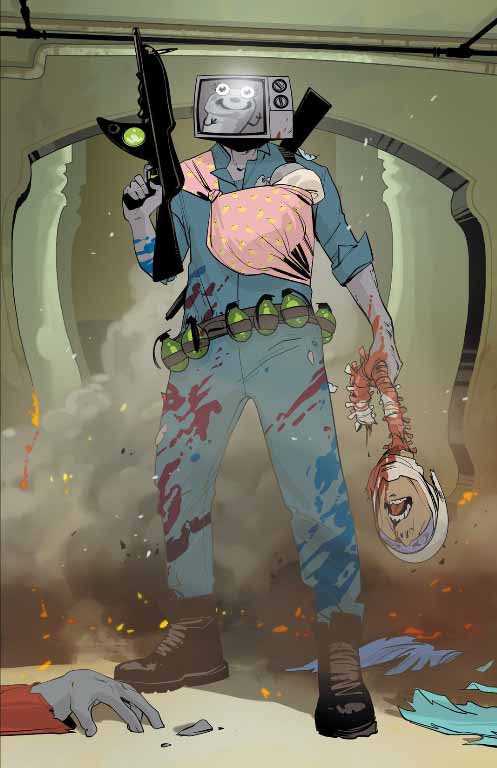
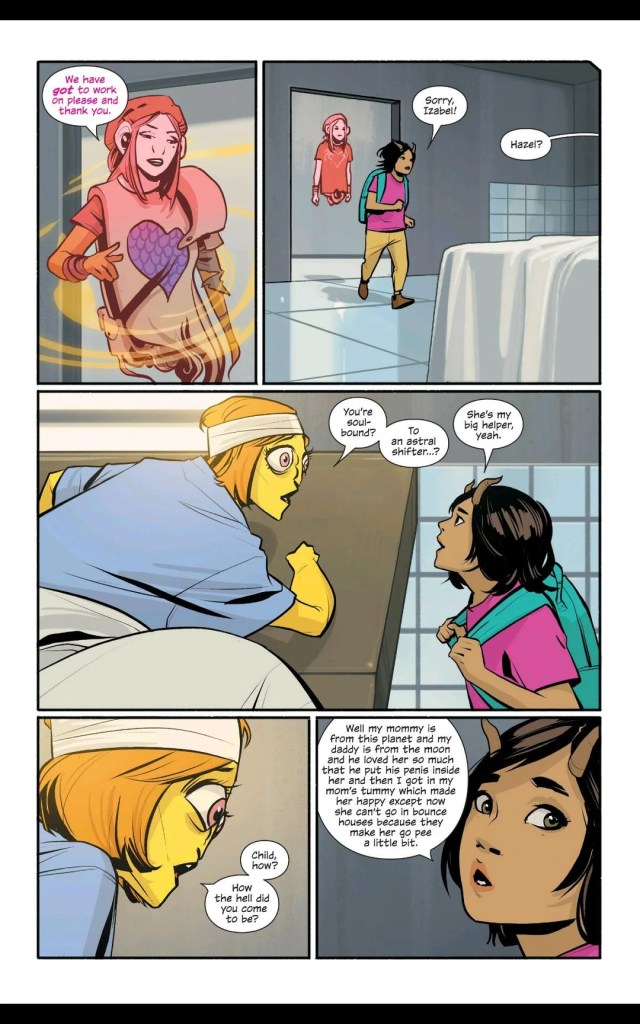
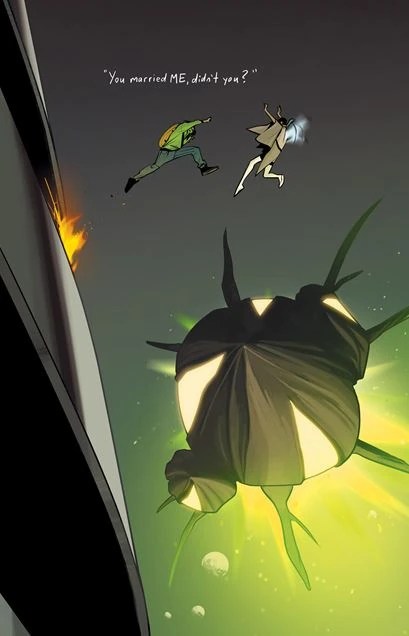
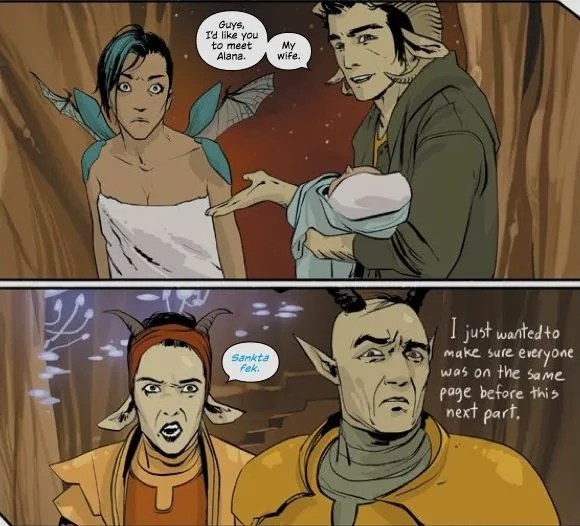
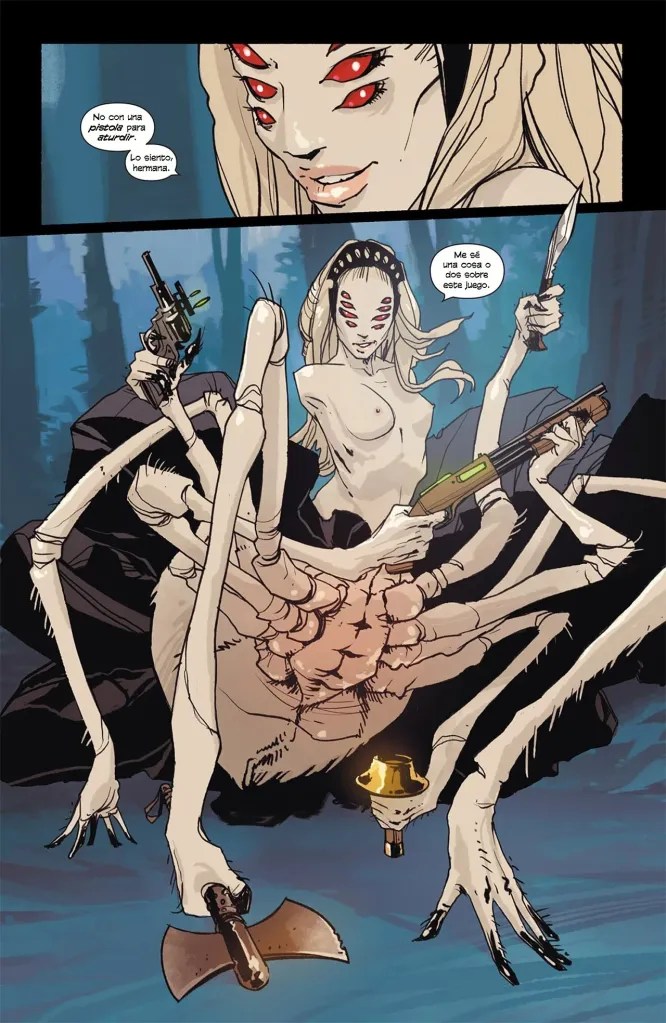
On the art front, Staples is incredible. As with the plot, nothing especially experimental or boundary-pushing is happening in Saga’s art. However, the story is crisp, rendered in vibrant colors, and dynamic. Character designs are excellent, faces are emotive (unless they’re not supposed to be), and this story wouldn’t be nearly as much fun in chapter book form. Saga is undoubtedly a comic; it’s an accessible and digestible one created at an absurdly high quality level.
What Didn’t Work for Me:
Overall, I’m having a great time with Saga. I think most of my problems wouldn’t be problems if I hadn’t binged the series, instead of experiencing it as it released back in the day. It feels a little bit like Vaughan introduces and resolves conflicts and scenarios quickly. While some of our early antagonists are recurring characters whose loyalties shift, it isn’t uncommon for Vaughan to introduce a major faction, conflict, or existential crisis, only for it to be solved within 2-3 issues. Now, these resolutions aren’t always easy or predictable. Characters face consequences for their actions, and more than a few die before I thought their time had come. However, it does feel like the story could have room to breathe a bit and flesh out some of the arcs into something more intense.
I also generally think that Vaughan has a loose hand with the capabilities of characters to serve the needs of his plot. Someone will be the most terrifying person, their bullets exploding heads, only for that to not count as soon as they face off with one of our leads. We don’t end up in ‘stormtrooper accuracy’ levels of unbelievability, but there were more than a few times where I raised an eyebrow at how something went down. Again, Saga is pulpy, so this is a bit of a moot complaint.
Finally, and this is something I set aside pretty early in my read. I don’t buy into the premise. People are moving mountains to avoid word getting out that two people from opposing sides of the war fell in love and had kids. You’re telling me nobody has done this before? In the generations of way, not a single other example of people from both planets falling in love? It is beyond belief, and also just doesn’t feel important enough for the rulers of various countries to get involved. It’s fine if this doesn’t get explained: I’ve moved on. Worth noting though.
Conclusion: I don’t know what to say. It’s popular for a reason. Go read it.
- Characters: 4
- Setting: 4
- Craft: 4 (Story) 5 (Art)
- Themes: 4
- Enjoyment: 5

