
I picked up Private Eye as a text for the Queer Comics elective that I get to teach when student interest is high enough. While there are plenty of breakout hits in that space, I also force students to expose themselves to a broad variety of stories for our independent exploration units. This was one of the few queer noir comics I’d heard about. It was fun and irreverent, great for helping me manage stress at the start of the school year – probably a running theme in my reviews in the next month or so. Unfortunately, and unfairly, I kept comparing this to Watchmen, and it just isn’t on the same level as the greats in the comic space.
The Premise: a private investigator in a world where masks and pseudonyms are part of everyday life sees his most recent client brutally murdered. Now, the target is on his back as both a suspect of her death and as a mysterious criminal seeks to tie up loose ends.
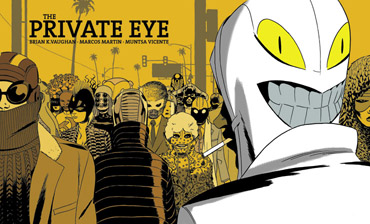
Read if You Like: weird imaginings of humanity’s future, dynamic characterization (in writing and art), stories that push a little bit on the edges of absurdity
Avoid if You Dislike: classic noir structures, books without a ton of thematic heft, ambiguous endings
What Worked For Me:
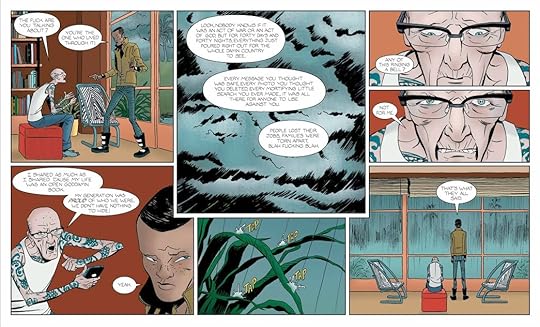
The big winner of this comic is the imaginative worldbuilding and visual storytelling. This is a delightful little post-apocalyptic world … kind of? After ‘the cloud’ leaked all content ever uploaded to the internet, the world fractured apart. Now they live without digital connectivity – nobody even knows what a computer is – and individual privacy is the norm. You’ll wear a mask and a pseudonym whenever you leave the house. At your funeral, those in your circle will learn your birth name, along with all the other pseudonyms you went by, bringing people from different parts of your life together.
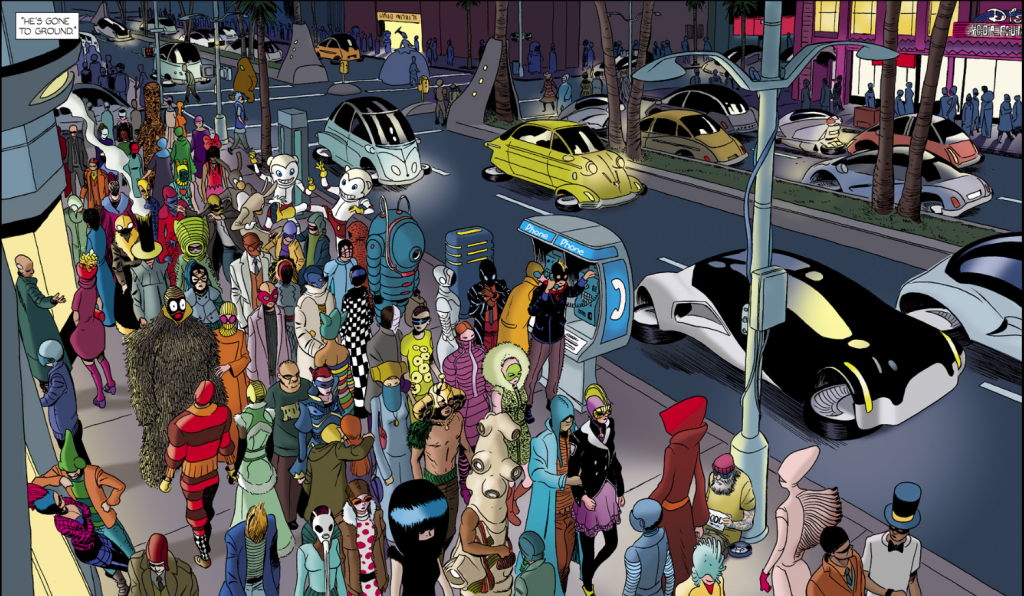
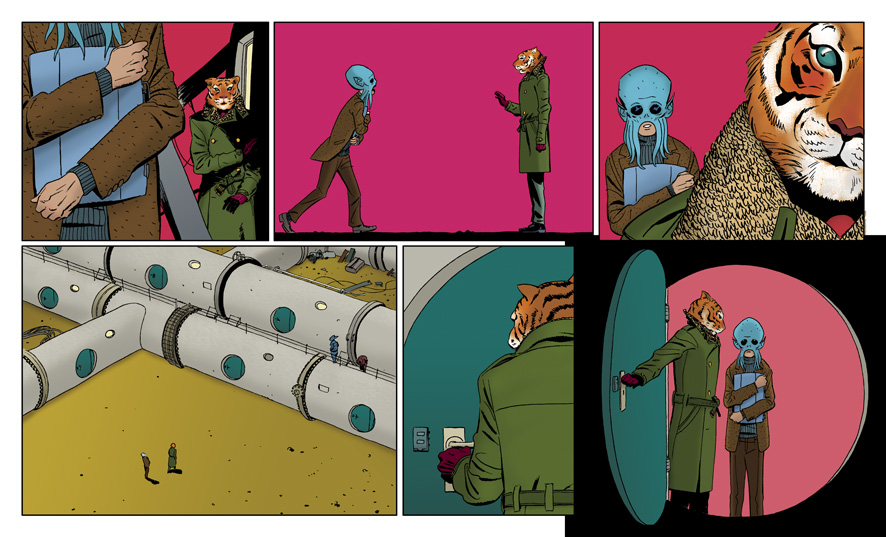
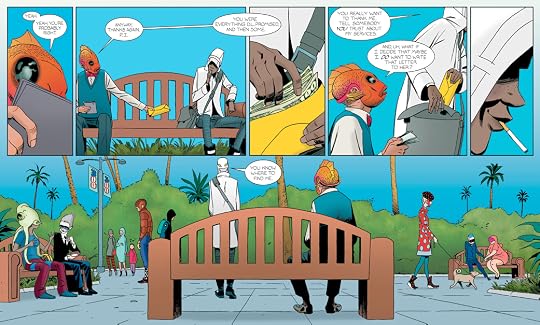
I sometimes get frustrated with comics where the art style feels flat, but I though Marcos Martín’s illustrations were delightful. The concept of the world is just absurd enough to make this pop-art inspired style work really well. I do think the fight scenes could have been more cinematic, but that’s a complaint I have from pretty much every American comic. I’m not sure why the pages are so wide, but I think it has to do with how the comic was originally published exclusively online – a delightful bit of irony for a story set so intentionally in a post-internet age – and I could see this reading very well on a desktop computer.
It was just a lot of cool ideas and styles thrown at a wall that felt like they worked together well. The main character’s grandfather in particular was a curmudgeonly delight, complaining about the good old days when you could play video games with people from around the world.
What Didn’t Work for Me:
Ultimately, I don’t think this comic ever pushed past ‘good enough to keep reading’ for me. On a story level, things were executed well. However, nothing felt exceptional. I never felt like there was a sense of radical escalation as the plot spun out of control. The setting never really chased down themes in any sort of deep or nuanced ways. There’s a lot of interesting and thoughtful tidbits, but nothing really pushed me. Ultimately, in a year from now I don’t think much beyond the premise will have stuck with me. In execution of the story, it was competently done, but basic.
Conclusion: lots of fun ideas, but didn’t push into new territory (aside from a queer lead long before it was popular)
- Characters: 3
- Setting: 5
- Craft: 3
- Themes: 2
- Enjoyment: 3


What a cool idea! But it sounds like it needed more development to be really memorable.
LikeLike