
Sunyi Dean’s debut novel The Book Eaters is the type of story that I have spent three years thinking about. Needless to say, there was no question about whether or not I’d pick up her sophomore work. Craft remain Dean’s strength, as do characters that don’t quite line up with easy moral labels. However, I didn’t enjoy this nearly as much as The Book Eaters. As has been the case (and probably will continue for at least another week or two), lingering concussion effects are partly to blame. Not entirely though, I think.
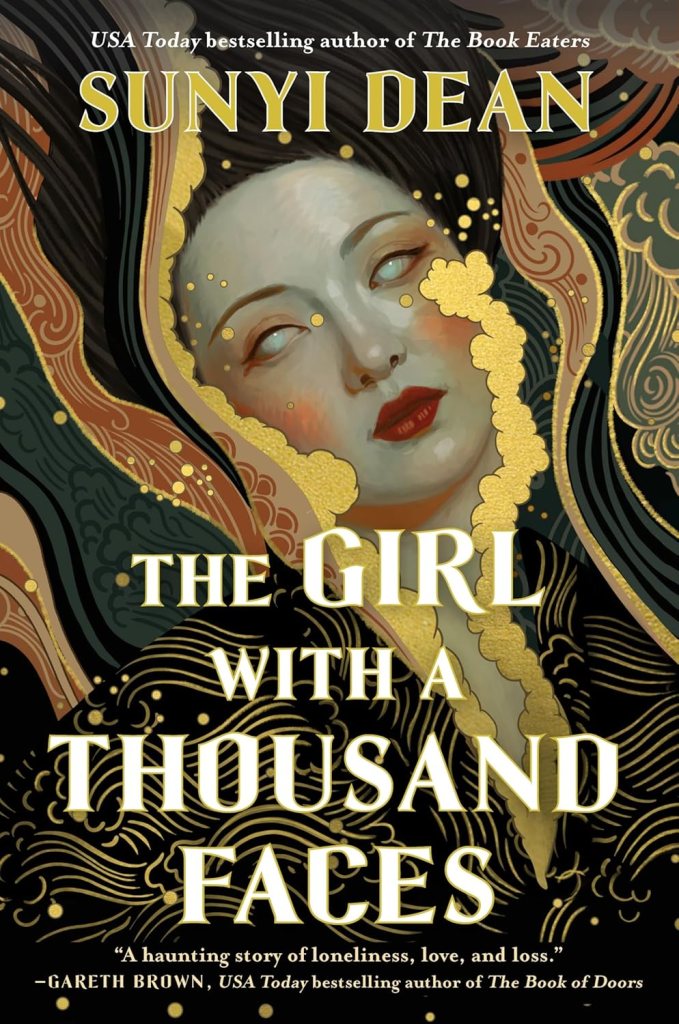
The Premise:
At the end of World War II, Mercy found herself on an island outside Hong Kong with no memories. Thirty years later she is a ghost talker in the haunted Kowloon district, working for the leader of the Snakeskin Triad. She been seeing visions of a drowned woman, and they’re getting worse. It turns out that an evil spirit has very special plans for Mercy, and she’s not going to enjoy them one bit.
Read if You Like: haunting visuals, competent women in their 50s, casual queer representation, ghost cat sidekicks
Avoid if You Dislike: unconventional narrative structures, shifting POV (including 2nd person), depictions of drowning
What Worked For Me:
The writing in this novel is simply gorgeous. I wouldn’t call it lush, because there’s a surprising amount of abrupt and brief sentences. However, Dean is excellent at picking details to focus on that achieve multiple goals. The opening chapters of this book are a masterclass in establishing a character, introducing major conflicts, and painting a vivid world all at the same time. It’s the type of writing where every element is pushing in the same direction. I truly believe that each sentence was carefully written and considered, and there’s not a throwaway line in sight.
The portrait of Kowloon is dark and intense, and the setting was probably my favorite part of the book. I was not expecting this, because the world of The Book Eaters was fine, but not its main selling point. This book evoked comparisons to Siren Queen by Nghi Vo in my head, where a vividly rendered world is enough on its own to anchor an entire book. The streets of Kowloon are seeded with ghosts, Triad exorcists allow Mercy and Bao (her ghost cat companion) free passage, and the lingering scars of World War II can be felt both in their immediate aftermath and the echoes it left three decades later. The neighborhood is grimy without feeling gratuitous. It evoked the sense that a place can both be a bit of a shithole and also a home that you will fiercely defend with your last breath – ask me how I feel about Kansas sometime. It is a place of hauntings and the more mundane horrors of men and monsters. It was the perfect place for a cat and mouse game as Mercy hunts, and is hunted by, a demonic spirit.
Thematically, I think this book works well as a story about the lingering trauma of war. It’s a running theme that what is done during wartime is heroic but monstrous in peacetime, and that society will happily throw away the monsters they created once their heroic usefulness has served its purpose. However, it’s all handled on a personal scale, which was a nice blend. You couldn’t shift this story away from its setting, and this is both a story about the women impacted by war and about Hong Kong’s experiences during World War II. This work plays second fiddle to hauntings, vengeance, and forgiveness, but it was the most successful thematic work in the novel.
What Didn’t Work for Me:
I kept saying that I was going to need to be in the right mood when I picked up this novel. In hindsight, this book would have been better as a purchase than a library rental. I kept putting it off because the time wasn’t right, and I got a concussion right when the 1 week deadline rolled around. So I was fighting through some brain fog with this one that meant there was more rereading than I usually go for. The prose here isn’t dense or difficult, but I had more trouble latching onto it than some other books I was reading at the time.
More prominently, this book is split into four different sections, the first two each getting a clean third of the book at 100 pages each. Section 1 is a horror/noir hybrid, though perhaps a horror/thriller is a better description. It bounces back and forth between Mercy’s earliest memories post-amnesia at the end of WWII and her current work as a ghost talker with the Triad. Section 2 rewinds to the pre-amnesia era and has a very different vibe, much slower paced and focused on family relationships. I can’t talk about sections 3 or 4 without spoilers, but stylistically they are more similar to section 2 than 1. Unfortunately, I was really vibing with section 1, and the abrupt shift from a pulpy story with excellent prose to a more introspective life story situation didn’t hit very well for me.
This wasn’t like The Last Contract of Isako, where there’s a huge mid book shift, but the core ‘genre’ of the story remains the same. The pacing, themes, style, and content all feel like a totally different horror subgenre, and I kept wishing we could get back to ‘the good stuff.’ I really like when authors take risks with their writing, and Dean took a big swing here. It didn’t work for me, but that’s just how ambitious choices go. Without spoiling much, I can objectively appreciate how tightly sections 1 and 2 fit together. From a craft perspective I think it all worked really, really well. I just happened to not like the stylistic shift. It’s a case where my lizard brain and English-teacher brain happen to disagree with each other.
Conclusion: Your enjoyment of this haunted Hon Kong will depend entirely on how you respond to stylistic shifts throughout the book. However, the aesthetics and imagery are truly excellent.
- Characters -3
- Worldbuilding – 5
- Craft -5
- Themes -4
- Enjoyment – 3 (but I think lingering concussion symptoms dropped this a bit)


Excellent review! I loved this even though it’s a bit scattered with all the different shifts you mentioned. Overall it was such an ambitious idea, and I think Dean did a great job.
LikeLiked by 2 people
The setting here definitely sounds haunting. It sounds a shame that the focus shifts so much between parts and I fear that I’ll long for more of those first section vibes too but I guess I’ll have to wait and see how I get on. The thematic value of it sounds wonderful. It sounds like the kind of read that would fit well at a book club.
LikeLike
This would be an easy book for a book club. I think it appeals to a pretty wide variety of folks, and there’s enough historical references to give it some appeal to folks who aren’t typical genre-fiction readers
LikeLiked by 1 person