
I’ve been chewing on the Forever Desert Trilogy since 2023. Books that are interested in the art of storytelling are candy for me, and this trilogy takes a different approach than most. I actually use the first book in the Speculative Fiction course I teach to high schoolers. This series benefits from gaps between each book in the series: the way Utomi plays with history in this trilogy works best when your memory of the past book is a little bit fuzzy. I liked the first two books in this series a lot, but this book is by far my favorite of the three. It’s pretty bleak, and probably not for everyone, but it really worked for me.
For reviews of the first two books in this series, see The Lies of the Ajungo and The Truth of the Aleke
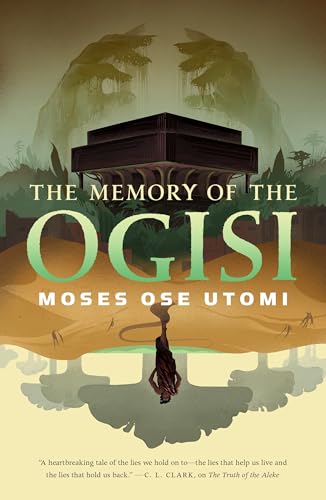
Read if: you’re looking for a blend of folkloric storytelling and epic fantasy, you’re interested in darkly thematic explorations of truth, power, and history
Avoid if: you dislike books that lack hope,you want worldbuilding to feel consistent and explainable
Comparable Titles: 1984, A Conspiracy of Truths, The Giver Quartet
Elevator Pitch:
In this iteration of the Forever Desert, a minor historian departs from The City of a Thousand Stories in search of the famed Tomb of Osi. His journey brings him into contact with historians from other cities in search of other cities. What he finds causes him to rethink his society’s role in the world, and what he brings back sparks the change that will bring The Forever Desert into its next generation of oppression, control, and violence.
What Worked for Me:
The Memory of the Ogisi was the perfect conclusion to the Forever Desert series. The Lies of the Ajungo relied on fable-esque storytelling techniques with an epic fantasy framing to create an interesting story on how controlling knowledge leads to control of society. The Truth of the Aleke was darker and raised the complexity and stakes of the story while leaning more into political and military complexity. Memory marries both together to feel like the culmination of the ideas carried through to their natural conclusion. This novella is darker than both of its predecessors. It brings back the childlike worldbuilding elements of the first book to mix with the more intense story and thematic exploration of Truth. The dissonance between these two elements is powerful. Yes things come in threes, but each of the three cities involves citizens voluntarily mutilating themselves as a way for those in power to maintain control.
Memory is unvarnished in its brutality, and unlike in its predecessors, it is interested in showing the perspectives of those who commit the brutalities. Just like the second book built on the foundation of the first, so does Memory build upon the themes of both its predecessors. The 500 year gaps between installments initially asserted that history is nothing but a story manipulated by those in power to reinforce the current order. The Memory of the Ogisi continues that throughline, but unlike the others, it intentionally shows how the events of the first half of the book already begin to build the next epoch of brutality and control. Vengeance begets Vengeance. Hatred begets Hatred. Peace is built on the subjugation of those without power remaining content with their lot and those with power remaining ignorant of the cruelty upon which their world rests. When change is sparked, the specifics of who is in control changes, but the inevitable cruelty of power remains constant. The ending of Memory invites you to imagine the next generation of this cycle, and the one after that, and the one after that. And, with how the story relies on history and fables and stories as a framing device, it’s entirely reasonable to view this trilogy as a closed circuit; The Memory of the Ogisi is the finale of this trilogy, but it just as easily could have been a prequel to The Lies of the Ajungo.
By allowing his protagonists to descend into the same ethical depravity as the villains of past books, Utomi is making a statement. It’s a powerful one, and the effect wouldn’t have been possible with longer novels, or with sequels that are more traditionally connected to their predecessors.
What Didn’t Work for Me:
Thinking about the series as a whole, I do yearn a bit for the version of this series that started as thematically complex and gnarly as this book. I love the throughline of the trilogy, but I also feel like Utomi’s interest in opaque storytelling is more compelling than the relatively simple takedown of people in power that the first book entailed. He’s an author I’m following eagerly, and I can’t wait to see what he puts out next.
Conclusion: a bleak and intense conclusion to a phenomenal trilogy
- Characters: 4
- Setting: 5
- Craft: 5
- Themes: 5
- Enjoyment: 5
 Marked for Plot
This series is on my TBR, and I’m glad you loved it overall. It’s always nice when the final book is the best, it makes the series so memorable😁
LikeLike
They’re so good! Not quite like anything I’ve ever read. Plus the entire trilogy is about the length of a single standard novel. The only downside to novellas (for me) is the relative cost compared to the amount of time you get to spend with it. This has gotten big enough that most large libraries will carry copies, though it’s likely still to niche for smaller libraries to pick up
LikeLike