
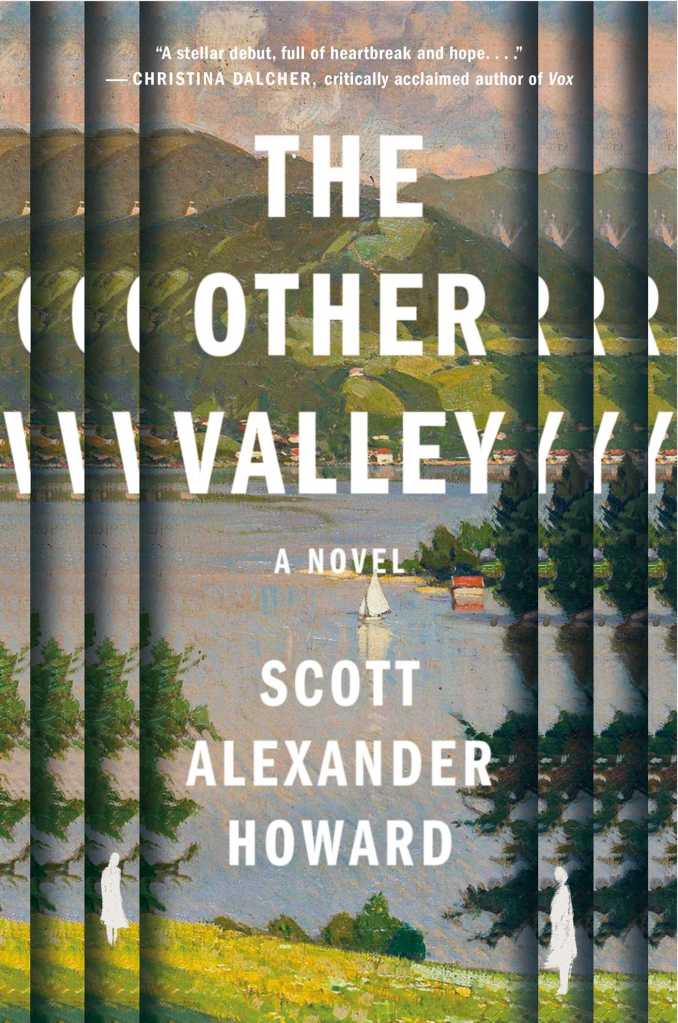
Literary Fantasy/Science Fiction isn’t something I read a ton of, but after this year I’m starting to think I should be reading more of it. The Other Valley wasn’t on my radar at all until it starting coming up repeatedly by reviewers I trust as one of the top books of 2024. As someone who read a lot of books published last year, this book is going to be my go-to example for how there are more phenomenal books coming out every year than you will ever be able to read. This is a frustrating and humbling thought, and one I’m slowly beginning to accept. It’s also the type of book that gave me a small existential crisis on whether I was doing anything meaningful with my life, which I’m still in the process of working through.
Read if you Like: stoic protagonists pushed to their limits, snapshots of emotional intensity, books that feel like indie-films
Avoid if You Dislike: Time travel that makes very little sense when you pick it apart, fast-paced novels
Elevator Pitch:
Odile lives in a small, unnamed town surrounded by villages, mountains, and a lake. The only thing distinguishing it from any part of rural France is that it is neighbored by it’s own past and future. Head East to go into the future 20 years, and West for the past. Travel and visitation is highly regulated by the Conseils, who approve requests to visit only from family members who have lost a loved one, or who know their impending death will mean they miss important milestone’s in their family’s life, and even then visits are anonymous and highly monitored to avoid changing the timeline. Odile applies to apprentice as a Conseil, mostly at the request of her overbearing mother, even though she isn’t sure what she wants to do with her life. Normally quiet and tepid, she begins to open up to some other teens, right when she identifies a visitor from another valley, which shifts her trajectory in life forever.
What Worked for Me
With the amount that happened in this book, it could have easily been trimmed down to 100 pages from a plot perspective. It would have been a shame had Howard done so. For a debut novel, he showed a remarkable mastery over mood. It is almost relentlessly focused on the daily experience of Odile at various stages of her life, only rarely dipping into conventional plot structures. This book is remarkably atmospheric. It creates emotions without telling you how to feel. I was awash in nostalgia while reading this book, despite never having been to France. Odile’s life – the good and the bad, and there’s a lot of bad – feels raw and jagged in prose that is soft and simple. It took a little bit of time for me to adapt to the lack of quotation marks around dialogue, but once I adapted to that, the rest of the book was simply captivating.
The core choice for society to use time travel as a way to help individuals cope with grief only augmented this, and made it stand out from other examples of time travel I can think of. In fact, despite time travel consistently being considered a hallmark of science fiction, I’d say this book has more in common with magical realism as a genre than most science fiction I’ve read. It evokes that same of simplicity and emotion that I typically see from that genre. When more traditional rising action and climax plot beats do occur, they feel frantic and urgent, sharply contrasted to the rest of the story. And it all comes together because Howard does such a good job of capturing portraits of Odile at various parts of her life, notably teenage nostalgia and midlife crisis. There is a sense of yearning to every part of this story; a desire for what could have been (and what is perhaps just out of reach) clashing with a reluctant acceptance of the casually cruel world she lives in, one that feels all to similar to our own despite being utterly different.
If I had to make a comparison, the first portion of this book felt very much like Call Me By Your Name by Andre Aciman (other than the prose style), and the latter half was reminiscent of the opening portions of Fool’s Assassin by Robin Hobb, in the following of the tribulations of the daily life of an adult. Both are books I love – though I have hesitations about Call Me By Your Name as a queer book, it is the purest encapsulation of a teenage yearning I’ve ever come across. It doesn’t top Welcome to Forever by Nathan Tavares as my favorite novel put out in 2024, but it’s definitely entering my long list of favorite books.
What Didn’t Work for Me:
There wasn’t a whole lot I’d change about this book. It really had me pushing past the amount that I normally read each day. However, I anticipate that many readers will have problems related to the worldbuilding and time travel elements, which don’t particularly hold up under any amount of scrutiny (it rarely does I think, but this book is especially hand-waivy). The most basic question of time travel isn’t satisfactorily addressed: if a future visitor changes the past, which affects the future to the point where they no longer visit the past, then how could the past have ever happened in the first place?
Additionally, the rest of the setting itself makes no logical sense. This small town, vaguely French, seems to exist in total isolation from anything else. Nothing other than this valley and it’s time-neighbors seems to exist, or is ever referenced. Yet they have cars, radios, wineries, and a host of technological developments and infrastructure that simply isn’t possible to develop from one small town. The mountains are completely abandoned – other than traveling through them to visit the time-neighbors – yet somehow there’s enough metal to sustain a automobiles? Where does the gasoline come from? This book fails to present any answers, and doesn’t even try to pretend to. If you don’t think you’ll be able to accept the premise of this book at face value, then you will spend the entire time with this book ripping it to pieces, which is totally fair. This book is fundamentally unconcerned with worldbuilding in a traditional genre fiction sense of the word, and I see a lot of readers having issues with that.
Similarly, I think people may find Odile a really annoying protagonist. She’s relentlessly shy, except when she isn’t – turns out Conseil testing is right up her alley – and that type of writing, where characters don’t have neat character traits, can frustrate people. I’m frequently one of those people. However, Odile never felt fake or forced to me. She oftentimes felt lost, directionless, or caught up in emotions and situations she’s ill-equiped to deal with, but she always acted in ways that felt human and understandable.
Conclusion: an engrossing atmospheric story featuring time travel and a character across many points of her life. Avoid if you like traditional sci fi plots of internally consistent worldbuilding.
- Characters: 5
- Worldbuilding: 2
- Craft: 5
- Theme: 3
- Enjoyment: 5
 Marked for Plot