
I’m a sucker for Fairy Tale mashups. I grew up loving Into the Woods, I binged Once Upon a Time in college. Retellings are wonderful too, but there’s something special about taking the idea of storytelling, throwing a bunch in a blender, and seeing what new comes out of it. How to Survive This Fairytale made me laugh, made me cry, and made me cry some more. I’m usually not a super emotional person, but this book got to me in a really profound way. Hallow has a fantastic debut novel, and I can’t wait to see what she writes next. This is definitely on my shortlist for book of the year.
Read if You Enjoy: Fairy tale mashups, characters processing trauma, romance subplots, aggressively paced books
Avoid if you Dislike: 2nd person narration, tidy endings, protagonists not always being the center of the story, books without fight scenes
Elevator Pitch:
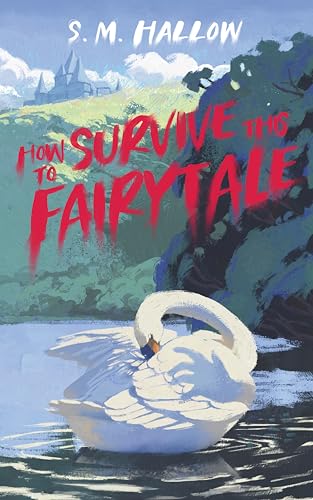
This story centers on Hans, or Hansel from Hansel and Gretel. The story mostly takes place after the events of the original fairy tale however, and follows him through several decades into his adult life. Featuring prominently in his journey are a girl and her brothers (cursed to be swans), Snow White’s evil Queen, and a loyal dog. This book is focuses on Hans’ journey to see if a happy ending is possible. The story is told in second person, with the ‘narrator’ being a sort-of explicit character who interacts with the story as Hans experiments with different possible paths through the situations he faces.
What Worked For Me:
So much, but Hallow’s choices around prose and scenes really made this book shine. Her writing is beautifully sparse, cutting out anything unnecessary to the emotional core of the story. She doesn’t bother wasting time on things you already know, uses sentence fragments when it fits the emotional state of the character, and keeps chapters short, brisk, and focused on a few key purposes.
While this is a relatively extreme example, I think sharing the prologue in it’s entirety is a good sample of what to expect:
A Prologue
A father leads his children into the woods and leaves them there.
That’s it. That’s the entire prologue. She establishes early on that each word matters. The entire book isn’t quite this brutally written – she get’s downright flowery at times when Hans is in love. However, a sense of urgency is always core to the story, even when we’re lingering on something beautiful or sad. I accuse a lot of books of having bloat, and needing to be cut down, but this is not one of those books. Hallow really had a chokehold on the pacing of this book (plot, emotional, etc), and I am astounded that this is a debut novel.
If i haven’t already made it clear, Hans’ journey is pretty emotional. A lot of this book is him (and the other important characters) processing their own trauma, and trying to find their own happy endings. Hans develops an eating disorder after his time in the Gingerbread House, lives in constant self-doubt, and is forced to do some pretty awful things by the evil queen (or perhaps he was complicit, and he doesn’t deserve a good life after the things he’s done while under her thumb). There’s a sense of relentless melancholy and dread that covers so much of this book, yet it is an optimistic story at its core. It’s probably not as messy as this level of trauma would be in real life, but healing certainly isn’t an easy journey for Hans in this book.
These happy endings look different for different folks, and Hallow worked hard to emphasize that Hans was the center of his own story, not everyone else’s. Side characters frequently solve their own problems, cure their own curses, and have Big Plot Events happen entirely offscreen.
Finally, I need to acknowledge that the chemistry between Hans and Cyrus (who spends a good amount of the book as a swan and/or out of Hans’ life) was off the charts. I haven’t quite found a good way of identifying why chemistry works or doesn’t, but I think in this case it had a lot to do with Hallow manipulating the tone of the book. As a boy cursed-to-be-a-swan, Cyrus isn’t exactly having flirty banter with Hans (though when it does happen, it flows wonderfully), but their time together is an idyllic step away from the horrors of what came before and after. This sort of tone swapping happens a lot in the book, though ironically the narrator character preparing you for these tonal shifts makes them all the more powerful. The love story became a central plot point in the second half of the book, but I wouldn’t classify this story as a Romance in the classical sense, since so much of Hans’ journey happens without Cyrus present.
What Didn’t Work For Me
I don’t want to say the ending didn’t work for me, but I’ve been going back and forth on it in the 24 hours since I’ve finished the book. I won’t say much for fear of spoiling things, but feel comfortable sharing that the book was left in a tidier place than the journey to get there felt like. I’ve dinged books in the past for this, but ultimately I think it fit with some of the themes developed in the book well.
If you’re averse to second person narration or fourth wall breaking, this might not be the book for you. Try the free sample on amazon and see if the style is a good fit for you.
In Conclusion: An easy 5/5 stars, especially for folks who like Fairy Tale stories, or deeply emotional books without much action
- Characters – 4
- Worldbuilding – 4
- Craft – 5
- Themes – 4
- Enjoyment – 5
 Marked for Plot
This one’s been on my tbr for a WHILE and I think I need to bump it up a few spots after this review!
I’m pretty sure the author has a new book next year called Halls of the Dead, and I am WILDLY excited for it! I was sold the second I heard about the sentient grimoires bound in human skin, honestly!
LikeLike
It’s definitely the book I plan on hyping whenever possible this year! This book was good enough that I’m on board to buy whatever comes next, and creepy talking grimoirs would be awesome
LikeLike