
I don’t read a ton of short fiction, but I’ve been trying to pick up more anthologies after loving Exhalation by Ted Chiang. Convergence Problems features the story A Dream of Electric Mothers, which is one that had been on my list to try out. What I found was a book of stories I burned through in a few afternoons.
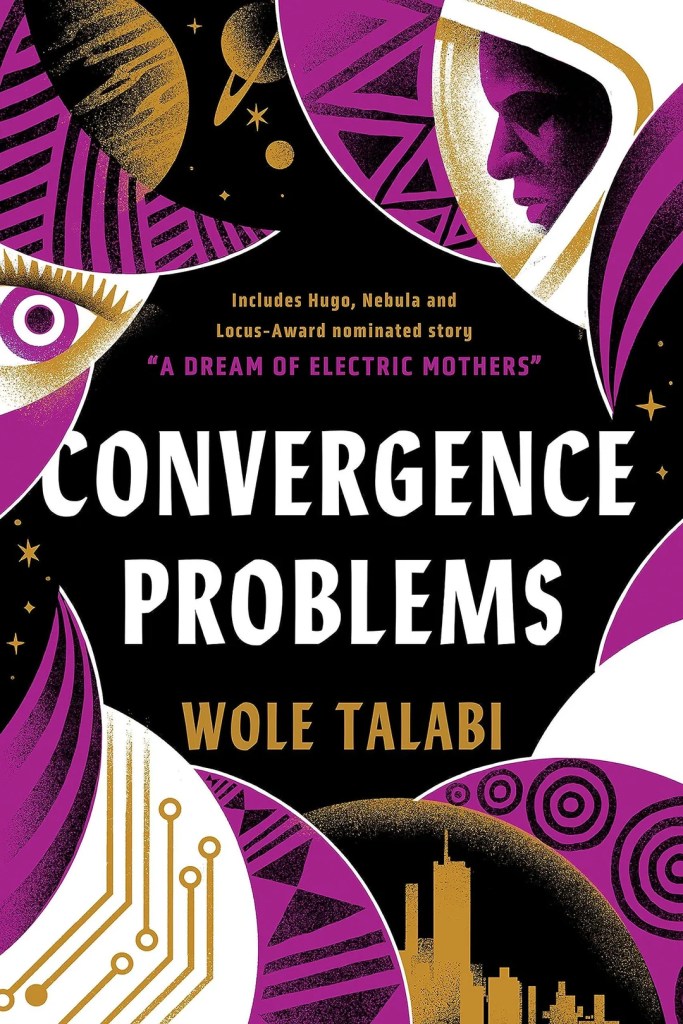
Read If Looking For: anthologies, gorunded Sci Fi, parallel storytelling, the link between cultural beliefs and technology,
Avoid if Looking For: a novel,
Elevator Pitch:
As an anthology, there’s no single pitch I can make for this book. All I can say is that, in general, the stories tend to focus on the intersection between technology and belief, oftentimes centering Nigerian characters, cultural beliefs, and societal concerns. It also has more than a few stories examining consciousness and memory. There were also a good number of near-future stories that felt scarily plausible, and examined how the impact of our actions today will primarily affect those who were least responsible for creating them. There was also a moderate amount of queer representation, which was much appreciated (I’ve found it’s usually an all or nothing thing in short fiction anthologies).
What Worked for Me
Overall, I thought the quality of this collection was quite high. There weren’t any stories that I felt were flat-out bad, and was consistently interested in them. I planned to read this one story per night before bed, but ended up binging the book in two days because I was enjoying myself so much.
Stories I found particularly compelling were
- Embers: is my story of the collection. It focuses on the transition to renewable energy, and how that will impact oil-towns and the people who live there after their usefulness to their country has ended. The characters are compelling, the story visceral, and it felt scarily plausible.
- Debut: a reflection on what AI creating art might look like. I didn’t feel much from this one, but it was a very interesting thought experiment on how AI art would look fundamentally different than human. I can’t say much more without spoiling things.
- Ganger: a dystopian thriller story paralleled with a remix on a traditional Yoruba story. It’s a really good example of how parallel stories can work well. Both were engaging, played into each other’s themes and plot points nicely, and I kept looking forward to the swap not because I was bored, but because it would show me how the story would shift.
- Performance Review: a story about a corporate performance review. It probably won’t happen in America, at least not legally, but it still felt like exactly what I would expect from capitalist social structures.
- A Dream of Electric Mothers: the breakout hit story of the collection, which reinterprets a cultural practice of consulting ancestors through a memory synthesis machine the government uses to advise policy decisions. It’s not the only story of its kind, but it was definitely an interesting story that shows off Talabi’s writing chops.
I really loved this collection, and appreciated that there were many stories that asked me to confront parts of reality that are oftentimes not considered in the conversation and news circles I (an American) normally participate in.
What Didn’t Work for Me
Talabi played with format in a few of his pieces (such as a forum discussion or a patent application), which were great. However, I really wished that he’d had one or two stories that really pushed structure and required a little more effort to chew on. I kept wishing that he’d gone for a structurally ambitious piece along the lines of Escaping Dr. Markoff by Gabriela Santiago, which I think he’d be really successful at.
In Conclusion: A short story collection with a strong focus on Nigerian characters and issues, near-future sci-fi, and the nature of consciousness.
- Characters – 4
- Worldbuilding – 5
- Craft – 4
- Themes – 5
- Enjoyment – 4
 Marked for Plot