
Victoria Goddard has been vaguely on my radar since I read The Hands of the Emperor, which I highly enjoyed but found entirely too long and repetitive. I’ve heard good things about her other books, and The Bone Harp’s premise piqued my interest. I have a soft spot for storyteller characters. And in the end I’m incredibly glad I read it. The book is very much a love letter to fantasy, with a twist on classic stories.
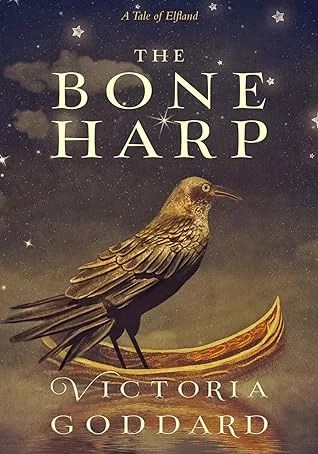
Read If Looking For: the trauma of violence, heroes after the dark lord is dead, poetic language, introspective reads
Avoid if Looking For: a plot where things happen
Elevator Pitch:
Tamsin is a bard. He sung in the first dawn, went to war with The Old Enemy, and became the Voice of Death itself. He was thrice cursed, his voice stolen, his hands ruined for harp-work. And then he died, and returned tho his homeland a millennia later. He faces the scars of his past life, a strange new world that moved on without him, and the lingering fears of what happened to his siblings and to Klara: his rival, his lover, his love.
What Worked for Me
I have a soft spot for books that engage with oral storytelling as a medium through which to structure their tale, and this book really delivered on the premise of a Bard central character. The author did a great job of capturing a storyteller atmosphere, and was able to really hammer some emotional bits home. I don’t cry often, but there were a few times when tearing up, and there were some very powerful moments, including where Tamsin confronts his extraordinarily violent past, and reunites with his family.
This book is pretty clearly in conversation with Tolkien as well. While the setting isn’t completely a rip off, it’s clear that the author wanted this story to live in the same literary space. I think it actually triumphs over a lot of books that try to talk with Tolkein. Often they take the species and basic plot outline, but leave theme and writing style behind. Thankfully Goddard didn’t try to emulate Tolkien’s prose, as it’s my biggest turn off with Lord of the Rings. However, the bits of Tolkien’s work that speaks to me most is the idea that the grand quest actually isn’t such a grand thing after all. This book takes that idea and fleshes it out the way that I had wanted Tolkien to do, but which I never feel like he quite realized fully. It’s about pain, and hope, and joy, and the people who stayed behind. It’s about healing and music and love. And despite there not being any lyrics to song in this book, I felt the music in my bones while reading it. Between her two novels I’ve read, it seems like Goddard’s strengths lie in emotional resonance, and fundamentally hopeful stories.
This is a damn good book
What Didn’t Work for Me
Repetition was my biggest fear, as it’s what has dragged this author down for me before. And this book does have repetition to it. I think it (mostly) works with the lyrical style, and allows Goddard to build up layers of emotion and theme. My only real critique is that I felt that the repetition got a little heavy in the middle section in particular (the book is split into three parts). Otherwise I adored this book.
It is worth noting that if you want highly readable and straightforward prose, this isn’t the book for you. The story is never challenging to read, but doesn’t push plot and character forward relentlessly like some favorite authors (including some of my favorites!) do. Nor does it have the bespoke intricacies of something that you would see in literary fantasy, or books that bridge the literary/genre divide.
In Conclusion: a phenomenal and lyrical story about what happens after the great evil is slain, and what happened to those left behind. Highly emotional, and very much worth your time.
- Characters – 4
- Worldbuilding – 4
- Craft – 5
- Themes – 5
- Enjoyment – 5
 Marked for Plot