
I should have known that The Geomagician would probably be a good fit for me. I’m a fan of Genre Romance, grew up roaming the backlands of Kansas hunting for fossils, and a few speculative naturalist books from this year have encouraged me to read more within this niche (shout out to both the Miss Percy series and The Flesh of the Sea). I don’t know that this book truly blew me away, but I definitely enjoyed it a good sight more than I anticipated. A good narrator always helps, but when I’m hunting for excuses to do chores while listening, it’s a good sign. Probably not going to satisfy people looking for something more than a Fantasy Romance, though I think the book is trying to push in that direction.
The Premise:
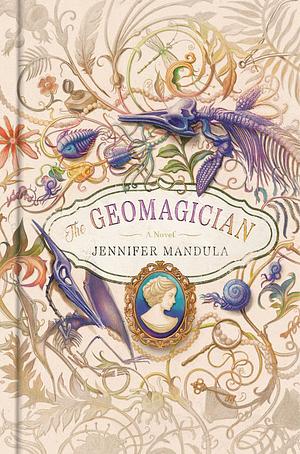
Mary is a struggling Paleontologist, denied the stipend that inductees of the Geomancy society receive. Of course, she’s made more discoveries than most of them. However, when you’re forced to sell your finds to pay rent, the men get all the credit. When she makes the find of a lifetime (a Pterodactyl egg that comes alive and hatches) she knows she has to leverage this to achieve her dreams and gain access to the academic circles that she’s more than earned. One of the candidates for the society’s next President is her first love, a Paleontologist and businessman named Henry who she’s never forgiven for what happened when they were teens. The other candidate is her mentor, a man whom has been remarkably cagey about letting women join the society.
Read if You Like: female naturalists, windowpane prose, second chance romances, classic feminist themes, cute animal companions
Avoid if You Dislike: withheld information, billionaire love interests, feminism that doesn’t acknowledge intersectionality
What Worked For Me:
Paleontology nerds unite! Well, perhaps those who are lightly nerdy in Paleontology. There’s a lot unreality in Geomagician (such as the time and care it takes to excavate and move fossils, which magic isn’t going to fully ameliorate). However, it is full of all sorts of fun little goodies. While the dinosaurs get big billing, I was enthralled at how much time Mandula spent with invertebrate and oceanic fossils. There’s a little bit of grounding on different types of fossils, mostly for readers who aren’t familiar with the basics, and it sparked a lot of joy in me. Hell, opening with Mary investigating a landslide because she knew it was prime fossil hunting time was excellent. This book opens us up to the messy reality of digging in the dirt, the petty squabbling about academic theories that get disproven as rapidly as they are proposed, and the political labyrinth that is academia. It was great fun, and I loved it!
The Geomagician is also a lot of fun to read. Mandula’s prose is the type of quick and accessible writing that makes you want to keep reading, just because you’re enjoying the journey. I was invested in the rivalry between Mary’s father figure and ex-lover, both of whom try to help Mary in their own ways. I liked the little details about magic (placing items on your skin charges them up, and fossils are one of the best materials around), and how the industrialization of Great Britain was shifting attitudes about magic. When read aloud, The Geomagician didn’t have awkward phrasing, unfortunate slumps in pacing, or twists that didn’t feel earned. Just a solidly written book that was a blast to spend time with it.
What Didn’t Work for Me:
My criticisms for The Goemancer mostly exist in comparison to some truly excellent stories that fill similar niches. For example, there’s a whole subplot about a political movement to raise the wages that must be paid to those who sell their bodies and time to charge up fossil relics with magic – multiple times it got compared with prostitution. However, I kept thinking that The Daughters of Izdihar did a better job showing the nuance of women’s activism in political reform, and it’s just a much more interesting execution of that idea.
In some ways the book is hampered by wanting to have it all. I struggled a bit with Mandula’s handling of Henry in particular. He’s fabulously wealthy, mostly off his own hard work. Notably, he’s excited about revolutionizing magic while trying to make it more equitable (and also is pursuing TRUTH, which Mary finds very compelling). No real mention or exploration of how his money is built on the poverty of others; he’s philanthropic, I swear! Mary is surrounded by rich friends, yet it feels like there’s little acknowledgement of how this places her in a different situation than those impoverished women without rich friends, whom all remain nameless. Instead, she’s kind of in the magical sweet spot as both the victim and beneficiary of privilege in every way convenient for the story. Mary is poor as dirt, and also an unrecognized genius in geomancy, and also has made most of the major fossil finds in recent UK history, and has a fabulously wealthy man who is pursuing her and trying to make amends. Oh, and she has a reincarnated Pterodactyl egg that is causing a theological revolution. I’m all for main character energy, but I also think the premise begins to sag under its own weight a little bit. Unfortunately, I think the book doesn’t quite realize how Mary’s situation sucks the air out of all the social commentary.
This is sometimes one of the pain points of Romantasy, I think. In Genre-Romance, I can frequently brush away these thoughts, because it’s damn rare that Genre-Romance is trying to say anything meaningful on a thematic level. It’s one of the things I love about the genre. When you add in fantastic elements, written to be taken seriously and not simply as a backdrop for the love story, the thematic fragility of common Genre-Romance stories come into more focus. This isn’t the fault of Geomagician, and Mandula handles it better than most books (Ministry of Time was atrocious for how it handled this contrast), but neither do I think she’s fully successful.
That’s a lot of words to say that I liked the book a lot. I always feel bad when this happens, because negatives are typically more interesting to me than positives. However, I am eagerly awaiting the sequel, which is due for April of next year.
Conclusion: a solidly written romantasy with overt feminist themes and a strong naturalist premise.
- Characters: 3
- Setting: 4
- Craft: 4
- Themes: 3
- Enjoyment: 4


Wonderful, glad to see you liked this book as well! It’s been the better part of a year now since I read it as an ARC, but I remember liking it a lot. You make a good point about Mary not fully recognizing her privilege. Her friend tried to get her more into politics, and I think by the end Mary starts to realize more of her privilege. Idk, I guess I chalked it up to Mary being more naturally interested in science than social justice. But yes, I see your point!
LikeLike
It definitely looks like it might be headed in that direction, which makes me hope book 2 will alleviate some of my concerns. Regardless, this was a delight to read, and I’m loving how Mandula is handling a second chance romance.
LikeLiked by 1 person
I guess some of how Mary’s positioned in the book is down to trying to base it on the real Mary Anning’s actual life — some of what you mention matches her biography (minus the magic)… I wonder if maybe the author tried to get too close a parallel here and there, without balancing it out to suit their own story. Reality doesn’t have to balance out, after all.
Maybe it’d have been better to fictionalise her a bit more.
LikeLike
The more I think about it, the more I think Henry is my biggest issue, which exacerbated all my other gripes (which are fairly mild, because I did really like the book). Mandula shifted the relationship to one of love, wheras their actual relationship seems more akin to Buckland’s role as patron-esque peron and mentor. But the real life Henry’s wealth was built off Jamacian slave plantations, which he happily profited off of them he had to sell them because he was living too rich a life. Almost all rich people in UK at the time either came from old aristocrat money, or from exploitative labor practices, but all of that is missing from this book. In Geomagician, Mary benefits from all that, but Henry is converted into a conveniently wealthy and mostly idealistic (even if all his choices aren’t the right ones). The sequel might head more into exploring this, and I really hope it does, because mostly this was a fun and bubbly romance for me.
LikeLike