
It’s no secret to those who’ve been in my orbit for a while that How to Survive this Fairytale is one of my absolute favorite books. So, when Hallow dropped her next book, I knew I was going to have to pick it up. Halls of the Dead is a very different reading experience, and I didn’t jive with it quite as much. However, the through-lines between these two books (relentlessly queer, unconventional takes on common tropes, and unusual structural choices) is something I’m very interested in, so Hallow remains on my list of authors whose release schedule I will be avidly following.
The Premise:
Irene is the first necromancer to perform a resurrection since Jesus himself. She brought back her love, Agnes, with the help of her husband John. John is himself ancient, sworn to keep the necromantic arts alive despite not practicing them himself. This story weaves these three characters’ past and present, tangling them together in a desperate knot as they try to secure a future for the necromantic arts. It’s a horror/fantasy hybrid about gore, necromancy, and revenge.
Read if You Like: magic that doesn’t shy away from grime, literal beetles inside your stomach, character-focused stories, getting lost in the language
Avoid if You Dislike: another book in Victorian London, bugs, stories that de-prioritize plot, frequent flashbacks
What Worked For Me:
If you thought that the necromancy in The Locked Tomb was good and grotesque, buckle up. Hallow holds no prisoners in The Halls of the Dead. This is a book about necromancy, full stop. You get tidbits of how illusion and transmutation work (they’re even interesting), but Hallow has let her imagination run wild when it comes to the necromantic arts. It turns out that her imagination is not lacking in gore. We start with Irene knee deep in mud as she unearths Agnes from her grave. She mutilates her hand – in great detail – to power the resurrection spell, the spell she got from a book created from the folded up body of a previous necromancer, a woman who now whispers in Irene’s ear. There is blood and bugs everywhere. Things only get more intense Hallow forges ahead. The book is littered with the filthy acts of necromancy. It’s not hard to understand why society has deemed it a dark art, because Hallow makes the visuals so entrancingly repulsive. I could pull description after description of all the cool stuff happening on this front. If you’re at all interested in a more gruesome and realistic – whatever that means when it comes to magic – take on necromancy, I can’t think of any book better than this one. It is decadent and indulgent and unrepentant.
Saint John is himself a product of necromancy. He’s a corpse stuffed with his own grave-dirt. Created and reanimated by the Abbot of a necromantic monastery called the Crypt, St. John now lives forever. That man, John’s first love, killed and immortalized John to a live where he hosts beetles and worms and blowflies in a body that neither breathes nor bleeds. His reanimation flashback featured a particularly impactful scene where the abbot, elbow deep into John’s body, caresses the ribs of Johns’ body while casting the spell. Literal shivers. In his backstory we see the necromancers he’s failed to protect, the vengeance he has wrecked upon his enemies, and his single-minded devotion to Irene, whom he sees as the path to finishing his divine mission, even as he begins to develop real (perhaps) feelings for both her and Agnes.
The language in this book is one to get lost in. I think some may find it too purple, I don’t think Hallow overplays her hand. There were so many moments while I paused to reread a passage to enjoy Hallow’s writing. One of my favorites featured John – can you tell he’s my favorite? – as he describes his own creation
My beloved made me into a grave. My own grave, yes. But the graves of others, too. I am where necromancers go when they die; I am the earth that remembers them. He made me into a cathedral where the future could worship the past. He made me the link between the living and the dead.
This formal and ritualistic language wends its way throughout the book. I think it matches the setting of the story and how Hallow approaches necromancy as itself a ritualistic type of magic. The prose here made me seriously begin to rethink my aversion to annotating my own books.
What Didn’t Work for Me:
As I read The Halls of the Dead, I struggled with figuring out why I wasn’t itching to continue reading. I aim for 50 pages per day, but it was rare that I felt any inclination to read past that mark with The Halls of the Dead, which seemed very at odds with how much I enjoyed the language. I think there are two primary culprits. The first is pacing. Chapters flit back and forth across character perspectives and time. We dip into different pasts, flit to the present as they deal with the fallout of the resurrection (and plot the downfall of the various evil men in their lives), but all this bouncing means that the plot of the story feels disjointed and meandering. The setting, vibes, and prose carried me a long way, but they couldn’t keep me fully engaged. Once the final act of the story approached, this was alleviated, and my motivation to read picked up.
I also just found Irene and Agnes a little … basic, and in a character-focused story, that’s a tough pill to swallow. Maybe St. John’s weirdness, which I adored, already prejudiced me against them. However, I never felt like either of their personalities shone through, and each of their backstories largely revolved around them escaping and enacting revenge on a suite of abusive men in their lives (father, brother, judge). I didn’t feel like Hallow had much that I hadn’t seen before, and I really wanted Irene’s relationship with her sister to get a bigger focus, as there seemed a lot more thematic heft in that storyline. I also didn’t really feel Irene and Agnes’ love for each other. I didn’t buy into their unrelenting devotion, which seemed to have its origins in a prophecy and little else. Meanwhile, when St. John begins to develop true feelings for the women, I am shown that emotional shift, rather than simply being told about it.
Conclusion: gorgeous language and vivid necromancy, but not for those seeking traditional book structures
- Characters: 3
- Setting: 5
- Craft: 5
- Themes: 4
- Enjoyment: 4


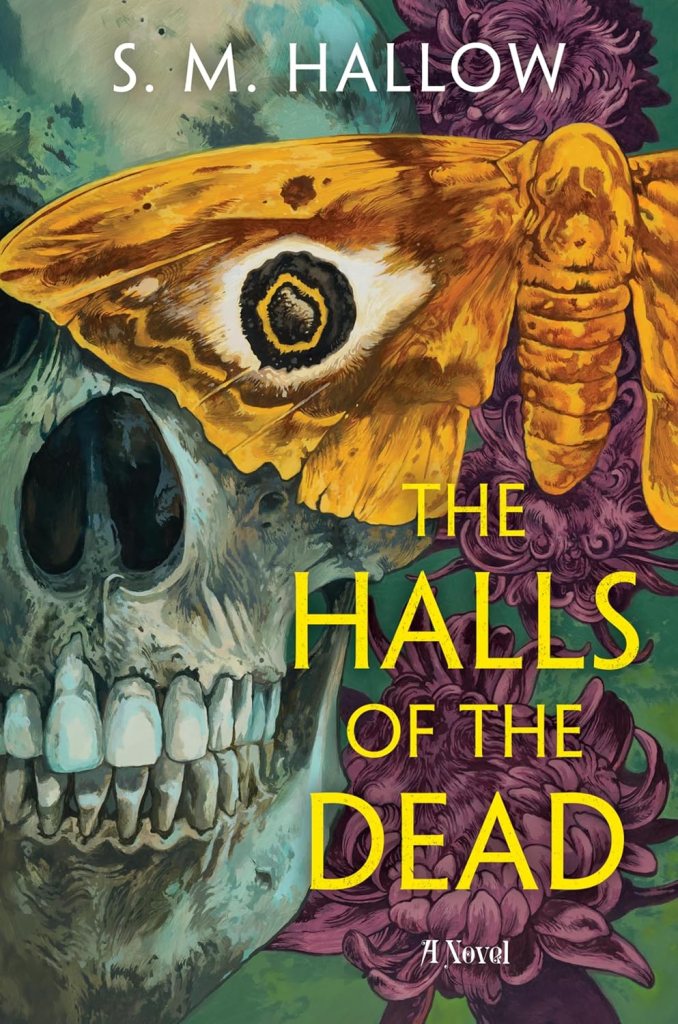
That cover is STUNNING. Holy cow!
Ash @ <a href=”https://essentiallyash.blogspot.com/“>Essentially Ash</a>
Click here if you want to follow me on <a href=”https://linktr.ee/essentiallyyash“>Bookstagram, booktok, add my snapchat or check out my photography</a>
LikeLike
Both covers for this book are great! This one does a better job of capturing the necromancy. The other cover is very clean cut and formal, which also is a big part of the book. It was tough picking which one to put here!
LikeLike
Glad you liked this one, though sorry it wasn’t quite perfect. Valid critiques though, as usual, especially re the plot really being the least important part of the book!
Have you heard the announcement of Hallow’s next book yet? Something to do with the ‘science’ of the four bodily humours, which sounds fun!
LikeLike
Ooooh, I had not! Interesting to see her push more into the horror space, which is not at all where I expected her career to go. Definitely reading this when it drops!
LikeLike