
August has ben so much fun! I have finally been blessed to join the concussion club and had a string of days where reading visually was simply not an option. It’s been two weeks at this point, and while my stamina is on the low end, it seems like I got the best possible version of a concussion possible. Hopefully this is the last time I feel compelled to reference it (outside of my August wrap-up). Mage Errant ended up being my audiobook series of choice, and I had a lot of time with a sleep mask over my eyes floating in and out of consciousness, especially for books 1-3. Thankfully, this is a reread for me, so I never felt particularly lost or confused. That said, the things that are popping up for me in this review are much more heavily weighted on the back half of the series – which is generally the better half anyways.
This will have some light spoiler elements for the first book in the series, but nothing specific or consequential.
Read if You Like: creative applications of magic, school settings, battles that span hundreds of pages, ensemble casts with plenty of queerness, morally complex (corrupt?) mentor figures
Avoid if You Dislike: prose that could use a line edit, characters leveraging ‘story logic’, critiques of imperialism, tonal shifts across the series from YA to Adult (no sex)
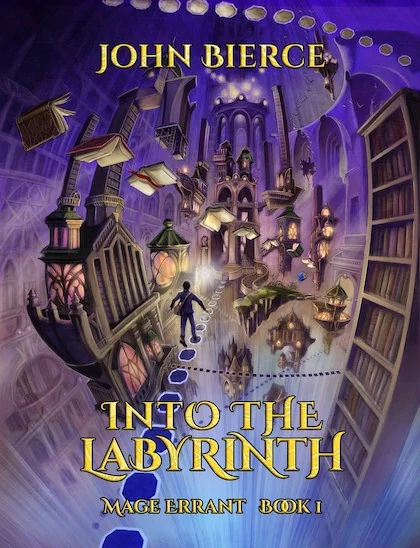
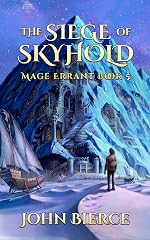
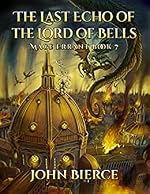
The Premise:
Hugh got a scholarship to the magical school of Skyhold by virtue of being from a country that supposedly has no mages. His magic doesn’t work properly, so he gets pulled under the wing of an eccentric battlemage who uses paper magic along with two other magical misfits. His teammates become Talia, a dream and bone mage whose parents arrogantly gave her fire magic tattoos; Sabae’s storm magic is limited to a few inches off her skin; and the more normal stone mage Godrick is apprenticed to his father, who is friends with Hugh’s mentor. The four of them end up entangled in the agendas of the Great Powers that rule and destroy the city-states of their continent, a threat from a far-off Empire, and hidden foes from across the multiverse. This is a ‘zero to hero’ type story, with books 1/3/5 mostly focusing on school and 2/4/6/7 focusing on the wider world.
I also think its worth noting that this series sits firmly in ‘popcorn fun’ territory for me, and me raving about it for several paragraphs is always going to be within that context. It’s Shonen Manga in novel form, and I’m judging the series within those constraints. This series will do nothing for folks whom progression or action fantasy are not appealing.
What Worked for Me:
I feel like any discussion of Mage Errant needs to start with the Magic. It is ridiculously simple and also super brilliant. Each mage has one or more ‘affinities’ or magic specialties, which allow them to manipulate, enhance, and adjust anything that falls within that topic. These can range from bland and common (cue the Avatar intro) to the oddly specific (basalt, mangrove trees, silk) to utterly bizarre (chameleon, scent, ripple/echo). Bierce has great fun with this. Our core cast of characters use a lot of the basics, plus some odd ones like Paper and Crystal. However, the story constantly pushes them in unusual and interesting directions, usually by placing restrictions on their powers. The bone mage has fire magic tattoos, meaning she can’t use traditional bone magic. Instead of enhancing her own skeleton, she turns them into bombs, the effects of which differ based on what type of creature the bone came from.
Antagonists more frequently get really oddball powers, and Bierce really nails the aesthetics of a wide variety of combat types. As the series goes on, he’s more and more willing to stretch battles out, giving entire chapters to a duel between two side characters to show off his ideas. Books 5 and 7 in particular are more than 50% focused on a single cinematic battle. Truly, if you told me that I would be enamored with a circus who uses bamboo magic to create giant mazes while mocking their foes … well I would have asked to read it immediately. This whole series is just a nesting box of cool magic ideas placed within a simple framework that just sings.
However, the best part of the magic was how Bierce used it to reimagine societies! As with much of this series, there’s not a lot subtle about Mage Errant’s worldbuilding, but it is delightfully imaginative. When a city has been ruled by Basalt mages for several decades, how might that affect the city’s structure? How would governments and cultures develop and react to rampaging power grabs from Great Powers who can sweep aside a city in a day? How do banks interact with a monstrous phoenix who holds 7/10s of all gold for his armor (hint: they assassinate anyone developing countermeasures to the phoenix’s power, to avoid gold flooding the market in the event of his death). You’ll get to visit plenty of fun locales outside of the school, and it’s just a really delightful world to get lost in.
On a character front, I was impressed with how Bierce scaled the series up from something pretty typical to a dynamic ensemble cast. Books 1 & 2 are truly Hugh’s books, and he’s the socially awkward and bullied kid that you can find in almost every magic school story. The cast blooms into something really wonderful as the four apprentices (plus Alustin, their paper mage mentor) become main characters as well, all of whom have much more distinct personalities. Mage Errant is refreshingly queer. Hugh is cis/het, but Godrick is gay, Sabae and Alustin are bisexual, and you get a variety of other queer background characters. There’s a good balance of personalities, with rambunctious chaos, political schemers, and the level-headed anchor that holds the group together. Again, I’m speaking from a ‘mindless fun’ perspective, so these characters won’t hold a candle to authors like Robin Hobb or SM Hallow, but they’re far better than is typical in these types of stories.
Also, we get morally complicated mentors! The main two mentor figures we get are Alustin, who eventually becomes a main viewpoint character, and the Sphynx headmistress of the school who takes Hugh under her wing. These two are such a divergence from typical mentors, because they are flawed and compromised and interesting. The sphynx eats defeated and defenseless humans who have wronged her, having kept them captive long after the battle ended. Alustin is motivated by revenge against the empire that destroyed his home, and has his own agenda just as much as his apprentices. There were some really big risks here that could have backfired on Bierce badly, but I had so much fun with these teachers!
Finally, Bierce slips some anti-imperialist thematic work into this series. It’s not as deep or developed as in his newest series, but there’s a lot of questioning power structures. Gloriously, the empire is not the only flawed system. Their grand design is to end the constant warring that has consumed much of the continent’s history, including the areas the protagonists live. The short version is that Great Powers are beings and mages strong enough to control a city, and they frequently go to war with each other, causing mass casualties as they vie for dominance. Neither system works particularly well, and Bierce is happy to call out shitty social structures (even more fantasy-specific ones) without pretending that he’s got all the answers. In fact, Sabae’s main goal in particular, which the others are happy to go along with, is to find a way to solve these problems. She never reaches any firm conclusions, which again felt remarkably fresh in a genre where protagonists single-handedly transform the world and solve all the problems that ever existed.
What Didn’t Work for Me:
As with so many progression fantasy books, the prose quality here is not always the greatest. In the early books especially, Bierce’s writing can get clunky. He’s got an unfortunate habit of repeating distinct words within a sentence or two of each other, when simple rephrasing would smooth out the language and lead to a better reading experience. These kinks do mostly work themselves out as the series progresses, but they don’t go away entirely. I really think this whole series could have gotten 1-2 more line edits, but that’s not something that self-published fantasy typically gets to indulge in. If this is going to be an issue for you, I think Bierce’s new series More Gods than Stars (same multiverse, different characters, different magic system) is an all-around higher quality package on page 1 than Mage Errant ever reached. Bierce is also taking more time writing the sequel than he did for Mage Errant’s books, so I’m hoping that means his quality of writing will remain high!
This story was great fun, but I cannot overstate that if you’re looking for anything other than a popcorn fantasy filled with fun fight scenes, this isn’t going to be a good pick.
Conclusion: light, easy, and great fight scenes. High enjoyment factor, but objective quality isn’t always there.


I feel like that ‘Avoid if You Dislike: prose that could use a line edit’ is directed specifically at me, but damn it, you’ve made this sound so appealing I want to give book one a try anyway!
…who knows, maybe I can finally switch off my editor-brain. Could happen!
LikeLiked by 1 person
Unfortunately, if I feel like mentioning it, it’s probably far beyond your threshold. If you’re interested in trying Bierce’s work, The City That Would Eat the World is definitely a better bet for you (and most people, honestly). It’s got no subtlety about its anti-imperial themes, but he continues to be very imaginative with how he uses magic to inform worldbuilding
LikeLike