
I knew that I wanted to start my 31 Novellas in 31 Days Readathon with something that I was almost certain I’d love. Penric’s Demon was a great choice for that. I’ve liked Bujold’s work in the past, the novella has a sterling reputation, and possession is shaping up to be a running theme for some of my 2026 reads (I highly recommend Asunder and Striker V, was less enamored with Ninefox Gambit, and am probably going to read If Found, Return to Hell for this project). This novella is going to be a good fit for anyone interested in something relatively low key and character-focused. My only regret of reviewing this first is that I need to wait until the end of the month to read any more in the series, because I am chomping at the bit to follow these characters.
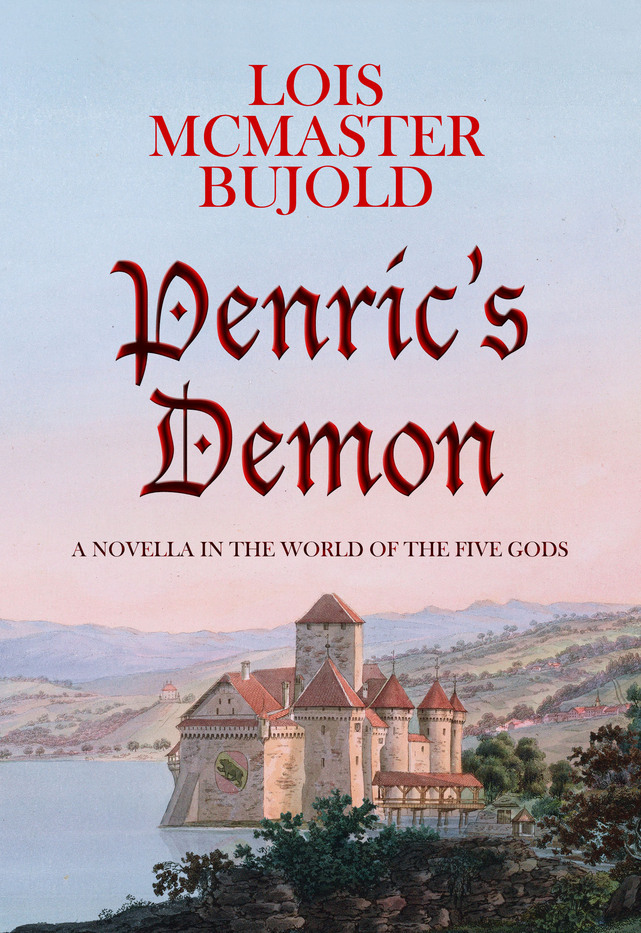
The Premise:
Penric is a minor lordling on the way to his own betrothal when he stumbles upon a dying woman. It turns out she was host to one of The Bastard’s demons, who jumped ship to Penric as her new host. Now he’s got the voices of the previous 10 hosts (12 if you count the lion and the sheep) in his head, magic powers he didn’t ask for, and a host of people jealous and scared of him. He really just wanted a quiet life, but at least the Demon (whom he names Desdemona) is nice. For her part, she’s just surprised that Penric is treating her with kindness and humanity, and quickly decides that she rather likes this poor oblivious young man.
Read If Looking for: friendly and oblivious doofuses stumbling into trouble, negotiating with ancient entities who are surprised at how chill you are, the goodness of humanity
Avoid If Looking for: satisfying plot arcs, malevolent spirits, energetic combat sequences
Comparable Media: The Goblin Emperor/Cemeteries of Amalo, Murderbot Diaries, The Dragon’s Banker
What Worked for Me:
At first I was very leery of Penric as a character. Bujold’s opening section of this novella feels like a very stereotypical oblivious man. Stereotypes have their place, but it’s not what I’m looking for when I pick up a book based on its reputation for excellently written characters. Thankfully, Penric rapidly gains depth as the book continues. He’s still woefully ignorant about lots of things (including how to talk to women), but he has a sense of relentless curiosity and optimism that makes for a light and enjoyable reading experience. A recurring motif was how his treatment of Desdemona as a person in her own right, instead of something to be feared or controlled, comes naturally to him while being anathema to everyone he meets. It’s like Bujold picked up the Golden Retriever archetype from the Romance Genre and decided to treat him with the intentionality and seriousness she gives to all her characters. We’ll see if he gets a character arc later in the series or if he remains an enjoyable yet static presence. As it stands, people looking for morally grey protagonists will be disappointed, but I enjoyed how much Penric felt like a cup of hot cocoa on a snowy day.
As a possession story, I think Bujold made some very smart choices. Considering the cozy atmosphere, it was a foregone conclusion that Desdemona would be amicable to Penric. However, she’s not quite like any possession I’ve seen. Her identity exists as impressions of past hosts, both one and many at the same time. This setup gives Bujold lots of material to cover in sequels as Penric gets to know all of Desdemona’s personalities better, and allows each of their specialties (such as medicine) to shine in different encounters. Her magic is from The Bastard, whose domain lies in the creation of chaos, giving a simple and evocative framework for why Demons are feared and the types of powers Penric will eventually be able to wield. Most interestingly however, is that Desdemona primarily speaks with her host using vocal cords; the more silent telepathic communication common in possession stories is possible, but more costly for her. This is another lever for Bujold to yank on in an author’s quest to create tension and comedy. Penric learns quickly to find private spots to converse with Desdemona, who will happily hijack his vocal cords and make it seem like he’s a madman talking to himself. The core premise of the series is well thought out and filled with potential. I honestly don’t think I’d change a thing at this point.
On a prose level, Bujold continues to show herself as a master of simple, straightforward, and evocative prose. I listened to the audiobook while deep cleaning my house earlier today, so I don’t have any direct quotes to provide you with. However, Bujold’s writing feels very old-school (this makes sense: she’s been publishing since the 80s) but most books I associate with that era are too overwritten for my taste. You get a lot of description, dialogue, and internal monologue from Bujold but it never feels like I’m drowning in excessive detail. Not a lot actually happens in these 140 pages, but I had a hard time pressing pause on the audiobook. This novella, more than any other, has sold me on why Bujold is one of this sub’s favorite authors despite not being a household name like Prachett, Tolkien, or Sanderson.
What Didn’t Work For Me:
As much as I loved this novella, I’d have been very peeved if it were a standalone book. Until I went and checked on Goodreads, I was convinced that this was a prequel book written mostly for people who already knew and loved these two characters. It focuses so much on Penric and Desdemona’s origin story that it eschews Bujold’s traditional careful sense of pace and plotting. It reads very much like the opening chapters of a novel, taking its time to explore dialogue and description. I kept thinking ‘I’m having a great time, but when is the plot going to start’, because it didn’t feel like Bujold intended for the story to remain the relentlessly slice-of-life explorations of Penric and Desdemona’s relationship forever. She does sneak a quick moment of drama into the book near its ending, which helped her establish some of Desdemona’s magic and set up Penric’s position for future adventures, but this book generally lacked a coherent structure that makes it work as anything other than a springboard for later books in the series. I loved it, and the novella absolutely achieved its goal of wanting me to grab the next copy. However, this is not a good novella to read if you want something that’s going to wrap itself up in a tidy little bow as a palette cleanser between other stories.
Conclusion: more a prelude than a true novella in its own right, this is a fabulous and gripping story that I can’t wait to chase down more of


Ive been curious about this series for a while (I never know if I’m better off picking up this or Chalion first) and am happy to hear that you enjoyed it. The multitude of personalities and varying specialities that the possession involves sounds like it has so much potential. And the hijacking of his voice to make Penric look mad definitely soubds entertaining. Its a shame to hear that theres not more of a plot to this but hopefully it’ll expand as the series carries on 🤞
LikeLiked by 1 person
I haven’t read a ton of Bujold, but I think you could start with either. You’ll miss a bit of worldbuilding around the five gods, but not so much that it would negatively impact your experience with Penric’s Demon.
LikeLiked by 1 person