
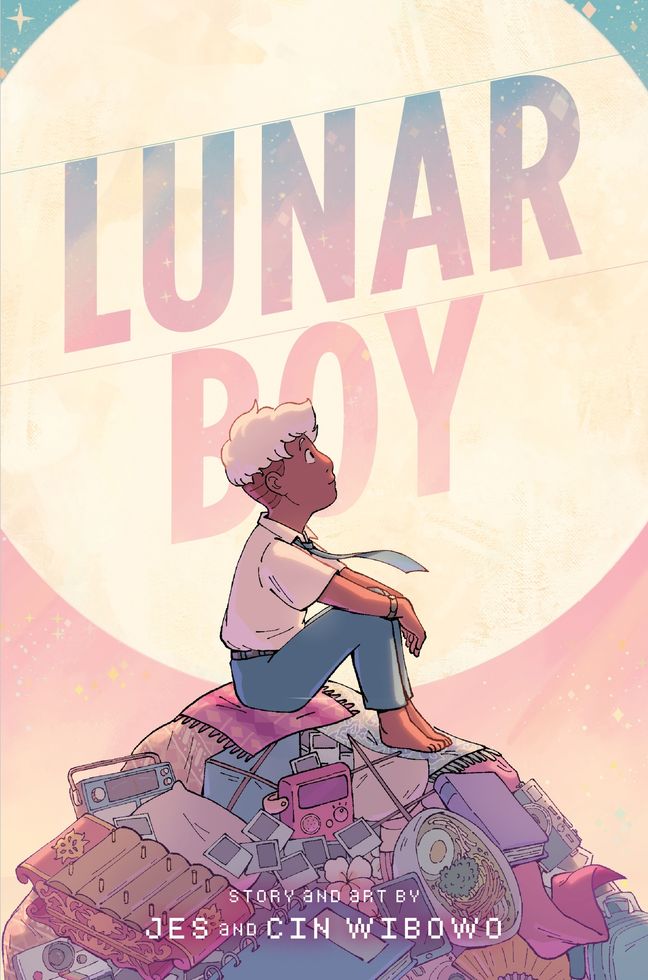
Talking about books with kids is one of the best parts of my job. Unlike most adults, they’ll gush about their favorites unabashedly and rip books they disliked to pieces. This means that I get a pretty good pulse on what books are worth a look – though my tastes don’t always line up with the kids. Lunar Boy is one of those books that kept coming up as phenomenal. Since nobody was reading it, I took my classroom copy home to read as a way to kick off my Spring Break. The kids were right; it’s good.
Read If Looking For: immigrant narratives, a focus on inner conflict, familial struggles & triumphs, adorable pen pals
Avoid If Looking For: hard sci fi, adult fiction (this is very middle grade, with all the tropes and idiosyncrasies that come with that label), books that ask difficult questions
Comparable Media: Aristotle and Dante Discover the Secrets of the Universe, A Song for You & I, Root Magic
Elevator Pitch:
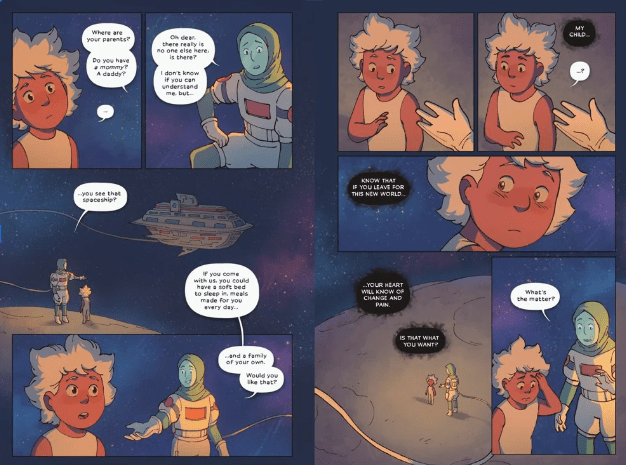
Indu grew up on The Moon before being rescued and adopted by an astronaut. When his new mother takes him home to Earth to join a new family, Indu deals with not knowing the language, siblings who don’t want him there, and feeling like he doesn’t know how to belong somewhere anymore.
What Worked for Me:
Lunar Boy is a great example of things that Middle Grade writing tend to get right more often than adult works. While this book isn’t going to work for people interested in untangling meaning for themselves, it does a great job of leveraging a reader’s emotions to help lend weight to the story. This book is, at its center, a story about immigration. Indu’s struggles to make friends at school aren’t solely related to language, but it’s a big part of the problem. When kids use transphobic language, he doesn’t understand what’s being said until it’s explained to him, and re realizes that his new classmates would feel that way about him if they knew he was trans. We see his mother spending time with new stepsiblings and feels like that relationship shifts. His stepfather misgenders him accidentally. He can’t express himself the way he wants to, even with people who are patient with him. This graphic novel is a masterclass in showcasing how a hundred small moments can build into a mountain that feels too tall for anyone to climb. When we teach kids about fiction in middle school, we talk about Windows and Mirrors. Some books are Windows, allowing you to get a taste of another’s lived experience. Other stories are Mirrors, where you see yourself in the story. Lunar Boy embodies that principle and places empathy first. Lunar Boy channels this energy, and Indu’s journey was an emotional and heartfelt one.
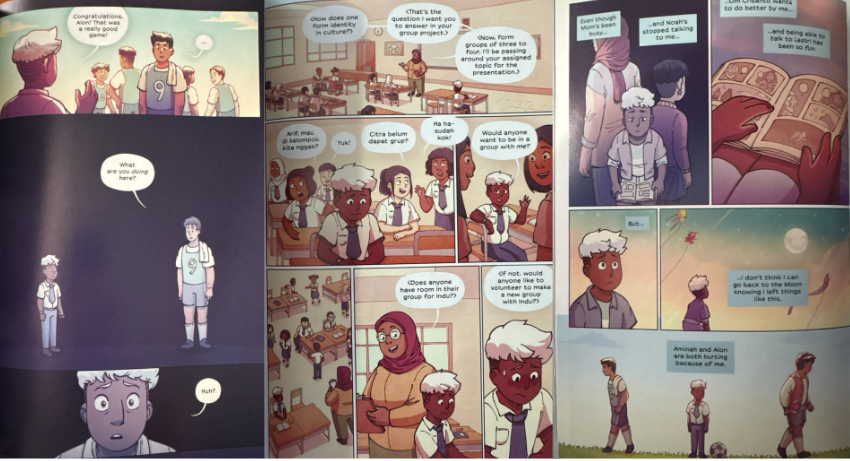
In 240 pages, this Wibowos also did a great job at fleshing out the supporting cast of characters. Obviously none of them get too much screen time, but each character is clearly a three dimensional character with their own things going on in their lives. Indu’s language tutor also volunteers at a LGBTQ+ community center. His brother is grieving the loss of his birth mother, and his sister thinks Indu doesn’t want to spend time with her. His penpal for a school project is grappling with depression. Even the school bullies feel like something other than cardboard cutouts, as they make an effort to include Indu in school projects and lunch conversations until they realize he’s not the right type of new kid. Whether they’re kind or cruel, Lunar Boy asks you to place humanity at the center of each character we meet.
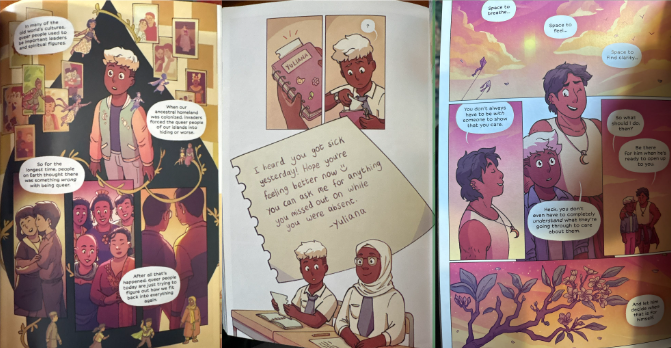
Finally, this was a setting I’d never seen before! Indonesia doesn’t get much page time in English-Language books to begin with, but a futuristic Indonesia that reimagines cultural practices as they develop with time was really well done. While the setting doesn’t get a ton of overt attention, the book would need major rewrites to function in another setting. While this world hasn’t solved bigotry or prejudice, it was a celebration of culture and a stand against homogenization in the 21st century. It claimed that progress need not come at the expense of what makes communities unique, and that we can carry our traditions into the future if we choose to.
What Didn’t Work For Me:
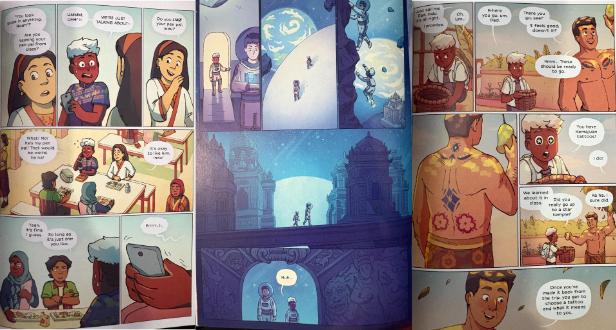
While the middle of this book did a great job of using Science Fiction settings to explore real issues kids go through, I thought the beginning and ending were less strong. In particular, there’s some fantasy elements which didn’t feel necessary. Did Indu need to come from a moon that speaks to him? Does he need to be able to ‘breathe’ in space without protective gear? If that were the primary driver of his ‘otherness’ I could understand its inclusion, but instead it gets forgotten as Indu grapples with the shift from Spaceship to New Earth. When the Moon speaking directly to Indu does return at the end as a metaphor for self-acceptance, I felt weird about that thread returning when it hadn’t gotten nearly as much development as other bits. In the end, I wish this story had been strictly Science Fiction instead of trying to blend Fantasy elements into it. It would have made for a tighter, more focused story without losing any of its thematic depth.
Conclusion: an insightful graphic novel exploring isolation, family, and belonging through the lens of space immigration
 Marked for Plot