
I am so happy that I read Lifelode. It isn’t a perfect book, but I love how it defies easy comparisons and pushed boundaries of fantasy in the 2000s structurally and thematically. It’s got delightfully weird worldbuilding and, if pressed, would use One Hundred Years of Solitude as the closest comparison I’ve read (though even that isn’t right). More selfishly, it’s also probably one of the best books I’ve read for a book club, simply because I think Lifelode makes so many bold choices that will spark interesting discussion. Certainly my views here on how Walton handled theme don’t seem to be universally shared amongst those who, like me, ended up reading far ahead for our midway discussion. Lifelode isn’t necessarily a dense book, but there’s a lot of interesting choices here which set a great foundation for discussion whether you loved or hated the directions the story took.
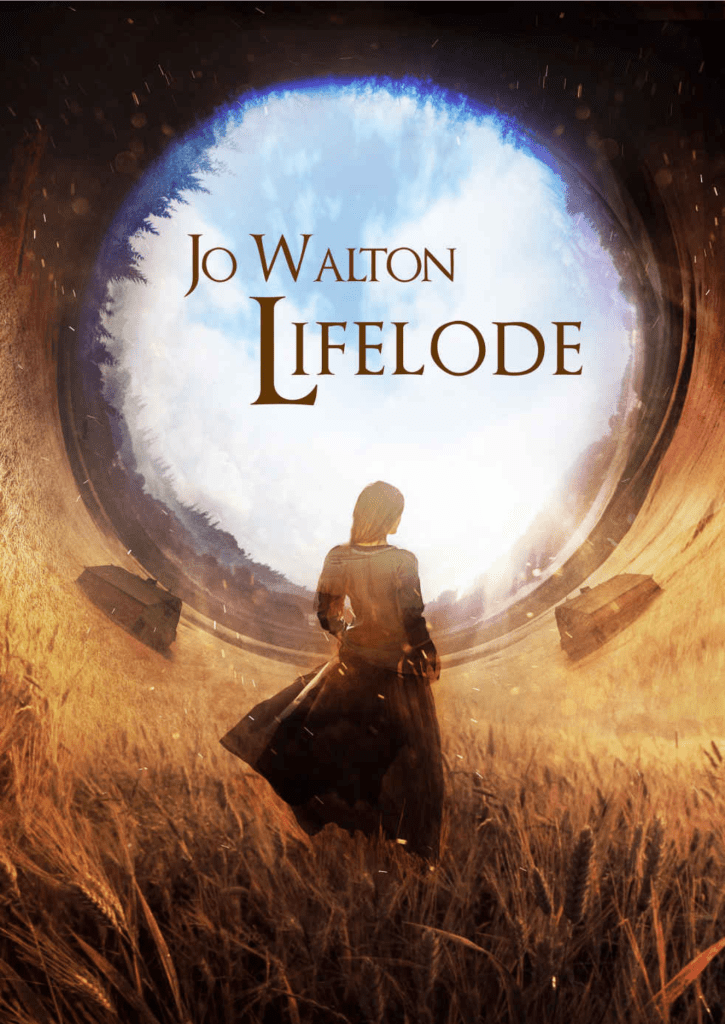
Read if Looking For: books without easy comparisons, celebration of traditionally feminine work, Gods as hiveminds, reimagined family structures
Avoid if you Dislike: pastoral settings, relationship drama, complex family trees, peas, petty characters
Elevator Pitch:
Applekirk is a rural farming town run by a lord and his family, who live in a large manor. Taveth is one of the four adults of the marriage, committed to maintaining the house. One of her husbands is Lord, another manages the sheep and farms. Meanwhile Chayra, the other wife of the house, has found joy in throwing pots. Their lives are thrown out of routine with the arrival of a flirtatious travelling scholar, a meanspirited ancestor to one of Taveth’s husbands, and a priestess of the goddess of marriage who has been sent to bring said ancestor to the goddess’ justice. Just as important, however, is the harvest and all preparations it requires.
What Worked For Me:
Walton’s commitment to a dreamlike atmosphere is commendable. In a world where the flow of time and thought shifts depending on how far East or West you are, where a character lives seeing shades of people’s past and future, and where it’s impossible to know when the gods are meddling in your life, Lifelode embraces an amorphic structure. Walton shifts between time without much indication that we have suddenly advanced several decades and the lovable children have become adults who are now telling the story in retrospective. Even the complex family dynamics present interesting worldbuilding opportunities, where Walton posits that a wider net of romantic relationships can strengthen a household. This book isn’t quite a magical realism story, but it feels like a marriage between that genre and Fantasy of Manners. It refuses for the first 150 pages to commit firmly to a plot, instead allowing characters to live life, bicker, and pursue small challenges – such as how to greet the great great great grandmother who came back from the East and is a stranger to us all, but also probably still family? I can’t say that I always loved how Walton approached the narrative, but she created a novel that defies easy comparison to anything else I’ve read. With how much I read, that’s not something I say terribly often.
A big highlight of the story was how Walton kept the stakes (mostly) personal and immediate without them ever feeling less meaningful than when weapons get drawn or magic summoned. The attention paid to timing loaves of bread coming out of the oven, or the housing arrangements for a rapidly expanding set of guests weren’t brushed over. They were seen as an essential part of the story of the household, worthy of respect and tension and thought in the same way authors might treat a raid or siege in more militaristic stories. Lifelode is an ode to the unsung labor running a household entails. It doesn’t consume the book – weapons, vengeful goddesses, and relationship drama all rear their heads in the back half of the book – but the importance of the routines of daily life never fade to the background.
What Didn’t Work for Me:
As I worked my way through this novel, my admiration for the dreamlike world of Lifelode and Walton’s commitment to celebrating housework was matched by my disappointment when banal relationship drama began to consume plot and character arcs. It began simply; a playboy scholar sleeps with Taveth and Chayra both. Taveth’s feelings are hurt, which leads to general reminiscing and resentment about sharing her husbands with Chayra. At this moment I thought that Taveth’s attitude felt very selfish (she doesn’t extend the same grace to her husbands that she expects from them) but, more importantly, that it reflected a crack in the facade that polyamorous relationships are the overwhelming norm in this culture. As a plotline, it seemed odd and disjointed, a lack of thematic rigor in what otherwise felt like a cohesive story. Surely there were more interesting ways to introduce domestic and marital disputes in a book that had previously innovated so much in how it sought to portray home life?
Unfortunately, this led to some Chayra’s POV sections which felt like Walton had begun to throw all of her interesting domestic worldbuilding choices out the window. She feels pride at being younger and prettier than Taveth, seeking to shame her wife (sort of? The women aren’t in love with each other, nor are the men in love with each other). The two continue in this manner, each barbed thought and word further eroding the careful celebration of femininity of the opening half of the book. It descended into one of the most cliched portrayals of the jealous woman stereotype I’ve read in a long time. Even in the ending, Walton’s resolution to this family drama seems only to reinforce monogamy as an ideal despite the premise of the book pushing in the opposite direction. Throughout this journey, it began to call other small details into focus for me: the near-relentless heterosexuality of the characters, the rigid gender roles (of course the male needs to be heir), and I began to feel that Walton’s whole construction was magical and imaginative, but reductive under the surface.
I think part of this critique comes from Lifelode’s age. The book is two decades old, certainly written before polyamorous relationships began to achieve any semblance of mainstream recognition outside of certain religious organizations. It’s a far sight better than most representations of polyamory at the time, and despite where the story ended up, it’s got a unique female voice in the fantasy genre even now. However, Lifelode ultimately feels limited and unimaginative in how it handles gender, relationships, and queer identities. I just wish the book had stayed weird, and that Walton had avoided the siren song of a more tangible plotline.
Conclusion: so many interesting ideas and a wildly unique story. Lifelode was a delight to read even when it disappointed me
- Characters: 3
- Setting: 4
- Craft: 4
- Themes: 2
- Enjoyment: 4
 Marked for Plot