
I have perhaps an unreasonably high bar for books in verse. Some of my early adult reading experiences were with Jacqueline Woodson, and the few science fiction and fantasy poem books I read just didn’t live up to the standard she (and a few others) set. I think I’ve finally found a speculative fiction book in verse I can recommend wholeheartedly: The Sign of the Dragon by Mary Soon Lee was a delight, a wonderful read for the wintertime, and just generally heartwarming and heartbreaking. A great book to peruse a few poems per night, and I enjoyed reading this over the span of months, instead of my normal span of days.
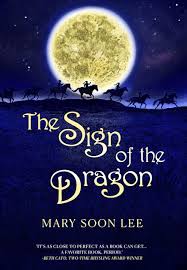
The Premise:
Xau never thought he would become King. When the dragon on the mountain ate all his older siblings though, Xau passed her test and earned himself a crown he never wanted. Sign of the Dragon follows Xau’s journey as he discovers what kind of ruler he wants to be, oversees conflicts and alliance with many foreign nations, falls in love, raises children, faces supernatural threats, and tries to live a life that prioritizes kindness and acknowledging the humanity of all. The book also features many illustrations of various cinematic and/or emotional portions of the story.
Read if Looking For: epic and mythic stylings, idealistic leads, cozy books that also deal with grief, a constellation of POVs, horses (and a cat)
Avoid if Looking For: protagonists with real flaws, dragon-forward books, the thrill of battle
What Worked for Me
This book, more than anything else I’ve read, captured what reading the old epics was like. The Aeneid remains one of my favorite reads of all time, and this brought me back. Xau is a bit like Achilles, if Achilles’ gifts were about the kindness of the human soul and being a horse boy instead of the indomitable skill at disemboweling his foes. Lee crafts a delicate balance: the hero of this story is larger than life, a man about whom legends are made. Yet the story remains grounded in human experiences and pure emotion. It was really skillfully balanced, and I haven’t read anything else quite like it.
One of the tools Lee used to create this balance was her vast spread of POVs. Xau is the throughline, and undoubtedly our main character. However, we frequently see him from the perspective of others, and Lee mixes in tidbits that relate to Xau only tangentially at times. War scenes and natural disasters almost always feature poems from the perspective of everyday citizens and soldiers; Xau’s guard and field medic gets a tooth infection; the palace cat is not happy with recent changes to her kingdom; a dragon and an eldritch blob exchange riddles across the span of continents. The Sign of the Dragon never lets you forget the fabric of humanity present in Xau’s life. Had the poems followed Xau more tightly, I think this book would have been quite boring. As it is though, Lee was able to build something really special. If I were to create a list of my 10 favorite poems from the collection, I think less than half would feature Xau.
Even when the book focused on prominent characters, my favorite poems typically weren’t the ones that moved plot threads forward. Lee tended to be more straightforward in those, but in poems whose purpose were helping build atmosphere, character, and theme, she allowed herself to linger in that beautiful liminal space between directness and implication, and those poems had the most power by far. These were the heart of Xau’s journey, and the plot (for me) was a vehicle to allow human emotion to show through. This is when poetry sings, and Lee captured that magnificently.
What Didn’t Work For Me
I very nearly DNFd in the first section of this book. The author made generous use of intense alliteration throughout the first (and part of the second) sections of the story. Alliteration has never been my favorite type of figurative language, and this book has examples of it at its worst. Hamfisting meaningless words into lines and stanzas simply because of the starting sounds, regardless of how it affects the flow of the poem. Thank you to all those who championed this book … it was worth pushing through. In general, this is a book that grew a lot on me as I was reading it, and I think would fare very well in a reread.
Otherwise, I wish Xau had more flaws, or that the things I perceived as flaws were acknowledged as such. This would, perhaps, go against the purpose and spirit of the book. However, Xau was such an overwhelming font of kindness and positivity and good decision making. It would be nice to see him mess up, or for his actions with good intentions to have more serious consequences. It reminded me a lot of the book Hands of the Emperor (excellent, far too long, similar style protagonist) in that I just couldn’t quite buy into how making the human choices were always the ones with the best outcomes. I suppose that’s just the pessimist in me banging pots and pans until its daily dose of misery is fulfilled. And there was certainly enough sadness and grief in here from external forces already, perhaps making Xau even slightly morally grey would have killed my interest. I suppose we’ll never know.
Conclusion: an epic poem in the traditional sense, telling a story of kindness and humanity. Very unique, and I highly recommend
 Marked for Plot
So glad you loved this one! I adored it, and plan on rereading it now I have the illustrated edition 😀
LikeLike