
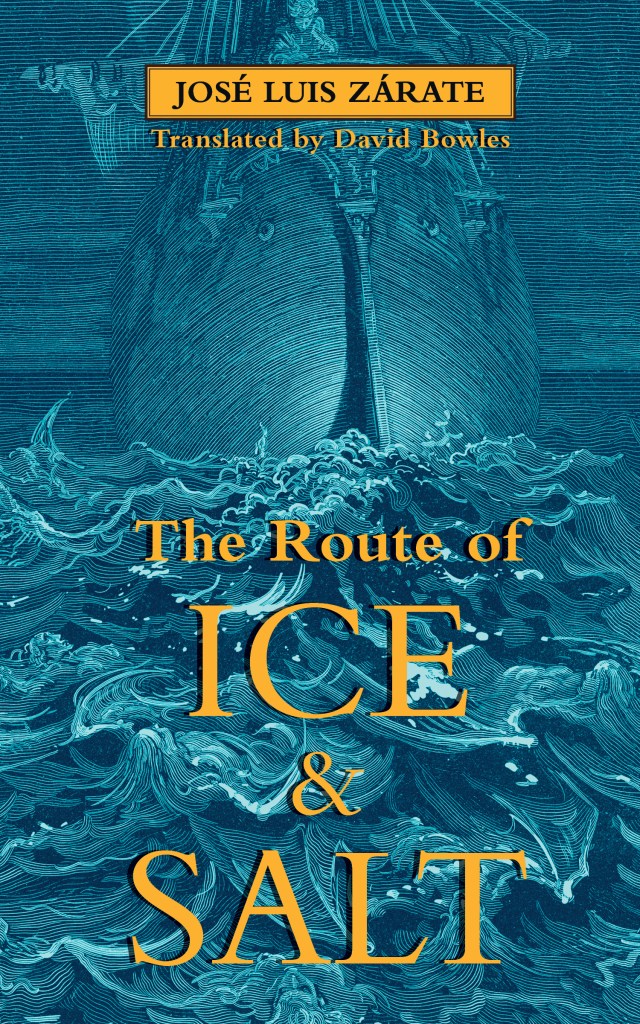
A Mexican horror novel following a ship captain of a ship transporting vampires, playing off elements of Dracula (which I haven’t read). It’s an excellent translation, and a dip into the more Literary side of horror than I normally go for. This was a good reminder of why I was a bad English major in college, and why genre fiction is my happy place over Literature. However, I’m glad I read this, and I think it’s much better at engaging with vampires’ historic associations with queerness in interesting ways than most other queer vampire books I’ve read.
Read if Looking For: intense focus on internal monologue, dream sequences, horror of the unseen, prose like liquid silk
Avoid if Looking For: direct plot or prose, ethical gays, paranormal romance elements, cute rats, protagonists who don’t sexually harass people, vampires with major speaking roles
Elevator Pitch
The captain of the Demeter has been hired to take fifty boxes of dirt to England. The captain spends the trip in a haze, torn between his constant desire for the companionship of men and his responsibilities as captain of the ship. And he dreams. Oh does he dream, and his dreams grow ever darker as strange things begin to take place on the Demeter, shifting what should have been an easy and profitable journey into a thing from nightmares.
What Worked for Me
At a sentence level, this book was gorgeous. I frequently found myself pausing over a sentence, mulling it over in my head, before moving on. Zárate is the master of slipping observation and metaphor into a scene before moving on as if nothing happened. You can tell that each word is carefully considered, each beat of this story intentional as it tries to bring you deeper into the psyche of the captain. I’d like to also credit Bowles’ work on the translation. As a non-Spanish speaker, I can’t speak for how much of this beauty if Zárate vs Bowles, but it’s clear both men are extremely talented at the mastery of their respective languages.
I think Zárate really managed to nail parts of queer repression. While my experience wasn’t at all similar to the captain’s, I could see the kernels of truth in how the captain managed his desire. People develop coping strategies when closeted, especially if they live in locations where exposure is physically dangerous. You find ways to manage and compartmentalize your personality into public and private personas. In this way, I think The Route of Ice and Salt was powerful. It’s an intimate peek into a man’s head, and Zárate doesn’t hold back when it comes to the friction that comes from never truly being able to live an unfiltered life. The foreword is excellent, and does a great job of placing this work in the textual lineage of queer horror and vampires, giving context to a lot of the decisions Zárate made in the construction of this novel.
Finally, some of the dreams really hit. Zárate’s ability to craft a visual is delightful. If you’ve got a phobia of rats (or of having sex with boats) avoid this book. However, the way Zárate takes desire and constantly twists and perverts it is really well done. I think there were too many dreams, but they sucked me into a dark and twisted world of repression. I think perhaps the experience of this book was more powerful for me than the story of this book? I loved so many pieces in isolation even when the greater whole didn’t quite come together the way I wanted it to.
What Didn’t Work For Me
The biggest sticking point for a lot of people is the captain’s queer desires. He’s in a state of constant lust, takes women prostitutes as young as possible because they look less feminine, and can’t go a single chapter without being extremely horny. I thought the decision was an interesting one, especially placed in the context of Vampires in horror fiction; the book opens with the captain wishing he could lick the salt off his sailors’ skin, and it never scales back. I don’t think Zárate is endorsing the thoughts or actions of his protagonist, but rather seeking to examine queer desire and repression in the context of horror. It would be very easy to label this book as homophobic, engaging in negative stereotypes about gay men. However, it definitely did not feel like Zárate was coming from a place of distaste of gay me while writing this.
My real sticking point with this novel was my normal complaints with Literature: it was too abstract for my taste. I can handle swimming through metaphor as long as there are regular places for me to anchor myself to the plot and story. This book very much felt like Virginia Woolf doing horror. While I recognize Woolf’s genius, I didn’t particularly enjoy reading her books in college. I probably would have enjoyed this book more with a physical copy (I read on an e-reader), and if I’d pursued it at a much slower pace. In retrospect, this book (and possibly many more that I’ve read) would have benefitted from me reading a few pages each night, instead of barreling through the whole novella until I finished it. As a single reading experience, I grew weary of one dream after another and wanted a bit less abstract narrative and a little bit more solid land.
Conclusion: a gorgeously written and thematically thorny book. It wasn’t for me, but more from a sense of mismatched preferences rather than any sort of concrete critique
- Characters: 4
- Setting: 2
- Craft: 5
- Themes: 4
- Enjoyment: 3
 Marked for Plot
‘Avoid if looking for cute rats’ made me CHOKE, so thank you for the giggles!
I admit I didn’t like the style of this one – not the prose so much as the endless quasi-philosophical introspection, I was bored to tears – but the worst part is I don’t think the author succeeded with the ‘gay men aren’t monsters’ messaging, which I’m pretty sure is what he was going for. The captain’s constant horniness isn’t going to be pleasant for everyone to read, but doesn’t contradict the gay men aren’t monsters premise: what DOES is the scene at the very start, where he tosses consent out the window and sucks on the neck of a guy who can’t say no. I can’t make sense of that scene, because without it the book works, and with it, it doesn’t (imo).
LikeLike