
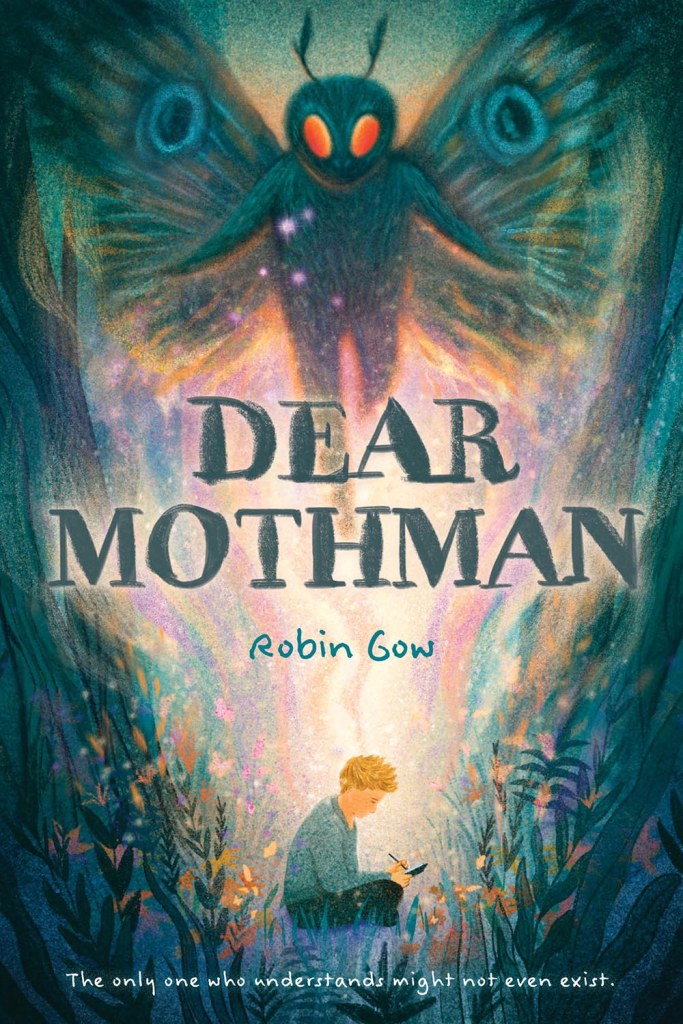
Dear Mothman has been in my orbit for about a year now as one of the better middle grade novels to come out. It doesn’t quite fit comfortably in any genre. It’s certainly speculative (Mothman is very real) but it reads a lot like a realistic fiction book. It’s part Epistolary and part Book in Verse, but doesn’t really live in either space fully. However, it’s got a whole lot of heart, and is one of the better books I’ve seen where a character’s processing of grief is front and center. It’s the type of middle grade book that many adults would enjoy, even those who have a distaste for ‘kids books’.
Read if Looking For: emotional musings, a good cry, childhood taken seriously, the intersection of queer and neurodivergent identities
Avoid if Looking For: fight scenes, teen drama, dramatic plot twists
Elevator Pitch:
Noah is a lot of things, but mostly he’s grieving and finding himself. His best friend (and crush) Lewis died in a car crash, and Noah is unmoored. Everybody else calls him Nora, he doesn’t know how to make new friends, and school seems so unimportant. He latches onto Mothman, Lewis’s last obsession before his death, and begins writing the cryptid letters. To his surprise, Mothman seems to get those letters. This book follows Lewis’ 6th grade year as he struggles to form new social connections, find a self outside of Lewis, and prove to himself that Mothman is real after all.
What Worked For Me:
I would like to deeply thank Gow for not feeling beholden to traditional plot structures. The beauty of Epistolary novels is the freedom to play around with isolated moments in time that traditionally structured novels rarely do. Gow took full advantage of the format to flit between topics, weaving the quest for Mothman with Noah’s grief with his troubles at school in a way that never felt unnatural. It felt a bit like making a crepe cake; each layer added a little more to what came before. Noah’s many journeys felt real and tangible because the plot didn’t focus on any single thing. It reminded me that genre fiction can sometimes get so stuck in plot that it forgets that existence itself is worthy of writing about. I don’t read nearly enough slice of life stories.
Noah himself was a great example of representation. He’s both Austistic and Trans, but neither define him. Gow does a great job of giving Noah’s struggles in both arenas page time without letting them consume the narrative. He gets angry after his new friends accidentally out him at lunch, and doesn’t have to social skills to handle being angry at someone he also likes. He feels bad about how he reacted. It’s the end of the world, but its also nothing compared to the loss he’s already gone through. It’s just all so tangibly real and balanced that I don’t have any notes for Gow on how this story progressed. The figure of Mothman himself becomes an analogy for how others see Noah, and how he feels outside of the world he lives in.
What Didn’t Work for Me:
This book is probably best described as a book in verse with strong Epistolary elements. However, the poetry read very much like prose with line breaks (most of the time), and I wish that Gow would have taken greater advantage of the poetic format to enhance the book. I have perhaps unreasonably high standards in this regard. Brown Girl Dreaming by Jacqueline Woodson was my first novel in verse, and nothing has quite lived up to it (a really fantastic memoir by the way. Highly recommended for kids and adults). Once I abandoned my hopes for it as a poetry book though, I found the prose to be wonderful. Never pretentious, but well thought out.
Conclusion: a heartfelt portrait of a 6th grader grappling with loss and identity, with the figure of Mothman looming large over the story.
- Characters: 5
- Setting: 3
- Craft: 3
- Themes: 4
- Enjoyment: 4
 Marked for Plot
Have you read Whitlock series!?
LikeLike
I have not! In fact, I don’t think I’ve heard of them before
LikeLiked by 1 person
It’s easily becoming one of my favorites!
LikeLike