
As part of pride month, I’ve been doing a lot of thinking and discussing about how avoiding problematic tropes can lead to more problematic tropes. Bury Your Gays (other than being a Chunk Tingle novel I very much want to read) is a classic example of authors, playwrights, and screenwriters killing off queer characters as a way of saying this person was bad and immoral sort of like how literally every Disney Villain dies due to their own character flaws. That trend is bad and problematic, but its backlash led to such predictable happy endings that I didn’t get the same beautiful tragedy and sadness in queer speculative fiction that I could find in cis/het works. Thankfully, I think this is being seen and rectified, mostly by queer authors themselves. I’m all for tragic gays making a comeback.
The Black Hunger is a great example of how bad endings for queer characters isn’t problematic on its own. It’s only bad when used as a way to demonize queer folks. And while I had some issues with the book, I had a great time with it as part of my continued exposure therapy to the horror genre after being traumatized by watching The Mummy when I was five (I still don’t like beetles to this day). Unfortunately, this book struggled in other areas, mostly related to depictions of Buddhism, which will rightly be a dealbreaker for many.
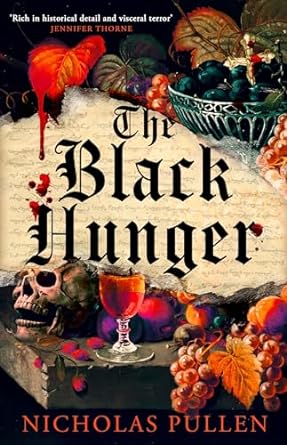
Read if Looking For: older gay male representation, evil cultists (and Russians), far too many teeth, slow burn gothic horror
Avoid if You Dislike: multiple narrators, Epistolary novels that don’t read like letters, authors taking liberties with real-world religions without getting it quite right
Elevator Pitch: John Sackeville is dying from a mysterious curse eating away at him. His partner is dead, and something horrible has happened to the world. He’s being interrogated for key information about a strange cult (partially of a dark sect of cannibalistic Buddhists, mostly Russian), but he starts at the beginning and takes his time getting to the juicy bits, spending a good among of time on his childhood, his years at Oxford, and his time in the British service in India. Part of his story also involves diary entries of a Jewish psychologist visiting the home of his ex-love to diagnose her with madness, and a letter said ex-love’s dead husband wrote to her about his experiences as a prisoner in Russia to a particularly Spooky count and his family.
What Worked for Me
I loved that this book started with the tragic ending, then rewound. Framing narratives have the power to place a lens over a story, coloring how you read it. Pullen did a masterful job of taking his time, pulling the story out like taffy to enjoy, knowing that it would all come falling to pieces. Even the horror elements were presented more slowly than I feel like I would typically see in a novel. The first 20% of the book could barely be counted horror at all. The slow shift into more direct horror was delicious, and I found myself entranced by the story.
The love between John and his partner was also a joy to read, even if we know immediately that Garrett is doomed to die. In fact, the tragic fates of most of our lead characters were enjoyable in their own right. John’s relationship with religion (and some of the other leads’ as well) was interesting as well, especially since a variety of religions play an important role in the story, notably Buddhism.
I also loved the scope of this novel. It truly spanned the globe. India, Scotland, Russia, and all through a beautifully historical lens. Pullen didn’t try to pull punches either, and you’ll find characters espousing views that are extremely problematic, but it always stays grounded in the historical context of those statements. Sometimes it feels like historical settings get sanitized protagonists who are morally right all the time and have utterly modern sensibilities. This was, thankfully, not the case here. Garrett owns a plantation in India for a portion of the story. Jonathan doesn’t see this as problematic, because he is himself a white man in British India, not because Pulley doesn’t, and this story is relentlessly told through the first person. Historical settings as purely set dressing can be fun, but books that don’t try to sanitize the viewpoints of people at that time are good too.
What Didn’t Work For Me
My chief complaint lies in that, as enjoyable as the writing was, Pullen didn’t do a satisfactory job of differentiating between our lead characters. They all sort of write in the same style, without distinct voice or character. It’s a nice style, but very noticeable especially since the narratives are all told in first person (two of which through diary entries). The letters and diary entries are far too detailed and specific for my taste, and don’t sound like the characters are writing in a diary or to another person. I generally feel like the story wouldn’t have been hurt if it weren’t epistolary in nature at all. This is a real shame because I liked the pacing and structure of having three narrators for different sections of the book, instead of constantly bouncing back ad forth like we normally do.
I also have some issues with the ending, notably how they interfere with the presentation of the framing narrative. The opening section makes it seem like the character is telling their story to an interrogator, but by the end of the story it seems to be talking to a nebulous ‘you’ (the reader?), and part of that tale was talking about the interrogator themselves. It was a great setup for a framing narrative – a dying gay man in a dying world mourning his love and spitefully taking his time to tell his story to the person demanding answers to try and save things – but fell short at the ending in this regard. I’m probably being overly picky here, but I like framing narratives, and I’ll get persnickety about them if I want to be.
Finally, I think its worth acknowledging some of the elephants in the room. This book has a lot of ideas that could go very wrong. Notably, the core villains are cannibalistic Buddhists (Russian Buddhists mostly, but still Buddhist), there’s a lot of potential for that to go wrong. I think Pullen did his best to try and steer the story away from that: you’ve got plenty of non-evil Buddhists too, referencing Jewish and Catholic faiths, as well as Indigenous American spiritual beliefs in passing as well. But I don’t think he really avoided these pitfalls. The Jewish character staves off their curse by taking Catholic Mass; even with the character’s complicated relationship with his own religion there was a better way to handle this? Pullen clearly did research and appreciates Buddhist culture, but this review by an actual Buddhist monk (who is also a registered instructor in Buddhist practices and also ordained by the Dalai Lama and also has a degree from Harvard’s Divinity school) talks with far more detail and authority about how Pullen messed up some very basic things (and also some very specific things).
There are also some reviewers who point out that Jonathan is a White Savior, sent to save the world because the people of India, Tibet, and Mongolia can’t do it themselves. This is true, but considering that our lead character failed at his goal (we know from the start of the book that the world ends up in a shitty place because of the failures of the lead character) and the British Intelligence Service probably could have handled the situation much more effectively, I don’t take issue with that. I do think the fact we don’t have an Asian protagonist is a major oversight though, and would have gone a long way to alleviating my concerns.
Overall, I think this was a book by an author who really was doing his best to write a story that dealt with sacred locations, people, and practices from many cultures (Stonehenge features prominently) to weave them together, but ultimately didn’t really get it right. I think it came from a place of admiration, and there’s far worse stuff out there, but it’s also not an insignificant issue.
In Conclusion: a beautiful horror book that was entrancing to read, but struggled with representing Buddhism effectively and leveraging the Epistolary format to its full effect.
- Characters: 2
- Worldbuilding: 2
- Craft: 4
- Themes: 2
- Enjoyment: 4
 Marked for Plot