
Sometimes a book comes along that utterly redefines how you view books, reading, or genres. The Traitor Baru Cormorant was like that for me, a book that shook me to my core, and forced me to realize just how powerful Queer Fantasy could be. It remains one of my all time favorites.
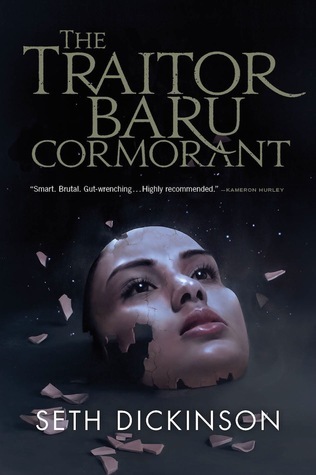
Read If Looking For: a book that will rip your heart out, economist lead character, anti-colonial stories
Avoid if Looking For: queer characters living happy lives, quick and/or breezy reads, twists that are complete surprises
Elevator Pitch:
Baru is a genius. A savant at math and numbers, she’s been trained since a young age by the Empire to be of use. She’s also grown up seeing her beloved island home colonized by the soldiers of the Empire: trade, coin, and plumbing. She also happens to be Lesbian, a crime that forces her to repress her desires and live a life of shame. And she wants to rip the Empire to pieces. But to do that, she must first gain power in the Empire. And so she accepts a job to run the Economy of one of the Empire’s many colonies – not her own of course – and suppress their own rebellion so she may grow her own.
What Worked for Me
At its core, this novel is about colonialism, and how an agent working both for and against the republic which claimed her home. The strongest part of the book – for me at least – was the opening part of the story, focused on Baru’s childhood and the insidious slowness, with which her childhood home is forever changed into something hard and unforgiving, without emotion. I loved how, while soldiers and wars are absolutely a part of the story, it acknowledges the parts of colonialism and social conditioning that separate colonization from simple violence.
From a writing standpoint, this book is delicate and masterful, leaving as much unsaid as dutifully expounded upon. It is a book that demands your full attention and rewards you for giving it. There are sections where you remain distant, feeling like an impartial observer. And then there are times where you sit in Baru’s head, the words of the book being whispered into your ear and sinking into your soul, tearing it apart piece by piece. It’s the type of story that makes me wish I had owned the book, instead of checked it out from the library. It is the type of story that deserves annotation, and close inspection in a collegiate course.
And the ending of the book is nothing short of a masterpiece. While it does set you up nicely for the rest of the books in the series, it also could work wonderfully as a standalone novel.
What Didn’t Work for Me
I think the biggest challenge with this book is that the entire story is perhaps a foregone conclusion. The book is called Traitor, and that makes many of the twists the author sets up feel utterly predictable. For me, this didn’t sap meaning from the story, but instead gave a sort of tragic feeling to the whole book. I can appreciate for many that will be a dealbreaker, however.
In Conclusion:
- Characters – 3
- Worldbuilding – 5
- Craft – 5
- Themes – 5
- Enjoyment – 5
 Marked for Plot