
As I’m continuing to explore the ways that I can use graphic novels in my classroom, I’ve begun taking a look at more and more graphic nonfiction. Insectopolis is kind of odd, as it’s half nonfiction and half post-apocalyptic xenofiction (humans die and it turns out bugs can talk like you or me), with plenty of fun tidbits inside. Lesson learned though, graphic novels are NOT to be read on my cell phone. I’ve got to figure out a better way to e-read comics.
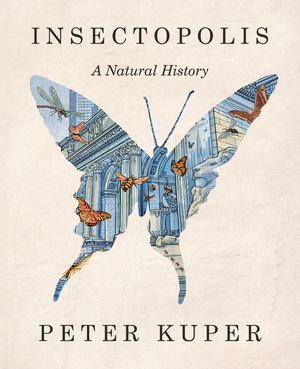
The Premise
Set in an insect exhibit at the New York public library both before and after humans have died off the face of the earth, this book pops from topic to topic in the insect world. It touches on biology, ecology, and biographies of human naturalists as it takes you on a tour of the bug world.
Read If Looking For: a survey of the insect world, notes on how bugs have affected the course of human history, ants that complain a lot
Avoid If Looking For: a rigorous examination of any particular insect or event, anatomical diagrams of bugs, nonfiction without frills or fluff
Comparable Media: Magic School Bus, the educational movie you watched when your science teacher was sick
What Worked for Me:
It’s hard to argue with how beautifully rendered Insectopolis is. Kuper makes good use of monochromatic backgrounds for the NYC Library, allowing his insects to stand out. He trends towards realism (especially with the insects), and the book is filled with gorgeous linework. This means that people who get squeamish looking at bugs shouldn’t read this book … but I’d have hoped that would be obvious. Kuber files off some of the rough edges of insects by generally making them sassy and sarcastic. Yes this book is filled with information, but you’ve also got everyone roasting the dung beetle and complaining about how humanity uses the word ‘bug’ in negative contexts.
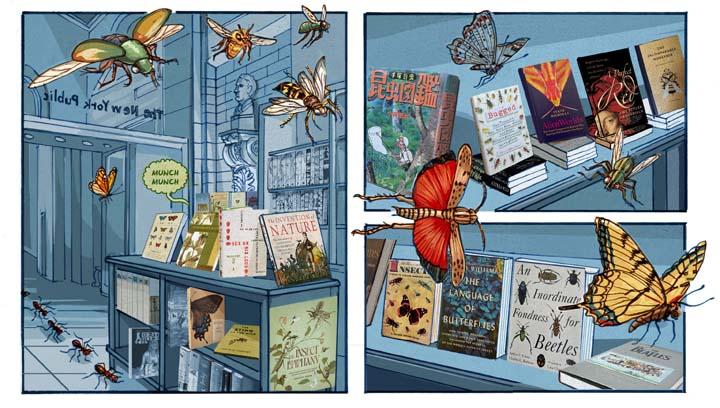
Insectopolis is set around an educational exhibit and, like most good exhibits, it does a good job of sparking curiosity about its subject matter. I knew Mosquitos were the deadliest animal in the world, but not that deadly – about half of all humans throughout history have been killed by mosquito-borne diseases. I heard about a few naturalists that have largely gone unrecognized by the institutions of entomology, though I wasn’t familiar with pretty much any name in the book other than Darwin: this isn’t a subject area I’ve learned much about. Should I want to learn more, I could flip to any portion of the book and find a fact or figure that’s interesting enough to chase down and dive into with more detail. As a book to kindle imagination, Insectopolis is very successful.
What Didn’t Work For Me:
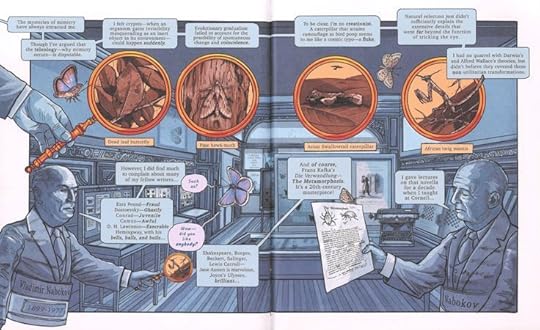
As someone who doesn’t read a ton of nonfiction in my personal life, it was challenging to not compare this to Sea of Grass, a very different type of nonfiction that was intent on picking apart nuance and complexity around the American Prairie. Insectopolis however, is a much more surface level exploration. Each bug gets 1-2 subtopics (typically biology + either its impact on history or a naturalist who studied them). However, with only 3-4 pages dedicated to each topic and generally sparse text, you just can’t get too deep into any specifics or complexity. It was great at creating some aha moments, but rather poor at helping me develop a rigorous understanding of anything in particular. While I don’t expect to become an expert in only 250 pages, I wished that the book were denser.
Conclusion: An interesting survey of insects, which aims to go wide instead of deep.
 Marked for Plot