
I don’t do many rereads, but when I saw the audiobook for Hench was available without a wait time, I couldn’t resist checking it out. Villain, the sequel, releases later this year, and I will definitely be putting it on my reading list. I think I’m a little more hesitant about some of the thematic work in Hench than I was during my first read, but this is a rock solid revenge story that stands out in a cluttered Superhero landscape.
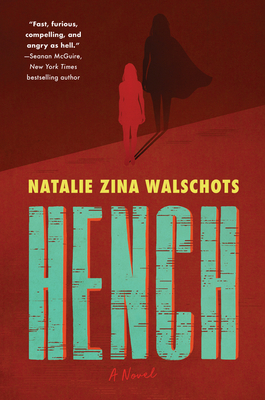
Read If: clever characters work for you, unreliable narrators are a plus, you think iguanas deserve only the best
Avoid If: you dislike critiques of policing, body horror makes you squeamish, you demand nuanced and thorough themes
Comparable Media: The Boys, Watchmen, I Keep My Exoskeletons to Myself
Elevator Pitch:
Anna is a Hench, but really she just does data entry and analysis. When her first time working in the field goes wrong though, she finds herself with a terrible injury, a grudge against the world’s most powerful superhero, and a desire to start revealing the great harm that ‘heroes’ do to society. She tumbles down a rabbit hole that gives her with the resources to turn her from a minor supporter for villains into a person feared and despised by ever super in the world.
What Worked for Me:
Good revenge stories need vindictive protagonists, hateable rivals, and a great curb stomp when it finally comes time to twist the knife. Hench executes all of these with a lot of skill. While data-entry as a skillset doesn’t sound particularly enticing, Walschots really makes a noncombatant main character work. Anna is great at social manipulation, creative problem solving, and getting others to do her dirty work. A lot of this book is puppetmaster competence porn. At times this is unbelievable; in two years she becomes the chief lieutenant to the world’s most powerful villain. While Anna has a bone to pick with everyone in the super community, she’s got a special bone to pick with Superman Supercollider, a man who seems devoid of personality outside being a hero. Hollow shells whose ideals only run as deep as their surface veneer are easy to hate, and boy did I hate Supercollider.
On a broader scale, I think Walschots does a really good job with characterization. Lots of characters are nods to classic superhero/villain tropes with enough of a twist to make them feel fresh. One of the earliest villains we encounter is the Electric Eel (E), who is the Performative Male in the flesh, a man who cares more that he’s seen as a progressive employer than actually being a good person when the chips are down. Nobody is terribly deep (other than perhaps Anna), but Walschots’ takes on classic ideas are catchy, evocative, and go well with the quick pacing and transparent themes of the book. This isn’t award winning writing by any means, but Hench is the type of book you either love so much that you consume it in record time or bounce off entirely because the premise doesn’t work for you at all.
As a small aside, I loved this story as casual Bisexual representation. It isn’t a romance story (though the sequel might head in that direction) but Anna is casually into a bunch of different people across the story. Her sexuality is never a large part of the novel, but an enjoyable element for me.
What Didn’t Work For Me:
It was tough for me to unpick how much Anna is meant to be an unreliable narrator vs a mouthpiece for the author, and I think this book only really works when the reader is willing to distance themselves from Anna’s perspective. One of the core ideas of the book is that the harm superheroes cause is greater than the harm they stop, and Walschots leans into (handwaived) math to do so, calculating the estimated remining life of those killed, lost income, property damage, shifts in the quality of life in those with new disabilities, etc. This is fairly in line with some of the more pragmatic criticisms of policing, though Walschots’ Canadian background means she’s likely coming from a different relationship with police than me as an American. I think this is a good foundation for critiquing policing, and it’s far more likely to reach those who are more supportive of police practices than ideological criticism would be.
However, Anna makes some leaps that have pretty big holes. I think she underestimates the damage and harm that villains do in this world. About halfway through the book, she also shifts to a mindset that heroes create villains (again, there are some parts of this idea that I agree with), but this allows Anna to write a blank check for any harm villains do by tallying it as another fault of heroes. And this is where Anna loses me, because it means she’s releasing any responsibility she has for causing harm and suffering in the world.
This brings us back to whether or not Anna is a stand-in for the author. It feels like this is at least partially the case, as Walschots does her best to soften many of the villains’ actions in the story. However, there are also moments where even sympathetic villains act in ways that are clearly meant to upset us the reader. At one point the chief Villain giving hypothermia to one of his employee’s toddlers as revenge for accidental mistreatment of his pet lizard. Ultimately, I think that Walchots tried for too much of a direct parallel in her thematic critiques of our world, but didn’t address some of the gaping holes she poked in her own arguments. I think I largely agree with the real-world conclusions she draws, but this is much less successful at condemning modern policing than something like Chain Gang All Stars.
Conclusion: a fun revenge story that oozes with charisma
 Marked for Plot