
When I explored the idea of using comics in an Ethics class I’m putting together for high schoolers, The Power Fantasy was one of the most-recommended titles. It’s easy to see why, as the whole series is one big thought experiment on whether people with extreme superpowers can exist ethically (notice I said exist, not behave). It’s also got a clear thematic lineage with Watchmen, taking the superhero deconstruction presented by Moore in directions that feel much more 2025. Ultimately, I don’t think it’s quite straightforward enough for me to want to use as a whole-class read with high schoolers, it’s great for anyone looking for something to chew on.
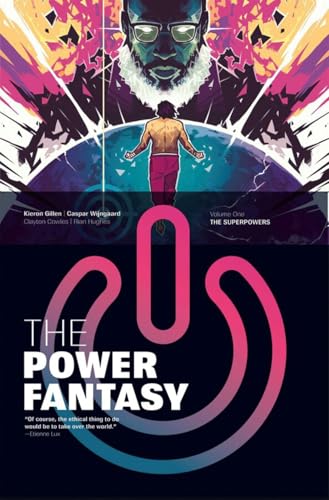
Read if Looking For: ensemble cast of morally dubious supers, cigars that defy gravity, non-sequential storytelling
Avoid if Looking For: authors who hold your hand, heroes vs villains storylines, dramatic fight scenes
Elevator Pitch:
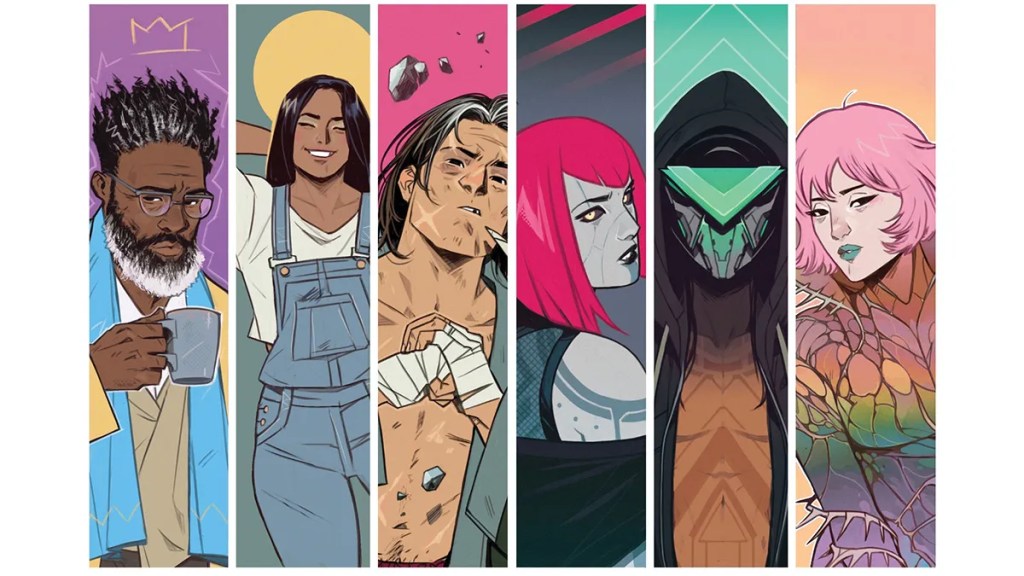
In this version of earth, Atomics (people with superpowers) began appearing in the 1940s with a woman gave birth to a literal angel. While most Atomics have minor powers, there are six Superpowers currently alive; the book defines a Superpower as “an individual with the destructive capacity of the nuclear arsenal of a major world power.” These six characters form the core of the main cast. There’s a psychic and moral philosopher, the idealistic angel with an attitude reminiscent of some versions of Superman, a man who can control gravity and hosts a floating commune, a girl who transforms into (or summons?) a kaiju when she get’s too upset, a woman with deep connections to Hell, and a man whose technology borders on magic. They don’t all get along, and each has their own idea about what a good and just world looks like.
What Worked for Me:
The Power Fantasy does a phenomenal job at reimagining how superpowers might change the world. There’s a level of gritty realism to the story that pulls away from classic golden era ideals where a shining star will swoop in at the last moment to save the world. Gillen channels the Cold War and nuclear arms races as comparison points. If six people hold enough power to destroy entire nations, how does the world warp around their personalities and desires? Their actions have ripple effects far beyond their intentions, and a fit of anger or bad judgement could spell the death of millions of people. Beyond that, these are people. It’s unreasonable to expect even the best of folks to always be in perfect control, and when inheriting massive power is random, not everyone will have that level of control over themselves. Yet does that mean that these individuals should kill themselves, and sacrifice all sense of self-preservation for the good of the world? Or are they stuck preserving the balance, trying desperately to avoid any single domino from toppling and killing all of humanity? The Power Fantasy refuses to provide easy answers, and I loved it for that.

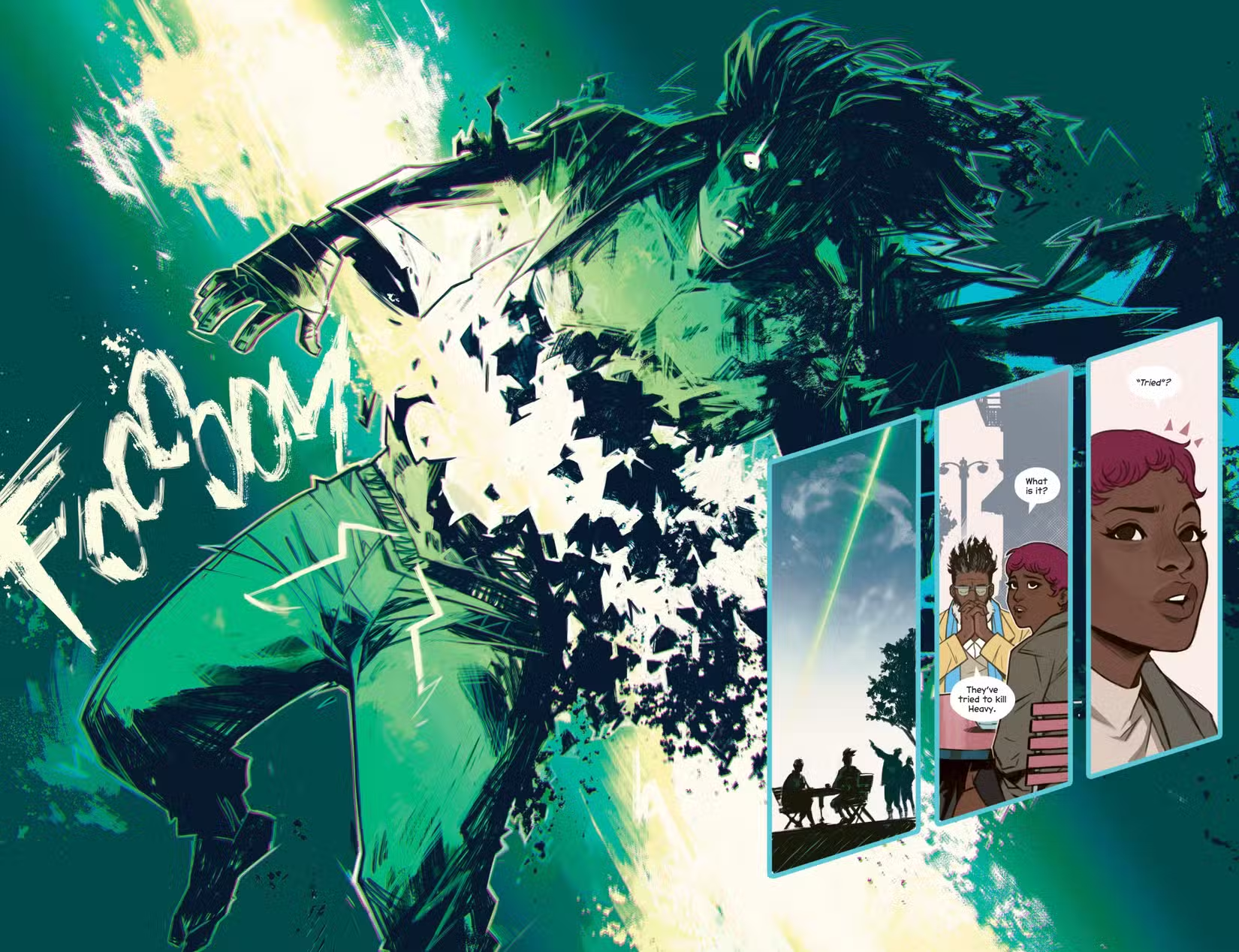
I’ll diverge a bit from my normal tradition of avoiding getting bogged down in specific details, because I think this early snippet is illustrative of the larger parts of the book. Etienne (the psychic and moral philosopher) realizes that the US Government has failed to assassinate another one of the six superpowers. He immediately intervenes, knowing that the man will likely destroy all of Texas in revenge. He presents the angry Superpower with a compromise: in exchange for not killing millions of people, let me know what you want. And so Etienne remotely assassinates hundreds, including both the president and also support workers who had no idea what their services were working towards. He thinks killing is unethical, but that this was the only course of action he could take that would be in line with his beliefs. He does a lot of other brutal things in the name of ethics, and Gillen wants you to constantly be questioning when his actions are justified, and when he’s out of line.
The story isn’t told linearly, instead flitting around in time (and referencing issues of the comic that have not yet been published). Character conversations will frequently be left in a space of openness, forcing the reader to consider what the subtext of their words really means. Implication is leveraged as much as exposition to push the story forward. I can already tell that I’ll want to reread this text when all the missing pieces have been slotted into place. Gillen doesn’t hold your hand, and I appreciated that the format and structure of the narrative matched the thematic ambition he’s pursuing.
What Didn’t Work for Me:
Ultimately, I think the only big letdown for me here is the art. Wijngaard’s character designs are universally excellent, he has a great sense of color, and knows when to step away from realism to allow visual symbols to help drive the story. Unfortunately, he also had a habit of throwing halo outlines around his characters, separating them from the background elements. It felt a little bit like Paper Mario, giving everything an oddly flat 2D appearance. This choice wasn’t even consistent though. I constantly felt like I settled into this style only to be jerked out by panels or pages without these outlines, which caused me to start being annoyed by them all over again.

One thing I hope from the sequels is a few chapters examining the life of the normal person in this world. As it stands, most minor characters are weaker atomics, and I think there’s some interesting open spaces to explore with more mundane characters who have no relation to the six Superpowers. Considering Gillen employs a more episodic structure, I don’t think this would feel terribly out of place.
Conclusion: when people have the power of nuclear bombs at their fingertips, what does an ethical existence look like? The Power Fantasy is deep, nuanced, and a story I’m excited to continue.
 Marked for Plot