
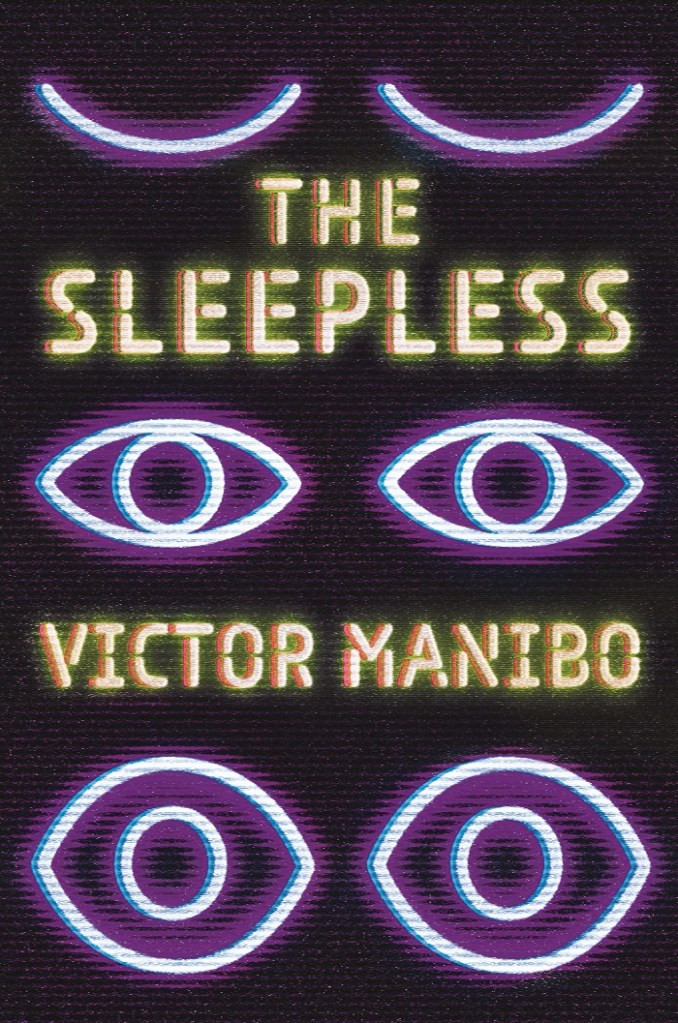
Going to sleep is probably one of my favorite things in the world; that said, I also feel like I’m constantly craving just a few more hours in the day. The Sleepless by Victor Manibo tackles the premise of what a world without sleep might look like, wrapped up in a cyberpunk-noir trenchcoat. I appreciated a lot about this book, and it surpassed my expectations knowing that this book both grew out of NanoWrimo and also is written by an author whose later work I have DNF’d. It’s a solid read, especially for people interested in exploring how a Cyberpunk society might come to be.
Read if Looking for: near-future cyberpunk, greedy CEOs, chaos bisexual best friends, jacked drug dealers
Avoid if Looking for: scientific rigor, happy endings, multidimensional side characters, romance plotlines
Elevator Pitch:
Jamie is one of the Sleepless: the quarter of humanity who stays awake 24/7, one medical professionals are still scrambling to understand. He’s also an investigative journalist on the cusp of publishing a major corruption story when his boss Simon is murdered. Not only did Jamie find the body, but he’s also the last man to see Simon alive, making him a prime suspect in Simon’s death. Unfortunately, Jamie also seems to have a mysterious bout of amnesia, where he can’t remember going to work that night, even though the video footage clearly shows he was there.
What Worked for Me:
I came into this story thinking of it as a mystery/thriller in a science fiction world. It works fine when considered that way, but I like the book a lot more as the origin story of a cyberpunk world. The setting is near-future, with recording visors on the cusp of being replaced by in-eye cameras. Without spoiling anything about the ending, the world tips firmly towards a dystopian future full of corporate power by the book’s end. Of course, being set in the near-future, there’s some commentary on how close we already are to this type of setting. I appreciated seeing the transition from a world that feels normal to one that doesn’t, and I appreciated how willing Manibo was to buck classic trends on how genre fiction books should end. I think many will find the ending frustrating and disappointing, but I thought it lent the book some much-needed thematic weight. A saccharine happy ending to this story would have felt rather toothless.
A more traditional choice Manibo made was how we floated back and forth in time. About two-thirds of the book focuses on the ‘current’ storyline where Jamie investigates the death of his boss and works to clear his name. The other third dwells on Jamie’s past: his experiences before he became sleepless, the death of his cousin (who was basically a brother), and how his life changed after his diagnosis. I thought this was a smart choice, as some of the backstory revelations were much better aligned with later plot points in the ‘modern’ storyline. Probably my favorite part of this entire book focused on Jamie’s relationship with his cousin Paolo before his death. There’s a lot of pain in Jamie’s life, and it doesn’t get any easier as his story progresses. I don’t think this book ever managed to rip my heart out, but it had a much better sense of balance than I was expecting after not liking some of Manibo’s other writing.
What Didn’t Work for Me:
The titular condition of Sleeplessness is (unsurprisingly) a major part of the book. While there’s some worldbuilding backstory about how it was labeled as a pandemic, and some initial steps towards thinking about what the environmental consequences of people being up 24/7 are, I kept wishing for just a little bit more rigor in this regard. I kept wondering what Ted Chiang would have done with this premise, but comparing Manibo to one of the best science fiction writers of the day is perhaps unfair. My view of this was probably soured a bit because I didn’t buy into the core conceit Manibo pitches: that the Sleepless will use their time well. Jamie is only a year into his sleepless journey, and he’s already mastered many skills in the eight extra hours he gets every day – including relatively frequent multi-hour wellness sessions in VR spaces. I just don’t think most people would really optimize their time like a video game character, and that there would be a less dramatic impact on a person’s productivity, sense of self exploration, and ability to master skills at a rapid rate.
Otherwise, I think characters are general a weakness of Manibo’s writing. There’s just not a sense that any two characters are particularly different from each other (with the exception of the dead boss), and many characters end up about as paper thin as they come: I’m looking at the researcher expert in Sleeplessness here. It reminded me of a lot of Sanderson’s early writing in this way. There’s a version of this book that absolutely wrecks me, but the characters hold it back from the brilliance of something like Welcome to Forever (another cyberpunk book with a character suffering from memory problems).
Conclusion: an interesting cyberpunk/noir/thriller with fairly bland characters.
- Characters: 3
- Setting: 4
- Craft: 3
- Themes: 4
- Enjoyment: 4
 Marked for Plot