
Recently, my epic fantasy books have been political and social in nature. They’re wonderful, but I’ve been itching for the style of Epic Fantasy featuring big armies and world-ending cataclysms. The Rage of Dragons lived up to that promise admirably. It’s more action-heavy than a traditional epic fantasy, with less emphasis on worldbuilding than is traditional. It lived up to the hype, and while I’m not planning to rush into a sequel, its a series that’s on my list to return to sometime in the next few years.
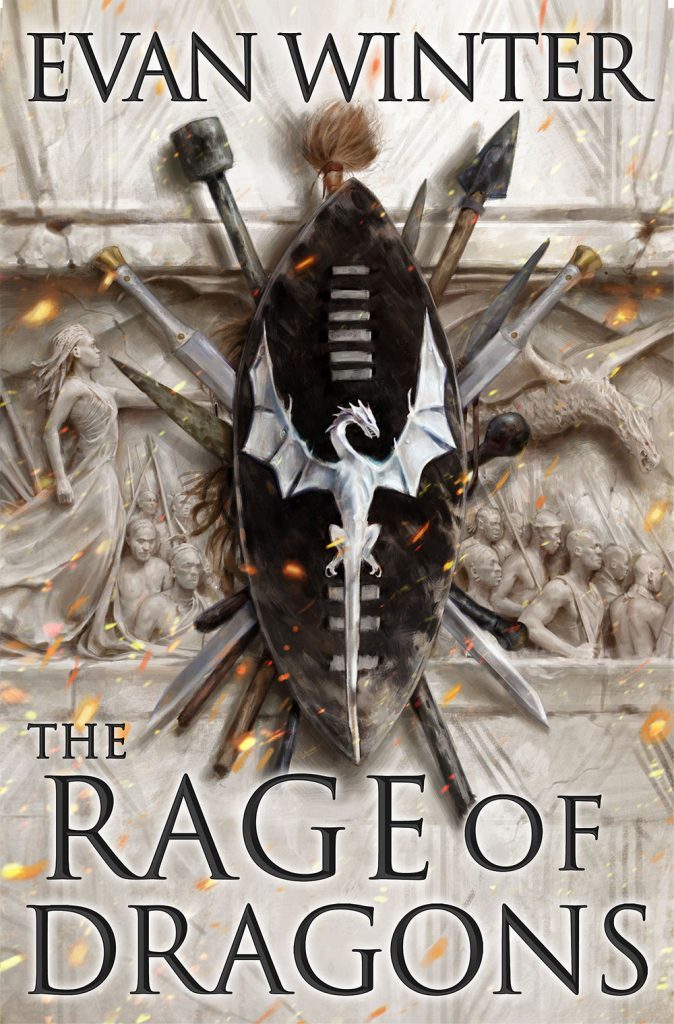
Read if Looking For: lots of fight scenes, quick pacing, the power of friendship & hard work, African-inspired fantasy settings
Avoid if Looking For: chosen one protagonists, unproblematic romance subplots, dragons as a major part of the story (probably more in sequels though)
Elevator Pitch:
Tau is a Lesser, one of the grunt class who is used as pawns in the great war of the Omehi people. He is smaller, weaker, and slower than the nobility, even before the ability of some nobles to turn into The Hulk with the help of the mages (who can also call dragons). His plans to join the military and earn early retirement with his sweetheart via grievous injury are ruined when his father is murdered by the nobility. Now, he swears to work tirelessly to grow stronger, and to kill the three men who are responsible for his father’s death. At the same time, the war grows more dire, and best laid plans will go awry.
What Worked For Me:
This book really brought me back to my childhood. This feels like an odd statement for a book about extreme caste systems, brutal wars, and constant fight scenes. The book brought me back to my time reading Naruto in the basement, hoping my parents weren’t going to kick me off the internet to make a phone call. Rage of Dragons feels like the epic fantasy novel version of a Shoenn manga. It’s power fantasy at the highest level: the main character may not get any special powers, but he goes from the bottom of his class to the nation’s greatest fighter in the span of a year. Early antagonists who sought to kill (or maim) him end up as his friends and comrades-in-arms. There’s a tournament arc with gorgeous fight choreography, and the story features the power of hard work to triumph over your rank at birth. It’s a brutally fast page turner once it picks up steam, and I had a lot of fun with those elements. This, more than anything will be the make or break moment for people and this book. If you like that style of story, pick this up immediately. If not? Probably not worth your time.
I did appreciate that the book engaged with how Tau’s experiences (which end up being fairly unique among his people) give him some significant trauma. It didn’t go as deep into this idea as I would have liked, but certainly far more than most books with warrior characters do. It bled into his romantic relationship, and he made many stupid, problematic, and trauma-driven choices, occasionally verging into abusive territory. I’ve been going back and forth on how his love’s story arc was handled, but liked that the people closest to Tau were the ones to immediately notice and feel the impact that a life of ceaseless violence had on Tau. I hope this becomes more central in later books, as I think Winter landed on a really interesting element with lots of potential to expand on.
What Didn’t Work For Me:
As much as I loved the punchy action-movie vibes of this story, I do think it dragged on a little bit too long. 535 pages isn’t long by fantasy standards, but it certainly isn’t short. I can only take so many variations on Tau curb-stomping his foes until it gets repetitive. Winter did transition slightly into a political intrigue plotline near the end of the story (and the sequel seems to be setting up for even grander enemies based on some of the secrets of magic, dragons, and history that get revealed), but at its core this was a fight-scene book. I wish it had been 300 pages long. I also wish this story had been spread out over 2-3 years in-universe time instead of a single year (less, honestly). There are some in-universe reasons for Tau’s rapid ascent to martial power, but I found myself chafing against his near universal dominance on the battlefield by the end of the book.
Finally, this book doesn’t spend much time thinking about themes. There’s nods to dystopian cultures, class wars, and imperialism, but nothing terribly developed. The Omehi people are something between colonizers and refugees, fleeing their homeland 300 years ago and carving out a new home for themselves in the blood of those whom already lived there. However, this served more as window set dressing than thematic heft. This may shift as the books continue, but book 1 lies squarely in the realm of mindless stabbing. Take it or leave it.
In Conclusion: an action packed page turner that should have been 200 pages shorter.
 Marked for Plot