
As one of the few self-published fantasy books to get picked up for a traditionally published reprint, I had high expectations for Blood Over Bright Haven. Its Dark Academia and anti-capitalist themes made me even more excited. It met most of my expectations, and despite wishing it were more avant-garde, I’m happy that I finally got around to this book! Definitely pushes Wang’s other work up on my list. This is a great option for anyone looking to dip their toes into the more political side of genre fiction, as it’s easy to read into parallels with our world. For those already experienced in that type of writing, this won’t blow your mind, but it’s an enjoyable (if standard) entry in that subgenre.
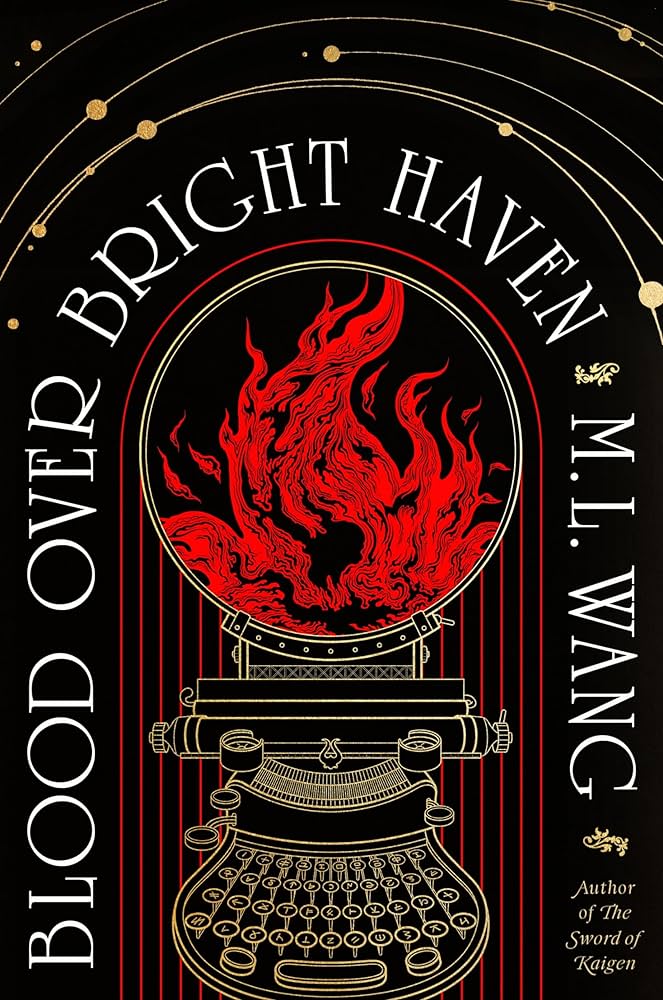
The Premise:
Sciona lives in a city of power and wonder. Protected from the blight that kills indiscriminately outside its magic walls, she seeks to rise past the stereotypes held against women become the first Female High Mage. She knew that sexism would be rampant, but when she’s assigned a janitor for a lab assistant instead of a trained mage, she takes it as a personal challenge. Thomil is a Kwen, one of the tribesmen who live in the Blightlands, and who made the terrible journey to the city; a journey which took all his family except for his (then toddler) niece. Together, they discover the dark secrets of academia, and threaten the very fabric the city rests on.
Read if Looking For: stories about racism and sexism, dark academia, conversations about ethics, light romance elements, engaging narrative voice
Avoid if Looking For: unknowable magic, unproblematic characters, books without sexual assault, surprising twists
What Worked For Me:
The strongest part of this story was how Wang tackled a protagonist who is both sympathetic and utterly racist. Sciona is certainly on the more liberal end of her society, and she often finds herself treating Thomil with the same level of casual disdain that she receives from her comrades for being a woman. Sometimes she catches herself, sometimes she gets called out on it by Thomil and reflects on her biases, and sometimes she stands her ground and digs in her heels. It felt like a very realistic portrait of someone grappling with their racism and their journey towards becoming a better person. Don’t expect to agree with Sciona all the time, and the book expects you to call her out in your head while reading it. It avoided the problem that I find with so many dystopian or historical fiction/fantasy novels: authors want their main characters to be likable! But everyone is a result of their own cultural programming, and it is an extremely rare person who overcomes that easily. Too often we see characters in historical settings (or fantastic settings featuring pervasive racism, sexism, etc) and the main character could have bee plucked right out of 21st century America. Wang made the choice to make Sciona’s racism a central conceit of her character arc, instead of brushing it under the rug. It’s a divisive choice, but one I appreciated.
Personally, I also enjoyed the tidbits of ethics sprinkled throughout the story. It wasn’t a major subplot, but as a teacher currently sketching out a high school Ethics course that will begin in February, it was fun to see characters debating consequentialism and virtue ethics with each other, though the names were filed off. I think others will care less about this, but it was a foundation for Sciona’s personal growth that pulled me right in!
Finally, hard magic fans will enjoy this book. Blood Over Brighthaven doesn’t go as hard in this direction as anything Brandon Sanderson would write. However, understanding the foundations of how magic works is a key feature in several plot elements of the story. Sciona needing to train Thomil, whom has no experience with magic, was one of the better in-universe excuses I’ve seen for authors info-dumping the mechanics of the world’s magic, and it worked very well! If you like your magic mystical and unknowable though, this is not the book for you.
What Didn’t work For Me
If I have a criticism for this book, it’s that the way it handled sexism didn’t feel as nuanced as the way it handled racism. It wasn’t bad necessarily, but didn’t feel as naturally woven into the storyline. It sort of hit all the expected plot beats for a book representing misogyny in academia. To be fair, they’re expected because they’re common in real life (including an on-screen sexual assault that wasn’t handled the way I would have liked). Part of this is because, while we have two lead characters, Sciona is clearly the protagonist. However, I kept feeling like characters’ experiences of racism (both participating in and experiencing) felt like a lived-in fact of life in the world, while the representation of sexism was more ‘whack you on the head with a mallet’. The content didn’t need to be toned down, but I wish it had been integrated in a way that felt less clunky. Show don’t tell isn’t universal advice, but I think it’s apt here.
I think my other issue is that the book is fairly predictable. The major twists felt obvious from the outset, and the ending of Sciona’s arc was clear. This didn’t detract from the story necessarily (I read romances, so a predictable plotline isn’t necessarily a downside for me), but it did pull in the opposite direction of the level of seriousness that the book seems to be trying to tackle. I kept returning to Chain Gang All Stars in my head. It’s a book which also deals with racism and sexism (though mostly racism) in a dystopian society. I kept imagining a version of Blood Over Brighthaven that was more smooth and ambitious.
In Conclusion: a great read for those looking for a story about a character overcoming her racism, fighting the patriarchy, with typewriter magic.
- Characters: 5
- Worldbuilding: 4
- Themes: 4
- Craft: 3
- Enjoyment: 5


Not the first time I’ve seen this book’s take on sexism side-eyed a bit. Kerstin Hall wrote about it in her newsletter a few issues back, broke it down really well.
But I agree it’s a bold, and interesting, choice to make your mc very clearly racist, because you’re completely right, most authors want us to like their leads and therefore don’t/can’t commit to giving them serious flaws. The discussion around this one has me thinking that it’s been a lot of people’s first exposure to an unlikeable protagonist, which, I think it’s good for readers to encounter those!
Have you read Sword of Kaigen?
LikeLike
I’ve not! Definitely interested, but one of those books that keeps getting pushed back by the new shiny release that pops onto my radar. I’ll get around to it someday. Definitely. Probably.
LikeLike