
The Hunger Games was part of my high school experience. I’m part of the generation that grew up with Harry Potter, reaching high school right as YA as a genre was beginning to coalesce into something more than a target audience, instead a grouping of stylistic decisions that led to a rather depressing homogeny. Hunger Games has stood the test of time, and for good reason I think. It’s one of the best of the era, and is a phenomenal book to use in a 7th grade Dystopian book club unit, especially when paired with data on mental health and suicidiality of those who go on reality television programs for our enjoyment. I didn’t pick up the other prequel, as Snow never interested me much as a character. When kids started raving about this though, I figured Haymitch intriguing enough for me to return.
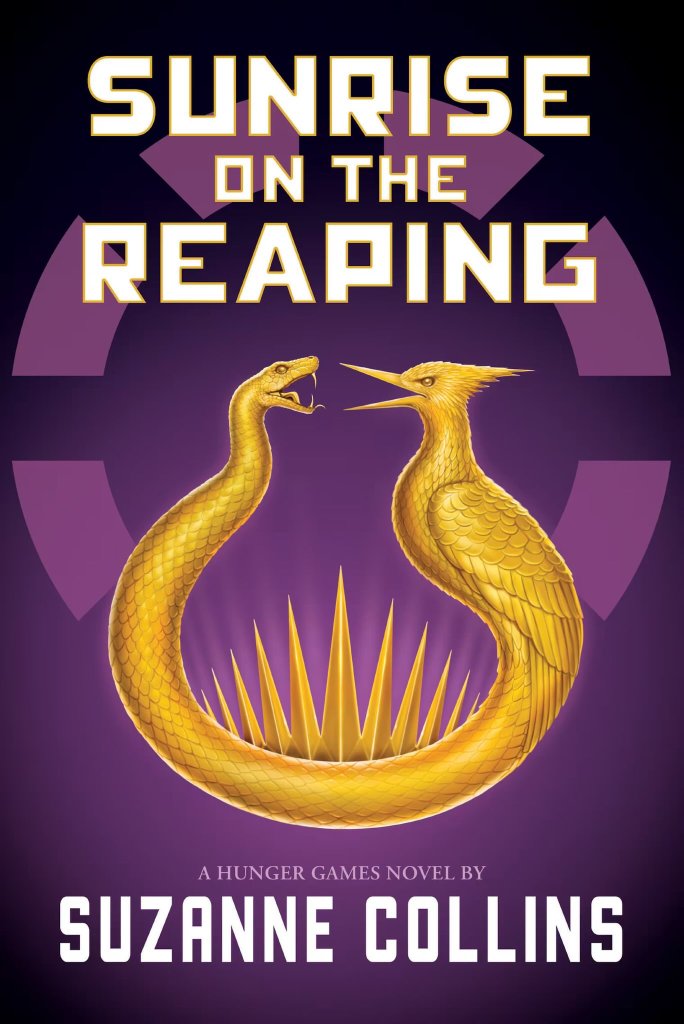
Read if You Like: Hunger Games content, bits of District 12 Lore, Books you know the end of
Avoid if Looking For: the adreneline of the original series, a ‘normal’ hunger games, exploring new thematic depth in the series
Elevator Pitch: Not a lot to say here assuming you’ve read the original trilogy. This is Haymitch’s Hunger Games. We already knew from the earlier books that there’s double the number of tributes and an arena themed around utter beauty where everything is poison. The only little tidbits to throw into this are that we’ll see some early apperances of Capitlol characters like Effie and Plutarch, as well as some of the Champion Tributes of Catching Fire (Mags, Beetee, and Wiress all make appearances), and that Haymitch wants to find a way to break the arena, sort of like the returning tributes ended up doing in Catching Fire.
What Worked For Me:
Overall, I didn’t love this book, and there’s quite a bit later on those elements. However, I did really appreciate the batch of District 12 Tributes. With 4, who all know each other, there was a really good opportunity to build up some emotional depth before they get brutally killed off, something she never did in the original trilogies. In particular, there’s a mean girl whose brand is roasting capitol fashion during her interview, and an oddsmaker with a bad reputation who ends up not being as selfish as everyone assumed. It was a nice little group. Similarly, I did like getting to see old faces in a different timeline. Beetee in particular got some powerful screentime, and Effie’s moments as a recent college grad-turned socialite was a lot of fun.
Unfortunately, that’s where the joy ended for me.
What Didn’t Work For Me:
It can sometimes be tough to seperate childhood nostalgia from the quality of a product. I found this book to miss a lot of things that hooked me in the originals: breakneck pacing, raw emotion, a really stupid premise taken very seriously, subtle critiques of the reader if you’re interested in exploring that space. This book lacked a lot of those things (other than the stupid premise taken seriously). It ended up feeling rather bland and rote, repeating elements for the sake of repeating them with just enough twists to try and distinguish them. And so I returned to read a few chapters of the original, just to see if this feeling was a difference between books or me changing as a reader. The Hunger Games held up. This book just didn’t capture that same magic. It felt like a prequel for the sake of being a prequel; a continuation of a series that Collins will likely never manage to top, and thus hasn’t tried yet.
Perhaps this is because the ending was inevitable. We know that Haymitch wins and ends up as a drunkard who feels despondant. And that origin story could be really cool. I even see the lines Collins is trying to draw between those two characters. Similarly, the basic premise (trying to break the arena, the unique dynamics of his tribute pool, etc) were all solid. It was the writing that let down the ideas.
I also think it’s worth acknowledging that I’m starting to see some holes in the dystopian themes Collins has built into the story. This book continues with the trend of having Career tributes be the butt of jokes and as main antagonists. In this case, there’s a meathead from District 1, Panache, who fills the main role. And despite Collins sort of acknowledging a bit that they’re victims in this whole system too, it really starts to feel like she isn’t interested in actually confronting that fact. District 4 has always been the most humanized of the Career districts, both with Finnick and Mags. But this book even calls out that Fishing is a sort of weird one to end up as a Capitol pet: it has much more in common with districts that focus on agriculture than Military or Luxury Goods. And I’m fine with our protagonists hating them; this makes perfect sense. But it’s striking (acknowledging I haven’t read the other prequel book) that Districts 1 and 2 don’t really ever get humanized by the narrative. Capitol folks do. Even those like Effie, who are enthusiastic participants in the games, get more emotive depth than the Career tributes. And this, more and more, feels like a glaring hole in the messages that Collins is trying to build into her books.
I’m not mad that I read this, but I feel comfortable that it’s Collin’s weakest book, and that I don’t think I’ll be returning to The Hunger Games anytime soon.
Conclusion: a disappointing prequel that not only didn’t stand up to the originals, but managed to sabotage some of the themes in the early books
- Characters: 3
- Worldbuilding: 3
- Craft: 2
- Themes: 1
- Enjoyment: 3
 Marked for Plot