
Robin Hood is not a story that I’m particularly fond of. I don’t dislike it, but the story doesn’t have a place in my heart – even as childhood nostalgia. Being a take on Robin Hood, I wasn’t sure if Greenwode was going to be a good fit for me, but thankfully it avoided being a campy retelling. Instead, this was a delightful story of romance, internalized homophobia, and the politics of rural England. It’s rare for me to want to pick up a sequel quickly, but I definitely want to tackle the next installment this year.
Read if Looking For: star crossed lovers, characters grappling with religion, beautiful forest scenes, romantic yearning, ancient gods
Avoid if Looking For: lots of dramatic archery sequences, books with few sex scenes, positive depictions of Christianity
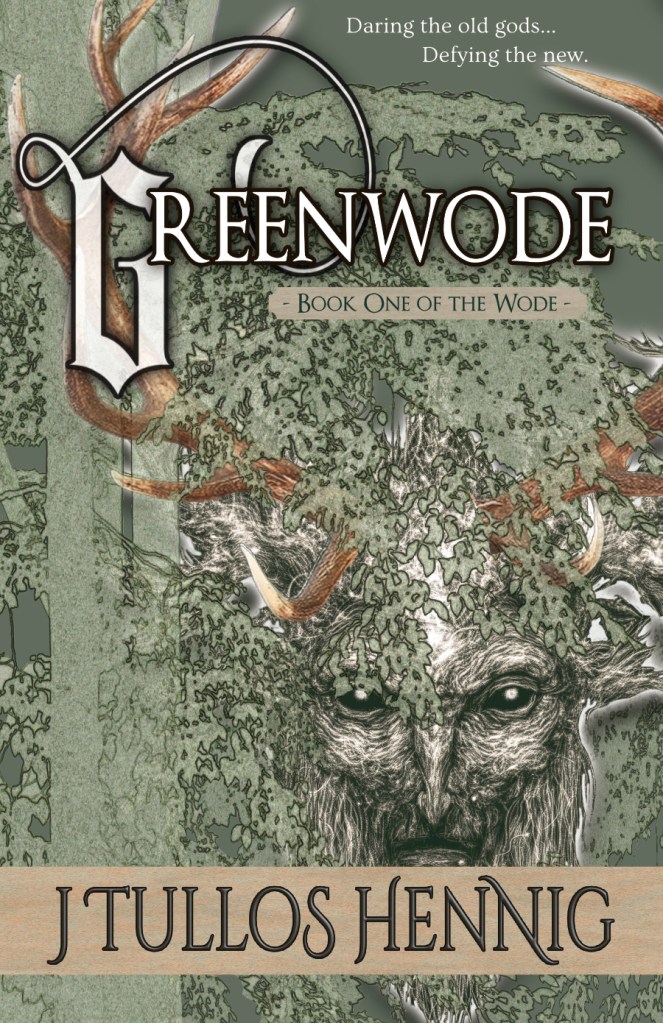
Elevator Pitch: Rob and his sister Marion are destined to take the mantle of Hunter and Maiden in the Old Religion, holding great power and sway over the traditional practices in a country rapidly being consumed by Christianity. Gamelyn is the son of the local lord and is fairly sure he wants to join a local monastery. After a chance meeting brings Rob and Gamelyn into contact and an easy friendship, both of their faiths will be tested by their growing attraction and duties. Their romance sits underneath the growing tension between the old and new religions, and it seems like war is close to breaking out.
What Worked for Me:
The thing that stuck out to me the most Hennig’s stellar job representing the challenges that queer folks run into with religion. Gamelyn is the obvious one here, who spends a good amount of time grappling with his sins, worrying about his immortal soul, and trying to figure out how something so wonderful can really be something so terrible according to his faith. I think some will find the lack of progress he makes throughout the novel frustrating, but it felt very authentic to me, and I loved how it wasn’t something neatly tied up after a few conversations. What I didn’t expect on this front was Rob’s own struggles with his faith. As the future Hunter, who will host the Horned God within him, Rob has a religious duty to sire children, which is a key argument his parents make against his relationship with Gamelyn (other than the whole ‘he’s destined to be your enemy’ point), and plays into Rob’s continual frustrations with how his father has tried to balance the safety of his people with the maintenance of their culture. While the pagan faith is obviously the ethically better one in this book, I liked that it wasn’t something totally black and white.
I also thought the core romance was really delightful. I’d place this book at about 60% romance and 40% political & familial fantasy (mostly setting up dominoes for later books), and the Rob/Gamelyn dynamic was excellent. Notably, Hennig didn’t fall into the trap that so many women writing queer men do, where the relationship maps easily onto heterosexual relationship dynamics. Greenwode was refreshing because it felt like a relationship between two guys, divorced from the gender roles that are a consideration in straight partnerships. Layer onto that great banter, casual ribbing, calling Gamelyn out on his bullshit, and a delightful amount of yearning and pining that captured young love, and there’s a great romance brewing here. I will say I’m hopeful that the later books will move further out of the romance sphere and into a larger focus on the political (and perhaps rebellion) plot that was being set up in this story.
What Didn’t Work For Me:
There isn’t anything major. While this book was highly enjoyable, it alone doesn’t make my all-time favorites list, though it has the potential to get there with the sequels. It was missing an ‘it factor’ that would push it up that ladder for me, and I’m not quite sure what it would be. Perhaps something with more action would be helpful, or fewer sex scenes? I’d say there are probably too many of them for the events of the rest of the story, and they sometimes serve as a crutch in the place of actual development of character and relationship.
In Conclusion: an enjoyable take on Robin Hood with a focus on romance, internalized homophobia, and perhaps too many sex scenes.
- Characters: 4
- Worldbuilding: 4
- Craft: 3
- Themes: 4
- Enjoyment: 4
 Marked for Plot
I think I almost gasped out loud when I realised what Hennig was doing re critiquing the paganism as well! I HAVE NEVER SEEN THAT BEFORE! It made me so freaking happy, and I loved how she handled it. (I’m neopagan, and her/Rob’s critiques are extremely on-point. It’s one reason why in Wicca, for example, a lot of queer people end up forming their own paths/covens/branches rather than joining one of the main big ones.)
I still have not gotten around to reading the rest of the series, though! Well, got most of the way through book two, got distracted, then decided I needed to reread Greenwode first before continuing, and haven’t been able to fit it into the reading schedule… What I remember of the second book had far less sex scenes, and also started retelling the canonical Robin Hood stories, if that’s of interest to you. (Since Greenwode is more set before those stories start.)
LikeLike
I’m not super familiar with Pagan religious beliefs or culture, but this is something I’ve heard from multiple people about Greenwode and its depiction of Paganism! I think there’s a default to assuming that everything that isn’t Christian (or whatever other dominant cultural/governmental force is being pushed against) is automatically a good alternative without flaws. The reality is that institutions, religious or not, and run by people, and even the best of people have biases and prejudice. Nothing is perfect. This doesn’t mean Fantasy should always live in a middleground of acknowledging this messiness, but I don’t see it expressed this way very often
LikeLike